

The Walt Disney Co. said on Friday it ceded all rights to the Fahrenheit 911 documentary film critical of US President George W. Bush to two of its studio executives, who will hold rights personally.
The move completes the withdrawal by Disney from the film by director Michael Moore, which won the top prize at the Cannes Film Festival and describes ties between the Bush family and prominent Saudi families, including that of Osama bin Laden.
The documentary also explores the US government's role in the evacuation of bin Laden relatives from the US after the Sept. 11, 2001, attacks.
Disney said that executives Bob and Harvey Weinstein of its Miramax Films subsidiary had personally acquired the rights to the film.
The Weinsteins "will also be responsible for all costs to finish the film and all marketing costs not paid by the film's distributors. Under the agreement, the Weinsteins will arrange for worldwide distribution for the film in all windows, including theatrical and home entertainment."
The Weinsteins will be able to distribute the film "through third parties or may distribute the movie personally in certain markets," the statement said.
The statement said the Weinsteins will use a Paris-based sales agent to negotiate international distribution arrangements. But it gave no indication of any plan to distribute the film in the US.
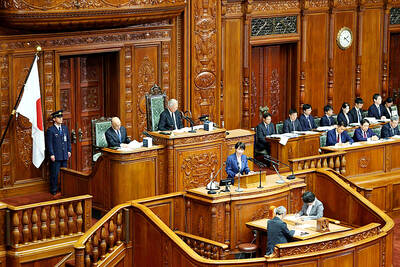
DIFFICULT TIMES: While promoting dialogue, the prime minister said Japan would also firmly assert the country’s position and call for responsible behavior Japanese Prime Minister Sanae Takaichi yesterday called China an “important neighbor” and pledged to build a stable relationship between the rival nations in a policy address. Diplomatic relations between the Asian economic giants have been at rock bottom since Takaichi suggested in November that Tokyo might intervene in any attack on Taiwan. “China is an important neighbor, and despite difficulties, we have built up a long-standing relationship over the years,” she said during an extraordinary session of the lower house of parliament. “We will work to ensure communication on shared challenges, promote dialogue to safeguard our national interests, and build a constructive
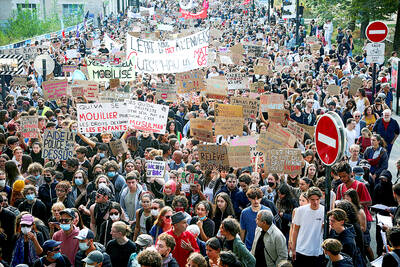
VIOLENT STANDOFFS: The government said 215 students have been injured since the start of the movement last month, including a teenager who lost a hand on Monday Thousands of demonstrators yesterday massed under heavy police surveillance in Paris and cities across France, as unions and teachers joined high-school students who for days have been demanding better conditions in protests punctuated by violent clashes. Students have blocked the entrances to hundreds of high schools for 15-to-17-year-olds since late last month, complaining of missing teachers, overloaded schedules, dilapidated classrooms and buildings that cannot cope with rising temperatures. In the Paris suburb of Creteil, where the protests started last month, students piled barriers outside the Saint-Exupery high school. “We are here to make our voice heard, all too often forgotten,” student Abderrahmane Abdelkader
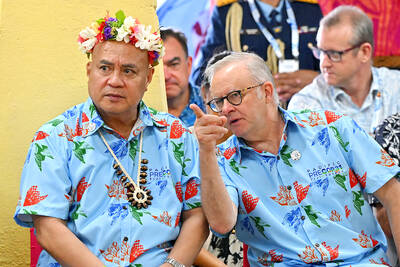
A Tuvalu government adviser yesterday said it felt like Australia had “taken over” the tiny country’s sovereignty during a visit by leaders to the Pacific island. The official — a senior government adviser who asked to remain anonymous because they were not authorized to speak to the media — said they were disappointed in Australia’s handling of the visit. The comments came during a visit by Australian Prime Minister Anthony Albanese and other leaders to Tuvalu, which has become a symbol of the existential threat posed by rising seas and is a key partner in Canberra’s Pacific strategy. “Just because we signed the
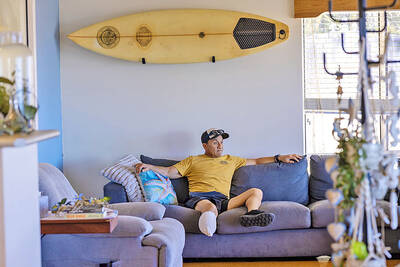
As shark attack survivor Mel Ismail fought the predator that severed his leg, he noticed something odd. “I saw its eye ... a big black eye,” Ismail said. “But it was winking back at me — I was trying to get my fingers in its eye and just pushing its eye as I was being dragged.” When the shark swam off, he managed to struggle back to shore, the surfer and professional firefighter said in an Australian Broadcasting Corp interview broadcast on Thursday. He was surfing at Glenfield Beach near Geraldton on Australia’s west coast when he was attacked on Sept. 14. He


 RSS
RSS