


An alleged corruption scandal in Iraq's finance ministry was behind the dramatic raid on the Baghdad home of Ahmad Chalabi, the leader of the Iraqi National Congress (INC), coalition officials said Friday.
Iraqi police and US troops who early on Thursday burst into his villa, as well as the INC headquarters nearby, seized items including computers and documents.
Chalabi, a prominent member of the US-appointed governing council, says the raid was a reprisal for his growing criticisms of the US role in Iraq.
Yesterday coalition officials suggested instead that senior members of Chalabi's INC -- a US-funded group that opposed former Iraqi president Saddam Hussein -- were involved in a scam earlier this year when cash went missing from the finance ministry.
The money apparently vanished when the old currency was replaced by new banknotes. The finance ministry found that money given out by banks during the changeover exceeded cash handed in, by the equivalent of about US$21.5 million. In many cases, counterfeit old dinars had been exchanged for genuine new ones.
Iraqi police initially arrested more than a dozen bank tellers, who were accused of fraud.
But in March, Sabah Nouri, a leading member of the INC and the head of the ministry's bank audit, was arrested. He has been in jail ever since, and coalition officials insist that the raid on Chalabi's villa was directly connected with the continuing investigation.
US officials say the Iraqi police were looking for 15 people in connection with "fraud, kidnapping, and associated matters," though they do not include Chalabi.
The kidnapping allegation is thought to relate to the detention of the bank tellers.
Coalition sources recently said Chalabi had insisted on having the old currency incinerated, rather than buried as originally planned -- with the incineration contract going to one of his associates. There have been claims that not all the money was destroyed.
This week the Pentagon announced it was ending monthly payments of US$40,000 to the INC for supplying intelligence. The organization has received a total of about US$33 million from the state department and US$6 million from the defense intelligence agency.
Last night members of the governing council held an emergency meeting and condemned Thursday's raid as a "violation."
"This is largely between the INC and America. But this is a violation of the governing council's rules," a council member, Mahmoud Othman, said.
"He is a member of the council. They should have told us about it. It isn't good," Othman said.
Asked why Chalabi and the US had fallen out, he said: "Lots of people including myself have been criticizing the US. The difference is that I haven't had any money from them."
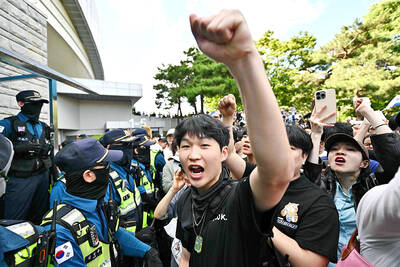
‘ABSURD MISTAKE’: The election commission said that there had been a failure to anticipate turnout after 14 polling stations ran short of ballot papers South Korean riot police yesterday cleared protesters from a Seoul polling station after a 35-hour blockade sparked by a shortage of ballot papers during local elections earlier this week. Wednesday’s election was the first nationwide vote since South Korean President Lee Jae-myung took office following the ouster of Yoon Suk-yeol over his short-lived martial law declaration. Lee’s ruling Democratic Party swept most races, but failed to flip the crucial Seoul mayoral seat. The South Korean National Election Commission apologized, blaming a failure to anticipate turnout after 14 polling stations in Seoul ran short of ballot papers. Some polling stations stayed open until 10pm to

France experienced its hottest spring on record, the French weather service said on Tuesday, after an exceptional early heat wave that also broke highs for the season in England and Wales. Meteo-France said the average nationwide temperature over March to May was 13.8°C — about 1.7°C above the norm, and surpassing records set in 2011 and 2020. “The warmest spring since records began in 1900,” it said in a bulletin. All three months were warmer than average, but the onset of an “unprecedented heatwave” late last month pushed the mercury to highs typically seen at the height of the summer. “Our country had never

A Sherpa guide was found crawling to base camp on Mount Everest a week after he went missing and was reunited with his family, who had given up hope he would return. Dawa Sherpa was last seen on Friday last week descending the mountain, but he did not reach base camp even though his client did. The pair were among the last climbers on the mountain as the climbing season came to an end and the route was dismantled. Dawa was located by a cleaning crew on Thursday morning as he was crawling down the snowy slopes around the Khumbu Icefall, just above
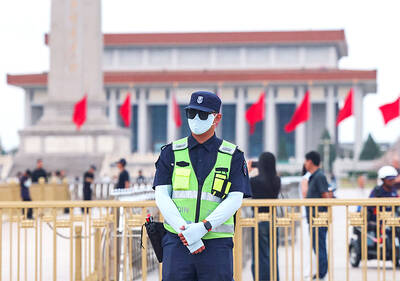
Chinese authorities are snuffing out any remembrance of the deadly 1989 military crackdown on student-led pro-democracy protests in Tiananmen Square, which happened 37 years ago yesterday, in a further tightening of a years-long campaign to erase what happened from public memory. Police told relatives of the victims they would not be allowed to visit a cemetery in Beijing on the anniversary of the crackdown, a person with knowledge of the matter said. Relatives of the victims visited the cemetery on the anniversary for more than 30 years to read memorial statements with police keeping watch, Amnesty International said. Hundreds of people,


 RSS
RSS