


Western leaders yesterday piled pressure on Myanmar's military rulers to release democracy figurehead Aung San Suu Kyi and include her political party in constitutional talks widely dismissed as a sham.
As the junta kicked off a constitutional convention without the Nobel peace laureate, the harshest comments predictably came from Washington, where President George W. Bush labelled the former Burma an "extraordinary threat" to US interests.
UN Secretary-General Kofi Annan urging southeast Asian nations to pressure Myanmar to release Suu Kyi.
The EU expressed "disappointment and concern" and was joined by the United States, Malaysia and Thailand in criticizing the junta.
Unusually strong words from the Thai prime minister suggest Myanmar's normally non-interfering neighbors are increasingly embarrassed by the junta, which takes over the chair of the Association of South East Asian Nations (ASEAN) in 2006.
Thaksin Shinawatra, whose Bangkok government has a policy of constructive engagement with diplomatically isolated Yangon, said he was quite concerned over the junta's lack of democratic pro-gress and indicated it had duped him over Suu Kyi.
"We understood they would release her in time to attend the meeting," Thaksin said.
Despite the absence of Suu Kyi, who remains under house arrest, and her National League for Democracy (NLD) party, Myanmar opened its National Convention on Monday to draft the constitution the country does not have.
Delegates to the constitutional convention have been told they cannot walk out of meetings or make any anti-national remarks.
A code of ethics and discipline, published in a state newspaper yesterday, is apparently aimed at ensuring that the National Convention will not be marred by ugly scenes or a show of dissent against the military rulers.
Soon after the opening ceremony, Information Minister Brigadier General Kyaw Hsan read out a "code of ethics and discipline to be followed by the delegates to ensure the successful holding of the National Convention," the official Myanma Ahlin daily reported.
"The regulations are prescribed not for repression but for the interest of the national races and the delegates," Kyaw Hsan told the delegates.
The delegates were told not to express disloyalty to the state, not to discuss "irrelevant matters," and not to accept any other country's patronage.
The forum is the first step in the junta's so-called "road map to democracy" unveiled in August last year. Critics dismiss it as a smokescreen to keep the generals in power.
For now, Annan is siding with the critics, saying the process lacks credibility without the country's chief democracy activist, who won a landslide election victory in 1990 only to be denied power.
However, diplomats say the reaction from ASEAN is now all the more important, given the relative increase in its commercial and diplomatic clout after the US and EU slapped sanctions on Yangon over Suu Kyi's detention.
ASEAN's next step is difficult to predict, diplomats say, given that its plan to admit Myanmar in 1997 in the hope of nurturing democratic transition has been exposed as fanciful at best.

PHISHING: The con might appear convincing, as the scam e-mails can coincide with genuine messages from Apple saying you have run out of storage For a while you have been getting messages from Apple saying “your iCloud storage is full.” They say you have exceeded your storage plan, so documents are no longer being backed up, and photos you take are not being uploaded. You have been resisting Apple’s efforts to get you to pay a minimum of £0.99 (US$1.33) a month for more storage, but it seems that you cannot keep putting off the inevitable: You have received an e-mail which says your iCloud account has been blocked, and your photos and videos would be deleted very soon. To keep them you need
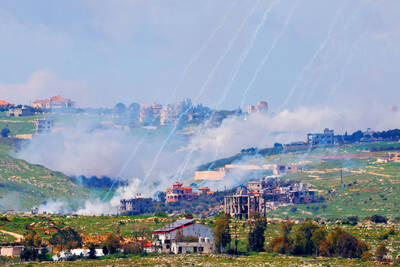
The Israeli military has demolished entire villages as part of its invasion of south Lebanon, rigging homes with explosives and razing them to the ground in massive remote detonations. The Guardian reviewed three videos posted by the Israeli military and on social media, which showed Israel carrying out mass detonations in the villages of Taybeh, Naqoura and Deir Seryan along the Israel-Lebanon border. Lebanese media has reported more mass detonations in other border villages, but satellite imagery was not readily available to verify these claims. The demolitions came after Israeli Minister of Defense Israel Katz called for the destruction of

A US YouTuber who caused outrage for filming himself kissing a statue commemorating Korean wartime sex slaves has been sentenced to six months in prison, a court in Seoul said yesterday. Johnny Somali, 25, gained notoriety several years ago for recording himself doing a series of provocative stunts in South Korea and Japan, and streaming them on platforms such as YouTube and Twitch. South Korean authorities indicted Somali — whose real name is Ramsey Khalid Ismael — in 2024 on public order violations and obstruction of business, and banned him from leaving the country. “The court has sentenced him to six months in
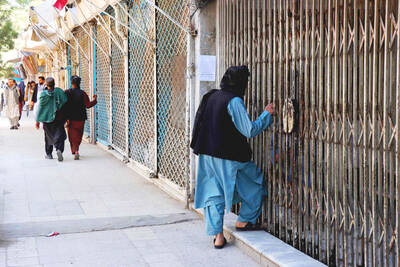
The death toll from a shooting in western Afghanistan rose to 11 on Saturday, after gunmen targeted civilians at a picnic spot in Herat, the provincial authority said. Bullet marks were visible on a wall of the Sayed Mohammad Agha Shia shrine, while bloodstains marked a blanket abandoned at the scene. “Eleven people have been recorded dead and eight others wounded from Friday’s incident, with the condition of two of the wounded reported as critical,” Herat’s information office said in a statement. The update raises a toll of seven killed provided on Friday by the Afghan Ministry of Interior Affairs


 RSS
RSS