


The crowd gathering around the rescue workers was strangely silent: old men, women and children queued at a simple wooden table in the Nigerian town of Yelwa, waiting for their bullet wounds and machete gashes to be treated.
Some of the most seriously injured were dragged out in wheelbarrows to meet the Red Cross team, but most stood about in varying degrees of shock and pain, holding out their hacked-up limbs or showing their still weeping entry wounds.

PHOTO: AP
Ethnic violence has become almost a way of life in this remote part of central Nigeria's Plateau State, but the savagery of Sunday's assault -- when a large gang of militants from the Tarok community of Christian farmers swept into the mainly Muslim town -- has stunned even Yelwa's war-weary population.
"This attack is far above our level of thinking. We are under shock. We are not even able to describe what has happened," Adilu Yinuss, a young Yelwa man, told a reporter who visited the town in the aftermath of the attack.
Umar Abdu Mairiga, the head of a Nigerian Red Cross team that managed to get into Yelwa on Thursday, said that most of the wounded need more than just the first aid his small team of nurses could provide, but they were too frightened to travel to hospital in the nearby Christian settlement of Shendam.
After inspecting the huge mass grave behind the house of the town's traditional rulers, he endorsed local claims that more than 600 people were cut down by automatic fire or slashed to death in a night of unfettered violence and destruction.
Less than an hour after the rescuers had entered the town they had already treated 23 seriously injured.
"Most received bullet wounds and machete blows, like this baby here," he said, pointing to a young boy lying cradled in his mother's arms a bearing a 10cm slash across his face.
Once the bleeding stops, the people of Yelwa will have to plan for the future.
They believe the Tarok want them to quit Yelwa for good, and suspect some local officials and security personnel of supporting them. They are thus seeking protection from President Olusegun Obasanjo's federal government.
Mohammed Babayaro is ready to leave. Once one of Yelwa's most prominent businessmen, his house was looted and burned and his family butchered, he said. Two of his four wives and 11 of his 22 children are dead, he claimed.
"If the federal government doesn't make this place safe, I will leave this place with what remains of my family," he said.
Tension was still high in Yelwa four days after the massacre. Visitors had to negotiate a series of police and military checkpoints, the town's Christian minority had disappeared and people kept a fearful eye on the Mobile Police (nickname: "Kill and Go") patrolling the streets.
Some residents accuse the police and army of assisting the attackers -- some of whom were armed with military-issue assault rifles -- and dark rumors are swirling around Yelwa of the kidnap and rape of young women.
Such stories could not immediately be confirmed and, for their part, the police deny any involvement in the atrocities. Officers did, however, admit that the ferocity of the attack had left them powerless to protect the innocent.
"The truth is that the policemen and soldiers were overpowered by the attackers. The various interest groups are better equipped than the security forces," said an officer in the town, playing down the larger casualty estimates. "It is a war situation where propaganda also plays a role."
With reports of unrest rippling out from Yelwa to other parts of Plateau State and beyond, some fear that the massacre could trigger another round of bloodletting in Nigeria, a country where more than 10,000 people have been killed in communal conflicts since 1999.
It's a prospect that daunts the townsfolk here. Lawal Abdullahi, a 35-year-old farmer, is pessimistic: "When we can, we defend ourselves with bows and arrows, spears and machetes, but this time we were overpowered."
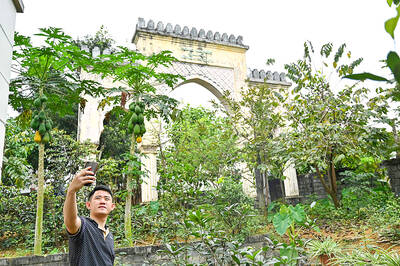
Le Tuan Binh keeps his Moroccan soldier father’s tombstone at his village home north of Hanoi, a treasured reminder of a man whose community in Vietnam has been largely forgotten. Mzid Ben Ali, or “Mohammed” as Binh calls him, was one of tens of thousands of North Africans who served in the French army as it battled to maintain its colonial rule of Indochina. He fought for France against the Viet Minh independence movement in the 1950s, before leaving the military — as either a defector or a captive — and making a life for himself in Vietnam. “It’s very emotional for me,”

The Chinese Communist Party’s (CCP) Central Committee is to gather in July for a key meeting known as a plenum, the third since the body of elite decisionmakers was elected in 2022, focusing on reforms amid “challenges” at home and complexities broad. Plenums are important events on China’s political calendar that require the attendance of all of the Central Committee, comprising 205 members and 171 alternate members with Chinese President Xi Jinping (習近平) at the helm. The Central Committee typically holds seven plenums between party congresses, which are held once every five years. The current central committee members were elected at the
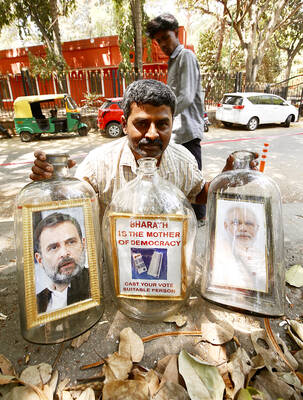
Indian Prime Minister Narendra Modi reaffirmed his pledge to replace India’s religion-based marriage and inheritance laws with a uniform civil code if he returns to office for a third term, a move that some minority groups have opposed. In an interview with the Times of India listing his agenda, Modi said his government would push for making the code a reality. “It is clear that separate laws for communities are detrimental to the health of society,” he said in the interview published yesterday. “We cannot be a nation where one community is progressing with the support of the Constitution while the other

CODIFYING DISCRIMINATION: Transgender people would be sentenced to three years in prison, while same-sex relations could land a person in jail for more than a decade Iraq’s parliament on Saturday passed a bill criminalizing same-sex relations, which would receive a sentence of up to 15 years in prison, in a move rights groups condemned as an “attack on human rights.” Transgender people would be sentenced to three years’ jail under the amendments to a 1988 anti-prostitution law, which were adopted during a session attended by 170 of 329 lawmakers. A previous draft had proposed capital punishment for same-sex relations, in what campaigners had called a “dangerous” escalation. The new amendments enable courts to sentence people engaging in same-sex relations to 10 to 15 years in prison, according to the


 RSS
RSS