


In the year since American troops rolled into Baghdad, moderate Iraqis have counseled patience to allow Washington time to deliver on its promise to replace Saddam Hussein's dictatorship with democratic rule. Others dismissed the occupiers as "infidels" from whom nothing good could come.
Photographs showing Iraqi prisoners sexually humiliated by smiling American guards, combined with long-standing complaints of heavy handedness and cultural insensitivity by US troops, have lent significant weight to the radical camp, compounding problems faced by Washington as it prepares to hand back power to Iraqis while dealing with Shiite and Sunni revolts.
The US military and top officials in President George W. Bush's administration have strongly condemned the abuses, emphasizing they were the work of a small number of soldiers. The military in Iraq also decided to grant the international Red Cross and Iraq's ministries of interior and human rights regular access to the notorious Abu Ghraib prison.
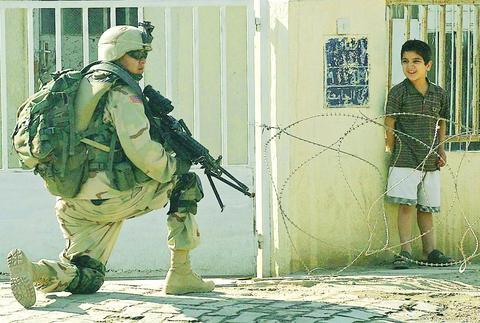
PHOTO: EPA
"The impact [of the Abu Ghraib scandal] on Iraqis will very much depend on the extent of their confidence that no stone was being left unturned by the investigations into the abuses and the efforts made to weed out those who broke the rule," coalition spokesman Gareth Bayley said.
But the extensive damage control effort, which included interviews with Bush on two Arab satellite television stations and apologies by top US military officers, may not be enough to assuage Iraqi anger.
Many Iraqis feel betrayed by the US. Gratitude for toppling Saddam has been replaced by frustration over America's perceived failure to meet all Iraqi aspirations.
"It's all lies and lies," said Haidar Younis, who runs an electrical appliances store in central Baghdad. "America wants us to drown in chaos while its soldiers kill hundreds of us in the name of democracy."
The Abu Ghraib scandal moved Baghdad University lecturer Ham-eed Shihab Ahmed to join Iraqis who question the motives of last year's US-led invasion. Rather than to promote democracy, many Iraqis believe Washington's goal was to control the country's oil wealth and promote Israel's regional interests.
"It is an occupation and by no means a liberation," said Ahmed, who specializes in international relations.

School bullies in Singapore are to face caning under new guidelines, but the education minister on Tuesday said it would be meted out only as a last resort with strict safeguards. Human rights groups regularly criticize Singapore for the use of corporal punishment, which remains part of the school and criminal justice systems, but authorities have defended it as a deterrent to crime and serious misconduct. Caning was discussed in the parliament after legislators asked how it would be used in relation to bullying in schools. The debate followed stricter guidelines on serious student misconduct, including bullying, unveiled by the Singaporean Ministry of

As evening falls in Fiji’s capital, a steady stream of people approaches a makeshift clinic that is a first line of defense against one of the world’s fastest-growing HIV epidemics. In the South Pacific nation — a popular tourist destination of just under a million people — more than 2,000 new HIV cases were recorded last year, a 26 percent increase from 2024. The government has declared an HIV outbreak and described it as a national crisis. “It’s spreading like wildfire,” said Siteri Dinawai, 46, who came to be tested. The Moonlight Clinic, a converted minibus parked in a suburban cul-de-sac in Suva, is
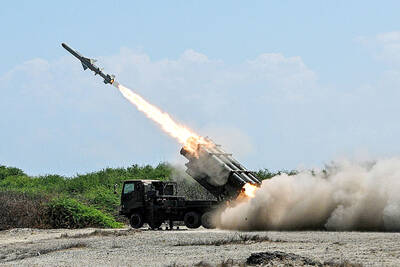
A MESSAGE: Japan’s participation in the Balikatan drills is a clear deterrence signal to China not to attack Taiwan while the US is busy in the Middle East, an analyst said The Japan Self-Defense Forces yesterday fired a Type 88 anti-ship missile during a joint maritime exercise with US, Australian and Philippine forces, hitting a decommissioned Philippine Navy ship in waters facing the disputed South China Sea, in drills that underscore Tokyo’s rising willingness to project military power on China’s doorstep. The drill took place as Manila and Tokyo began talks on a potential defense equipment transfer, made possible by Japan’s decision to scrap restrictions on military exports. The discussions include the possible early transfer of Abukuma-class destroyers and TC-90 aircraft to the Philippines, Japanese Minister of Defense Shinjiro Koizumi said. Philippine Secretary of
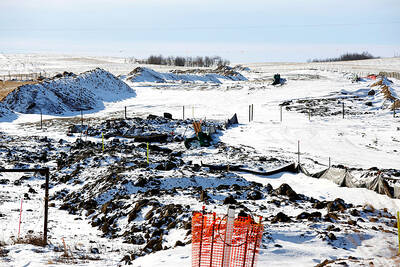
Separatists in Alberta are preparing to submit a petition tomorrow that they said has enough signatures to force a referendum on independence for the oil-rich Canadian province. Polls indicate the pro-independence camp remains a minority among Alberta’s 5 million people, but has hit a historic high of roughly 30 percent. Alberta separatists are also closer than ever to forcing a referendum, riding momentum fueled by intensifying grievances over Ottawa’s control of the provincial oil industry. They have also undeniably gotten a boost from the return to power of US President Donald Trump. After launching a petition in January, Stay Free Alberta, the group


 RSS
RSS