


The debate over Hong Kong democracy turned into a political showdown at the border yesterday, as China barred two opposition lawmakers from entering while admitting three others who tried but failed to meet with a top Chinese official.
The three pro-democracy lawmakers made it as far as the hotel where Qiao Xiaoyang (
China has routinely blacklisted many of the pro-democracy figures in its territory Hong Kong, and one lawmaker who made it across the border to China called the discussion with Li an encouraging development in the tense political standoff.
"We are disappointed we weren't able to meet with Qiao, but it's a breakthrough that we are at least able to have a meeting with officials in mainland China," Legislator Frederick Fung (
Qiao has been heavily involved with Beijing's recent decision to assert control over any electoral changes in Hong Kong and the opposition lawmakers wanted to tell him about the popular push for full democracy in the territory.
Many in Hong Kong fear that the Standing Committee of the National People's Congress will rule in the next few days that the territory will not be allowed to democratically choose its next leader in 2007.
Ordinary Hong Kong people now have no say in picking their leader, though they will directly elect 30 of 60 legislators in September. Most Hong Kongers want universal suffrage, but Beijing has recently said any reforms will require its advance approval, casting doubts on Hong Kong's prospects for full democracy.
TV footage showed Qiao inside the meeting, telling Li to go deal with the Hong Kong opposition figures.
"I don't have time -- I can't duplicate myself," Qiao said, adding that the pro-democracy viewpoint was already well known.
One of the lawmakers who was barred from China, Cyd Ho (
Hong Kong residents normally can enter China freely, but Beijing views pro-democracy politicians as troublemakers and has previously denied entry to some of them, including Ho.
"I am very sad the citizens are being divided into different classes in our country," Ho said in remarks carried on live television after she and colleague James To (
Yesterday's developments made for prime-time political drama in Hong Kong.
A throng of journalists followed the lawmakers on the train journey to the border, with television showing a map of the railroad line and footage of the politicians using tickets to pass through turnstiles.
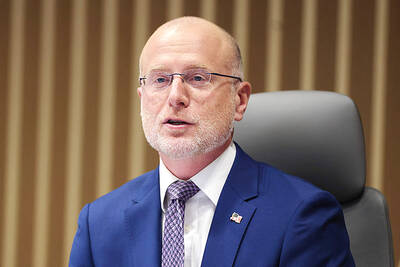
FAKE NEWS? ‘When the government demands the press become a state mouthpiece under the threat of punishment, something has gone very wrong,’ a civic group said The top US broadcast regulator on Saturday threatened media outlets over negative coverage of the Middle East war, after US President Donald Trump slammed critical headlines from the “Fake News Media.” The US president since his first term has derided mainstream media as “fake news” and has sued major outlets over what he sees as unfair coverage. Brendan Carr, head of the US Federal Communications Commission — which oversees the nation’s radio, television and Internet media — said broadcasters risked losing their licenses over news coverage. “The law is clear. Broadcasters must operate in the public interest, and they will
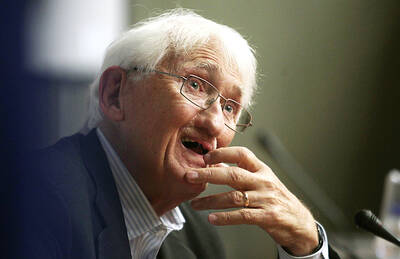
INFLUTENTIAL THEORIST: Habermas was particularly critical of the ‘limited interest’ shown by German politicians in ‘shaping a politically effective Europe Jurgen Habermas, whose work on communication, rationality and sociology made him one of the world’s most influential philosophers and a key intellectual figure in his native Germany, has died. He was 96. Habermas’ publisher, Suhrkamp, said he died on Saturday in Starnberg, near Munich. Habermas frequently weighed in on political matters over several decades. His extensive writing crossed the boundaries of academic and philosophical disciplines, providing a vision of modern society and social interaction. His best-known works included the two-volume Theory of Communicative Action. Habermas, who was 15 at the time of Nazi Germany’s defeat, later recalled the dawn of
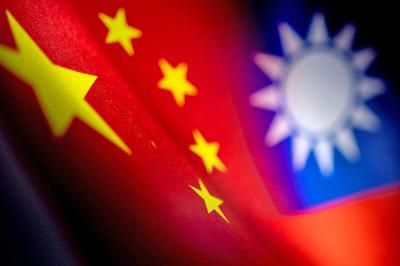
The Chinese public maintains relatively warm sentiments toward Taiwan and strongly prefers non-military paths to improving cross-strait relations, a recent survey conducted by the Atlanta, Georgia-based Carter Center and Emory University showed. The “China Pulse” research project, which polled 2,506 adults between Oct. 27 last year and Jan. 1 this year, found that 86 percent of respondents support strengthening cultural ties, while 81 percent favor deepening economic interaction. The report, co-authored by political scientists at Emory University and advisors at the Carter Center, indicates that the Chinese public views Taiwan’s importance through a lens of shared history and culture rather than geopolitical

Cannabis-based medicines have shown little evidence of effectiveness for treating most mental health and substance-use disorders, according to a large review of past studies published in a major medical journal on Monday. Medical use of cannabinoids has been expanding, including in the US, Canada and Australia, where many patients report using cannabis products to manage conditions such as anxiety, post-traumatic stress disorder and sleep problems. Researchers reviewed data from 54 randomized clinical trials conducted between 1980 and May last year involving 2,477 participants for their analysis published in The Lancet. The studies assessed cannabinoids as a primary treatment for mental disorders or substance-use


 RSS
RSS