


Indian officials say Pakistan -- which has won a measure of gratitude in the US for agreeing to join the battle against terrorism -- harbors and supports the very groups Washington has pledged to fight, including the Taliban.
"How can he be concerned about terrorism? He promoted it," Prime Minister Atal Bihari Vajpayee said of Pakistan's president, General Pervez Musharraf, in an interview The Times of India printed on its front page Friday.
The charge that Pakistan harbors terrorists is one India has been making for years, mostly in the context of bloodshed in Indian-ruled Kashmir, where Muslim militants -- some based in Pakistan -- are fighting Indian troops in an insurgency that human rights activists believe has claimed more than 60,000 lives.
US President George W. Bush has pledged an exhaustive campaign to wipe out terrorism around the world and punish nations that provide aid or safe haven to terrorists. Indian leaders see a new chance to get help fighting Pakistan-based militants they call terrorists.
But with Musharraf pledging Pakistan's support in what American officials suggest will be an attack on its western neighbor, Afghanistan, Indian officials fear claims of Pakistani support for terrorist activities will go unheeded.
They also fear that Pakistan's strategic position in any attack on Afghanistan means the US -- which had been leaning toward India and away from Pakistan as it reassessed its alliances following the end of the Cold War -- will shift again in the other direction.
"No statements had emanated from Washington to suggest that the US ... was in a mood to focus on India's bitter experience of terrorist activities on its soil," Vajpayee said in the interview with The Times of India.
India, Pakistan's eastern neighbor, has offered the US use of its territory for a possible military strike against terrorists in Afghanistan. It has also supplied US investigators with intelligence on what it says are training camps funded by bin Laden not only in Afghanistan, but also in Pakistan.
"But the reaction from the US has not been very encouraging," said Kanti Bajpai, professor of international relations at Jawaharlal Nehru University.
"For everyone to now be rushing toward Musharraf is understandable because he holds the tactical key to what's going on," Bajpai said. "But it could be such a pain if Pakistan goes scot-free in all this. It would be rather foolish."
Predominantly Muslim Pakistan and majority Hindu India have fought three wars since independence in 1947, two of them over Kashmir, a mostly Muslim region that is divided between them by a tense cease-fire line and is claimed by both in its entirety.
Islamabad wants a vote in Kashmir, the only Muslim-majority state in India, to decide whether Kashmiris want to join Pakistan or stay with India. India has rejected the proposal, saying Kashmir is an integral part of the country.
India accuses Pakistan of harboring, arming and funding Muslim guerrilla organizations that are fighting in Indian-ruled Kashmir and it calls the groups terrorists. Musharraf and other Pakistani officials call them freedom fighters and says Pakistan gives them only moral support.
One Pakistan-based group fighting in Indian-ruled Kashmir, Harkat-ul Mujahedeen, is on the US State Department's list of terrorist organizations. Another, Lashkar-e-Tayyaba, is on a watch list for terrorism. Indian officials say both are linked to bin Laden.
In a televised speech Wednesday, Musharraf accused India of trying to profit from tensions after the US attacks by suggesting Pakistan is not fully cooperating with the fight against terrorism.
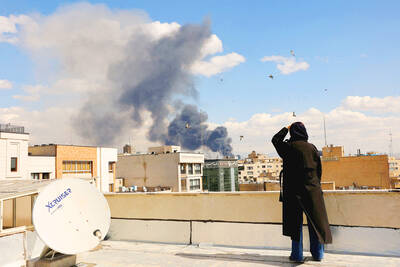
CHAOS: Iranians took to the streets playing celebratory music after reports of Khamenei’s death on Saturday, while mourners also gathered in Tehran yesterday Iranian Supreme Leader Ayatollah Ali Khamenei was killed in a major attack on Iran launched by Israel and the US, throwing the future of the Islamic republic into doubt and raising the risk of regional instability. Iranian state television and the state-run IRNA news agency announced the 86-year-old’s death early yesterday. US President Donald Trump said it gave Iranians their “greatest chance” to “take back” their country. The announcements came after a joint US and Israeli aerial bombardment that targeted Iranian military and governmental sites. Trump said the “heavy and pinpoint bombing” would continue through the week or as long
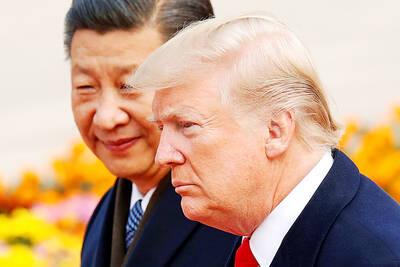
TRUST: The KMT said it respected the US’ timing and considerations, and hoped it would continue to honor its commitments to helping Taiwan bolster its defenses and deterrence US President Donald Trump is delaying a multibillion-dollar arms sale to Taiwan to ensure his visit to Beijing is successful, a New York Times report said. The weapons sales package has stalled in the US Department of State, the report said, citing US officials it did not identify. The White House has told agencies not to push forward ahead of Trump’s meeting with Chinese President Xi Jinping (習近平), it said. The two last month held a phone call to discuss trade and geopolitical flashpoints ahead of the summit. Xi raised the Taiwan issue and urged the US to handle arms sales to
BIG SPENDERS: Foreign investors bought the most Taiwan equities since 2005, signaling confidence that an AI boom would continue to benefit chipmakers Taiwan Semiconductor Manufacturing Co’s (TSMC, 台積電) market capitalization swelled to US$2 trillion for the first time following a 4.25 percent rally in its American depositary receipts (ADR) overnight, putting the world’s biggest contract chipmaker sixth on the list of the world’s biggest companies by market capitalization, just behind Amazon.com Inc. The site CompaniesMarketcap.com ranked TSMC ahead of Saudi Aramco and Meta Platforms Inc. The Taiwanese company’s ADRs on Tuesday surged to US$385.75 on the New York Stock Exchange, as strong demand for artificial intelligence (AI) applications led to chip supply constraints and boost revenue growth to record-breaking levels. Each TSMC ADR represents
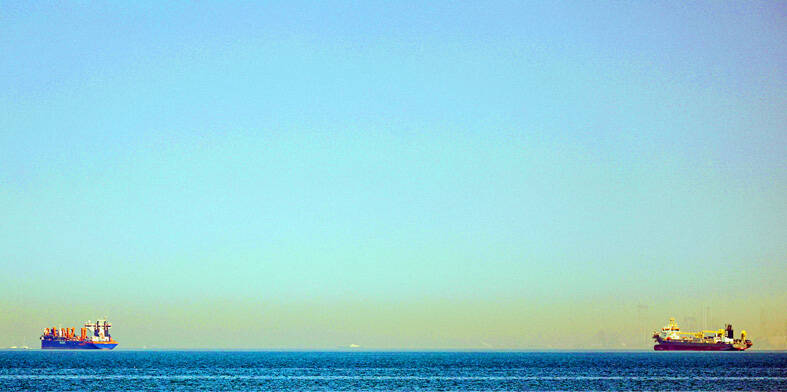
State-run CPC Corp, Taiwan (CPC, 台灣中油) yesterday said that it had confirmed on Saturday night with its liquefied natural gas (LNG) and crude oil suppliers that shipments are proceeding as scheduled and that domestic supplies remain unaffected. The CPC yesterday announced the gasoline and diesel prices will rise by NT$0.2 and NT$0.4 per liter, respectively, starting Monday, citing Middle East tensions and blizzards in the eastern United States. CPC also iterated it has been reducing the proportion of crude oil imports from the Middle East and diversifying its supply sources in the past few years in response to geopolitical risks, expanding


 RSS
RSS