


A German official on Monday rejected a petition asking the country to establish diplomatic relations with Taiwan, citing Berlin’s “one China” policy, but said it plans to expand its ties with Taiwan.
Petra Sigmund, the director-general for Asia and the Pacific at the German Ministry of Foreign Affairs, said that Germany and China established diplomatic relations in 1972 and the country recognizes the People’s Republic of China as the only legitimate representative of China.
Germany excludes the possibility of establishing diplomatic ties with Taiwan under its “one China” policy, Sigmund said, adding that it has no intention of changing the policy, in keeping with its EU partners.
Sigmund was responding to a petition launched by Michael Kreuzberg that asked Berlin to formally recognize Taiwan. The petition reached the 50,000-signature threshold in October, which required the German government to formally discuss it.
The Bundestag’s petitions committee on Monday held a public hearing about the issue that was attended by foreign ministry officials.
The committee is to decide whether to forward the petition to a parliamentary discussion.
Though Sigmund rejected the idea of establishing formal diplomatic ties with Taiwan, she said Taiwan and Germany share values, such as democracy and freedom, adding that Taiwan is Germany’s “partner of values.”
Germany cherishes frequent exchanges with Taiwan in the economic, cultural and academic spheres, and plans to expand ties with Taiwan, Sigmund said, without elaborating.
Kreuzberg told the hearing that he launched the petition to forestall autocratic China’s annexation of democratic Taiwan and to ensure that Taiwan’s safety becomes the moral responsibility and obligation of Western nations.
Kreuzberg said he would deliver a similar petition to the European Parliament, because if other EU nations establish diplomatic ties with Taiwan, Germany might follow suit.
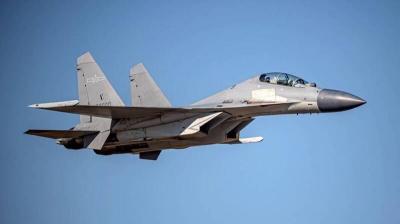
Eight Chinese naval vessels and 24 military aircraft were detected crossing the median line of the Taiwan Strait between 6am yesterday and 6am today, the Ministry of National Defense said this morning. The aircraft entered Taiwan’s northern, central, southwestern and eastern air defense identification zones, the ministry said. The armed forces responded with mission aircraft, naval vessels and shore-based missile systems to closely monitor the situation, it added. Eight naval vessels, one official ship and 36 aircraft sorties were spotted in total, the ministry said.
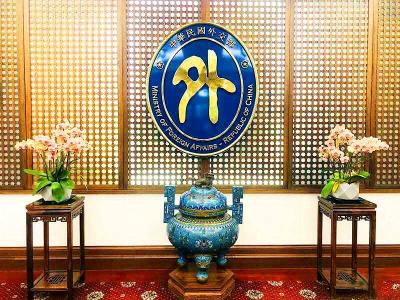
The Ministry of Foreign Affairs (MOFA) today said that if South Korea does not reply appropriately to its request to correct Taiwan’s name on its e-Arrival card system before March 31, it would take corresponding measures to alter how South Korea is labeled on the online Taiwan Arrival Card system. South Korea’s e-Arrival card system lists Taiwan as “China (Taiwan)” in the “point of departure” and “next destination” fields. The ministry said that it changed the nationality for South Koreans on Taiwan’s Alien Resident Certificates from “Korea” to “South Korea” on March 1, in a gesture of goodwill and based on the
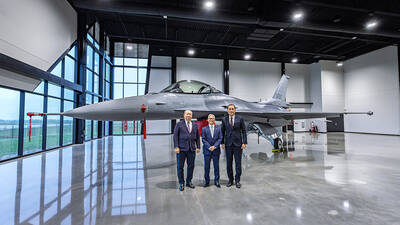
Taiwanese officials were shown the first of 66 F-16V fighter jets purchased by Taiwan from the United States, the Ministry of National Defense said yesterday, adding the aircraft has completed an initial flight test and is expected to be delivered later this year. A delegation led by Deputy Minister of National Defense Hsu Szu-chien (徐斯儉) visited Lockheed Martin’s F-16 C/D Block 70 (also known as F-16V) assembly line in South Carolina on March 16 to view the aircraft. The jet will undergo a final acceptance flight in the US before being delivered to Taiwan, the
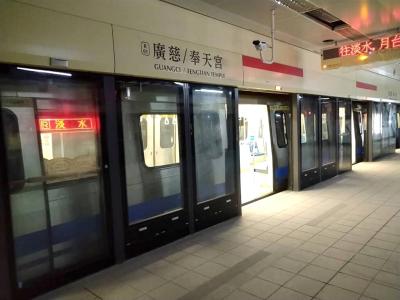
The New Taipei Metro's Sanyin Line and the eastern extension of the Taipei Metro's Tamsui-Xinyi Line (Red Line) are scheduled to begin operations in June, the National Development Council said today. The Red Line, which terminates at Xiangshan Station, would be connected by the 1.4km extension to a new eastern terminal, Guangci/Fengtian Temple Station, while the Sanyin Line would link New Taipei City's Tucheng and Yingge stations via Sanxia District (三峽). The council gave the updates at a council meeting reviewing progress on public construction projects for this year. Taiwan's annual public infrastructure budget would remain at NT$800 billion (US$25.08 billion), with NT$97.3


 RSS
RSS