


Taipei city councilors from the Chinese Nationalist Party (KMT) and the New Party yesterday accused Yang Hui-ju (楊蕙如) of using her ties within the Democratic Progressive Party (DPP) to receive government funding.
KMT Taipei City Councilor Hsu Chiao-hsin (徐巧芯) showed reporters in Taipei a 2016 letter in which Yi Shih, a company founded by Yang, appeared to ask the Taipei City Government to provide an official document approving the company’s cohosting of the WTA Taiwan Open.
The letter showed that it was copied to five city councilors, all of whom belong to the so-called “faction” of Representative to Japan Frank Hsieh (謝長廷), she said.
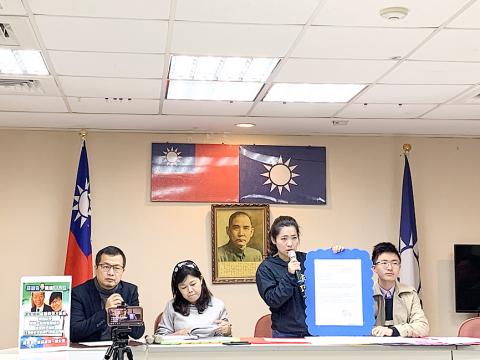
Photo: Kuo An-chia, Taipei Times
Yang might have sent the councilors duplicates to show the city government that she had the backing of the councilors, she added.
The copied councilors have not expressed their opinions on the matter, Taipei Department of Sports Deputy Commissioner Liu Ning-tien (劉寧添) said, adding that the government subsidies for the tournament were reviewed and awarded according to the regulations.
Yi Shih received about NT$42 million (US$1.38 million at the current exchange rate) from the city government in contracts and subsidies for the 2017 WTA Taiwan Open, and about NT$50 million for last year’s tournament, the city councilors said.
The funds were provided in part by the Sports Administration; the Tourism Bureau; the Taipei Department of Sports; the Taipei Department of Information and Tourism; EasyCard Corp; Chunghwa Telecom; CPC Corp, Taiwan; and China Airlines, they said.
Hsieh and the DPP have distanced themselves from Yang, but Yang “does not want to distance [herself],” KMT Taipei City Councilor Lo Chih-chiang (羅智強) said.
“How was Yang able to obtain so much government funding?” Lo asked.
DPP Deputy Secretary-General Lin Fei-fan (林飛帆) on Tuesday said that Yang and the DPP have “no ties,” KMT Taipei City Councilor Yu Shu-hui (游淑慧) said, but added that photographs show Yang and DPP members at private gatherings.
Yang became a DPP member in 2008 and previously ran in DPP legislative primaries, she said.
Yang was being “fed by the DPP,” New Party Taipei City Councilor Ho Han-ting (侯漢廷) said.
A netizen on Tuesday night wrote on the online bulletin board Professional Technology Temple that an IP address used by Yang is the same as an IP address at DPP Legislator Huang Kuo-shu’s (黃國書) office, he said.
Ho called on Huang to explain whether he lent his Legislative Yuan office to a “Internet army” so that it could “attack” an official.
The Taipei District Prosecutors’ office on Monday said that Yang paid NT$10,000 per month to members of her “Internet army” to post articles on popular social media platforms and comment on news stories in an attempt to influence public opinion.
Additional reporting by Lee I-chia

Actor Darren Wang (王大陸) was sentenced to six months in prison, commutable to a fine, by the New Taipei District Court today for contravening the Personal Data Protection Act (個人資料保護法) in a case linked to an alleged draft-dodging scheme. Wang allegedly paid NT$3.6 million (US$114,380) to an illegal group to help him evade mandatory military service through falsified medical documents, prosecutors said. He transferred the funds to Chen Chih-ming (陳志明), the alleged mastermind of a draft-evasion ring, although he lost contact with him as he was already in detention on fraud charges, they said. Chen is accused of helping a

SECURITY: Starlink owner Elon Musk has taken pro-Beijing positions, and allowing pro-China companies to control Taiwan’s critical infrastructure is risky, a legislator said Starlink was reluctant to offer services in Taiwan because of the nation’s extremely high penetration rates in 4G and 5G services, the Ministry of Digital Affairs said yesterday. The ministry made the comments at a meeting of the legislature’s Transportation Committee, which reviewed amendments to Article 36 of the Telecommunications Management Act (電信管理法). Article 36 bans foreigners from holding more than 49 percent of shares in public telecommunications networks, while shares foreigners directly and indirectly hold are also capped at 60 percent of the total, unless specified otherwise by law. The amendments, sponsored by Chinese Nationalist Party (KMT) Legislator Ko
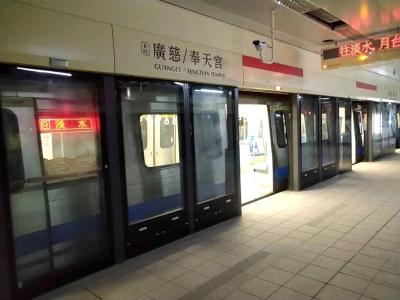
The eastern extension of the Taipei MRT Red Line could begin operations as early as late June, the Taipei Department of Rapid Transit Systems said yesterday. Taipei Rapid Transit Corp said it is considering offering one month of free rides on the new section to mark its opening. Construction progress on the 1.4km extension, which is to run from the current terminal Xiangshan Station to a new eastern terminal, Guangci/Fengtian Temple Station, was 90.6 percent complete by the end of last month, the department said in a report to the Taipei City Council's Transportation Committee. While construction began in October 2016 with an
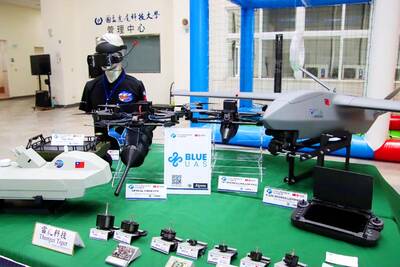
NON-RED SUPPLY: Boosting the nation’s drone industry is becoming increasingly urgent as China’s UAV dominance could become an issue in a crisis, an analyst said Taiwan’s drone exports to Europe grew 41.7-fold from 2024 to last year, with demand from Ukraine’s fight against Russian aggression the most likely driver of growth, a study showed. The Institute for Democracy, Society and Emerging Technology (DSET) in a statement on Wednesday said it found that many of Taiwan’s uncrewed aerial vehicle (UAV) sales were from Poland and the Czech Republic. These countries likely transferred the drones to Ukraine to aid it in its fight against the Russian invasion that started in 2022, it said. Despite the gains, Taiwan is not the dominant drone exporter to these markets, ranking second and fourth


 RSS
RSS