


The New Power Party (NPP) yesterday accused the Democratic Progressive Party (DPP) of failing to deliver on its policy commitments after planned amendments to mining and cross-strait laws failed to pass during this legislative session.
The DPP has been using all sorts of excuses to not move forward with important draft amendments, while requesting a three-week recess from Dec. 18 for its election campaigns, the NPP’s legislative caucus wrote on Facebook yesterday.
“If the DPP cannot deliver on campaign promises it made four years ago, why should it deserve a legislative majority [for another four years]?” it asked.

Photo: Wu Shu-wei, Taipei Times
President Tsai Ing-wen (蔡英文) in July said that DPP legislators would aim to complete draft bills to crack down on Chinese Communist Party (CCP) proxies operating in Taiwan in the current legislative session.
However, DPP caucus whip Ker Chien-ming (柯建銘) on Saturday confirmed that related amendments would not be able to pass the three readings in the legislative session as there was not enough time left.
Meanwhile, hopes of passing draft amendments to the Mining Act (礦業法) in this legislative session were also dashed after a proposal by the NPP to prioritize the bill was blocked by the DPP in a legislative meeting on Friday.
According to legislative laws, bills that do not clear a third reading by the end of a legislative term must be scrapped, with the exception of bills on government budgets.
The way amendments to the act have been handled in this legislative session is disgraceful, NPP Chairman Hsu Yung-ming (徐永明) said.
After filmmaker Chi Po-lin (齊柏林), who had exposed destructive mining operations, died in 2017, there seemed for a while to be a consensus across party lines that the act should be amended, but the DPP later began blocking proposed amendments and the Chinese Nationalist Party (KMT) stopped attending related meetings, he said.
The draft amendments to the act and those aimed at cracking down on CCP proxies were policies the DPP had promised the public, NPP Legislator Huang Kuo-chang (黃國昌) said.
While the DPP said that it could not pass amendments regarding CCP proxies in the current legislative session due to the laws’ far-reaching implications, if it expects people to vote for it again for the same reason, it would be “treating them as idiots,” he said.
Anyone curious about the delay to the draft amendments should first direct their questions to the DPP, KMT caucus whip William Tseng (曾銘宗) said.
Based on legislative records from the past three years, any bill the DPP wanted to pass would definitely pass, he added.
The DPP, which holds a legislative majority, is the primary reason the bills were not passed, People First Party (PFP) caucus whip Lee Hung-chun (李鴻鈞) said.
While the PFP has listed amendments to the act as a legislative priority, it could not influence the DPP’s decision, he added.
In response, Ker urged other parties not to engage in political manipulation.
DPP legislators Chen Ting-fei (陳亭妃) and Chao Tien-lin (趙天麟) said yesterday that, if re-elected, they would propose amendments to address CCP proxies.
Perhaps the January presidential and legislative elections could be considered as a poll on the proposed amendments, Chao said.
If people support the amendments, they would vote for the DPP instead of pro-China parties, he said, adding that if the DPP could win enough legislative seats, it would be able to complete the amendments.
Additional reporting by Huang Hsin-po and Hsieh Chun-lin
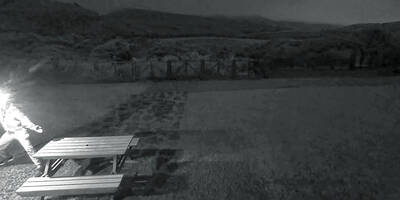
Yangmingshan National Park authorities yesterday urged visitors to respect public spaces and obey the law after a couple was caught on a camera livestream having sex at the park’s Qingtiangang (擎天崗) earlier in the day. The Shilin Police Precinct in Taipei said it has identified a suspect and his vehicle registration number, and would summon him for questioning. The case would be handled in accordance with public indecency charges, it added. The couple entered the park at about 11pm on Thursday and began fooling around by 1am yesterday, the police said, adding that the two were unaware of the park’s all-day live

A former soldier and an active-duty army officer were yesterday indicted for allegedly selling classified military training materials to a Chinese intelligence operative for a total of NT$79,440. The Taipei District Prosecutors’ Office indicted Chen Tai-yin (陳泰尹) and Lee Chun-ta (李俊達) for contravening the National Security Act (國家安全法) and the Anti-Corruption Act (貪污治罪條例). Chen left the military in September 2013 after serving alongside then-staff sergeant Lee, now an army lieutenant, at the 21st Artillery Command of the army’s Sixth Corps from 2011 to 2013, according to the indictment. Chen met a Chinese intelligence operative identified as “Wang” (王) through a friend in November

Minister of Digital Affairs Lin Yi-ching (林宜敬) yesterday cited regulatory issues and national security concerns as an expert said that Taiwan is among the few Asian regions without Starlink. Lin made the remarks on Facebook after funP Innovation Group chief executive officer Nathan Chiu (邱繼弘) on Friday said Taiwan and four other countries in Asia — China, North Korea, Afghanistan and Syria — have no access to Starlink. Starlink has become available in 166 countries worldwide, including Ukraine, Malaysia, the Philippines and Vietnam, in the six years since it became commercial, he said. While China and North Korea block Starlink, Syria is not

The Grand Hotel Taipei has rejected media reports claiming that the hotel had prevented CBS from broadcasting coverage of the Beijing summit between U.S. President Donald Trump and Chinese President Xi Jinping (習近平) on its premises. Media reports alleging that the hotel owner, dissatisfied with CBS’s coverage, prohibited the network from broadcasting political content on the hotel premises, are not true, the hotel said in a statement issued last night. The reports were “inconsistent with how the hotel actually handled the matter,” it said. The hotel said it received a refund request from a


 RSS
RSS