


National Taiwan University (NTU) has clarified that a report that its online education platform, CEIBA, had been hacked was a false alarm, as it was simply an error that occurred when a Department of Information Engineering student was conducting research.
The university on Wednesday reported that its system was hacked and that all students’ scores had been changed to 87.
The suspicion was that the numerals were specifically chosen to mock the university, as the number “87” means “idiot” in Hoklo (commonly known as Taiwanese) Internet lingo.

Photo: Lin Cheng-kung, Taipei Times
The university’s Department of Education Affairs Information Division director Kevin Chang (張良鵬) said on Friday that the department received notice on Wednesday that an engineering student had accidentally changed the scores.
“The student, who was testing theories about information security loopholes, made the changes to what they thought was one entry,” Chang said. “However, the single change affected the entire system.”
Fortunately for the university, the online education platform is an isolated platform for grading purposes and is not connected to the department database, he said.
The department recovered the original grades by restoring a previous backup of the system, he added.
Department director Ting Shih-tung (丁詩同) said the university’s Computer and Information Networking Center will be performing routine check-ups on university Web sites every three months.
The university’s Student Association head Tu Chun-ching (涂峻清) said that the school should be more cautious in terms of information security and that the university should reduce its reliance on information systems, citing an incident at National Sun Yat-sen University (NSYSU) as an example
NSYSU associate professor Chen Chih-chieh (陳至潔) on Facebook on Thursday said that university professors specializing in political science or cross-strait studies had their e-mails monitored — some for up to three years — by someone posing as a school official.
Commenting on the NTU incident, National Chiao Tung University Department of Computer Science professor Lin Ying-dar (林盈達) said that campus Internet systems are more open than networks used in the private sector.
While the student should not have been able to do what they did, NTU should ensure that its servers are compliant with the International Organization for Standardization Information Security Management System 27001, Lin said.
NTU should have annual checkups and detect weak points in its information security defenses, Lin said, adding that NTU should also consider setting aside a few days when lecturers and students would be “white hat” hackers, attacking the system to find weaknesses.

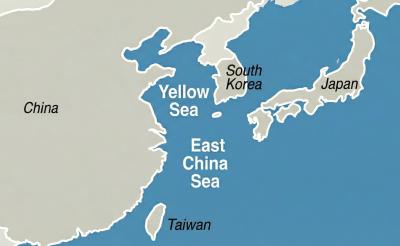
China has reserved offshore airspace in the Yellow Sea and East China Sea from March 27 to May 6, issuing alerts usually used to warn of military exercises, although no such exercises have been announced, the Wall Street Journal (WSJ) reported yesterday. Reserving such a large area for 40 days without explanation is an “unusual step,” as military exercises normally only last a few days, the paper said. These alerts, known as Notice to Air Missions (Notams), “are intended to inform pilots and aviation authorities of temporary airspace hazards or restrictions,” the article said. The airspace reserved in the alert is

More than 6,000 Taiwanese students have participated in exchange programs in China over the past two years, despite the Mainland Affairs Council’s (MAC) “orange light” travel advisory, government records showed. The MAC’s publicly available registry showed that Taiwanese college and university students who went on exchange programs across the Strait numbered 3,592 and 2,966 people respectively. The National Immigration Agency data revealed that 2,296 and 2,551 Chinese students visited Taiwan for study in the same two years. A review of the Web sites of publicly-run universities and colleges showed that Taiwanese higher education institutions continued to recruit students for Chinese educational programs without

A bipartisan group of US senators has introduced a bill to enhance cooperation with Taiwan on drone development and to reduce reliance on supply chains linked to China. The proposed Blue Skies for Taiwan Act of 2026 was introduced by Republican US senators Ted Cruz and John Curtis, and Democratic US senators Jeff Merkley and Andy Kim. The legislation seeks to ease constraints on Taiwan-US cooperation in uncrewed aerial systems (UAS), including dependence on China-sourced components, limited access to capital and regulatory barriers under US export controls, a news release issued by Cruz on Wednesday said. The bill would establish a "Blue UAS
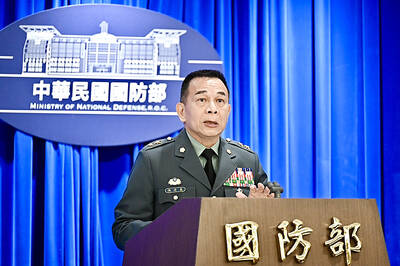
The Republic of China Army Command yesterday relieved Kinmen Defense Battalion commander after authorities indicted the officer on charges connected to using methamphetamine. The Kinmen District Prosecutors’ Office on Wednesday detained Colonel He (何) after the Coast Guard linked him to drug shipments and proceeded to charge him yesterday for using and possessing crystal meth. The man was released on a NT$50,000 bail and banned from leaving Kinmen, the office said. Army Chief of Staff Lieutenant General Chen Chien-yi (陳建義) told a news conference yesterday that He has been removed and another officer is taking over the unit as the acting commander. The military


 RSS
RSS