


Liberty Times (LT): The problem of being unable to find suitable jobs for retired military personnel persists. How does the council intend to assist in that regard?
Feng Shih-kuan (馮世寬): Since the implementation of the program in 1997 to reduce military personnel and subsequent programs, our total armed forces have dropped from 600,000 to 200,000.
However, during the process, we have not redesigned the civil servant pay system for retired military personnel. Retired military personnel can only find work at the Ministry of National Defense or the Veterans Affairs Council (VAC). Yet what of other agencies?
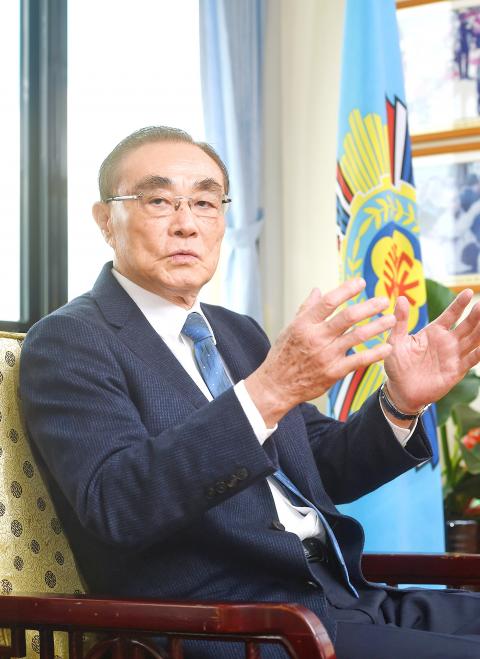
Photo: Fang Pin-chao, Taipei Times
An example of this is the case of a major general who had gone to South America for his military academy, staff college and war college education, and completed his master’s degree and doctorate in Spain.
The Ministry of Foreign Affairs told me that locals in South America said that he spoke perfect Spanish; yet he was forced to retire, as he could not make the promotion to lieutenant general within the given time.
We have no positions to offer these talented and skilled people once they retire.
Do we have military experts in our Ministry of Financial Affairs? Does it not stand to reason that we should have them, as we are developing indigenous weapons programs?
It also stands to reason that the defense ministry and companies should not be the only ones concerned with the establishment of a supply chain that would foster our aerospace industry.
The nation has 15,000 people retiring from the military every year. Of these retirees, the council can only employ 8,000 due to its limited scope.
Private firms or other government agencies should lend a hand.
Why cannot retired military personnel be employed at the Ministry of the Interior, the Ministry of Transportation and Communications or the Ministry of Education?
By the time someone is promoted to a full colonel, they must have developed some leadership skills and other specialty know-how. It is just that we do not have anywhere for them to go. I see no reason that they should not find employment in our society.
LT: How could a sense of honor be fostered within the military, while changing the public’s perception to give military personnel the respect they deserve?
Feng: Let me use a few examples to illustrate a point.
About three months after I was appointed to the position of defense minister, the Singapore Armed Forces carried out a scheduled exercise with the Taiwanese military.
I asked the units why they chose the particular area they did to park their tanks. When they said it was for security purposes, I told them the tank was purchased with taxpayers’ dollars and there was no security in question.
Later when the exercise ended at about noon, they told me they were not returning to the base until midnight. I told the company commander to take the unit back to the base by 4pm.
When I then stood at the base entrance watching the armored vehicles return, I noticed how they had drawn the interest of civilians nearby. They were filming or taking photographs of the vehicles.
That gave me an idea and later when Taipei hosted the 2017 Universiade, I ordered armored vehicles to drive down the Zhongxiao E Road when in transit during an anti-terrorism exercise.
The more people who watch the vehicles go by, the more we can proudly claim that we have discipline and good equipment, as well as technique. That in itself gives the military’s image a health boost in the public’s eyes.
If we moved military exercises into cities and townships, it would boost to the public’s opinion of the military even more.
For example, during the Han Kuang Exercises in Penghu in 2017, our officers told the civilians that we had to remove certain parts of buildings, as we had to install military hardware, but promised that we would rebuild the parts taken down with superior materials.
This likely helped build civilians’ trust in the military.
Additionally, the refitting, moving, or taking down of civilian properties should be handled by our reserves, giving less cause for the civilians affected to complain about drills held in city areas.
I truly believe the public and the military need to have mutual trust and positive interactions.
LT: The work of the council covers areas including medical care, education assistance, home care, etc. What do you want to prioritize as minister?
Feng: After I assumed the post, I visited all the Veteran Service Offices except the ones in Penghu, Kinmen and Chiayi counties.
I have confidence in the home care services we roll out, but the medical care part raises some concerns, as I find the medical staff at these offices not quite up to my standard. The medical staff should be registered nurses, but the ones I encountered only received 90 hours of training; still, it is better than nothing. The offices are all equipped with sufficient staff and facilities, but there is still room for growth.
Veterans Service Offices in rural areas lack doctors, nurses and rehabilitation specialists. What do we do when veterans at council-affiliated retirement homes get sick? Yes, we can have an ambulance take them to one of the Veterans General Hospital branches, but who can guarantee their safety on the bumpy trip to the hospital?
If we can handle mild injuries and illnesses, for example, the common flu or applying medicine for scrapes or bruises, without taking the trouble to send patients to hospital, then would it also not be a blessing for the veterans? That is why the medical capabilities and facility services must be improved.
Also, I visited the 12 branches under the Taipei, Taichung and Kaohsiung Veterans General Hospitals and encouraged them to apply for the medical equipment needed to improve patient care. It is also important to establish a system that tracks patients’ conditions after their checkups and makes them aware of the benefits of an annual health examination. This is not business as some might call it, but proper care.
As those branches need more facilities and medical staff, I have come up with a project called “pyramid,” which builds a supply chain that incorporates veterans homes, Veterans General Hospital branches, and Veterans General Hospitals. The Taipei, Taichung and Kaohsiung Veterans General Hospitals must supply their subordinate branches with sufficient equipment, personnel and bonuses to train doctors, nurses and rehabilitation specialists. Like a business corporation, once there is an established system in which personnel and bonus incentives are offered, competitiveness would surely increase.
LT: In recent years, the council has participated in exchanges with veterans groups in other countries. Are there any opportunities to deepen the relationships?
Feng: We have reported to the Legislative Yuan the exchange we have had with the US, but the scope of our hard work goes beyond that.
For example, we have had discussions with a group in another country about an exchange program for personnel and liaison officers.
However, the number of people entitled to diplomat salaries given by the Ministry of Foreign Affairs is limited by law, which would be an obstacle for us if it is not amended.
The former Soviet Union, Poland, the Czech Republic and some other eastern European countries assisted us during World War II in our battle against Japan. The council should collaborate with the army, navy and air force to investigate the historical connections we have with those countries.
In that same time period, our military also engaged with India and Myanmar [then Burma] when we conducted training there, which could serve as a niche for us to explore further bilateral exchanges.
Give us more time and space, and we will strive to do as much as possible.
Translated by staff writers Jake Chung and Dennis Xie
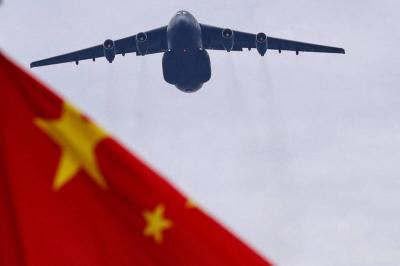
Beijing could eventually see a full amphibious invasion of Taiwan as the only "prudent" way to bring about unification, the US Department of Defense said in a newly released annual report to Congress. The Pentagon's "Annual Report to Congress: Military and Security Developments Involving the People's Republic of China 2025," was in many ways similar to last year’s report but reorganized the analysis of the options China has to take over Taiwan. Generally, according to the report, Chinese leaders view the People's Liberation Army's (PLA) capabilities for a Taiwan campaign as improving, but they remain uncertain about its readiness to successfully seize

Taiwan is getting a day off on Christmas for the first time in 25 years. The change comes after opposition parties passed a law earlier this year to add or restore five public holidays, including Constitution Day, which falls on today, Dec. 25. The day marks the 1947 adoption of the constitution of the Republic of China, as the government in Taipei is formally known. Back then the Chinese Nationalist Party (KMT) governed China from Nanjing. When the KMT, now an opposition party in Taiwan, passed the legislation on holidays, it said that they would help “commemorate the history of national development.” That
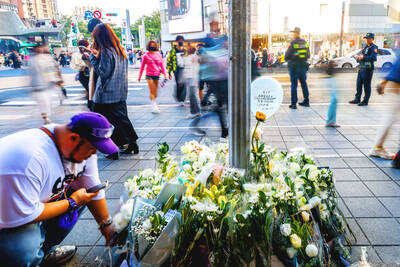
HORROR STORIES: One victim recounted not realizing they had been stabbed and seeing people bleeding, while another recalled breaking down in tears after fleeing A man on Friday died after he tried to fight the knife-wielding suspect who went on a stabbing spree near two of Taipei’s busiest metro stations, Taipei Mayor Chiang Wan-an (蔣萬安) said. The 57-year-old man, identified by his family name, Yu (余), encountered the suspect at Exit M7 of Taipei Main Station and immediately tried to stop him, but was fatally wounded and later died, Chiang said, calling the incident “heartbreaking.” Yu’s family would receive at least NT$5 million (US$158,584) in compensation through the Taipei Rapid Transit Corp’s (TRTC) insurance coverage, he said after convening an emergency security response meeting yesterday morning. National

Taiwan has overtaken South Korea this year in per capita income for the first time in 23 years, IMF data showed. Per capita income is a nation’s GDP divided by the total population, used to compare average wealth levels across countries. Taiwan also beat Japan this year on per capita income, after surpassing it for the first time last year, US magazine Newsweek reported yesterday. Across Asia, Taiwan ranked fourth for per capita income at US$37,827 this year due to sustained economic growth, the report said. In the top three spots were Singapore, Macau and Hong Kong, it said. South


 RSS
RSS