


New Power Party (NPP) Legislator Huang Kuo-chang (黃國昌) yesterday said that he is not interested in running for president after the party on Wednesday announced that it is drafting regulations to enlist him in next year’s presidential election.
NPP Secretary-General Wu Pei-yun (吳佩芸) said in a statement on Wednesday that the party is drafting regulations for nominating its presidential candidate and would prioritize enlisting Huang in the presidential election.
Huang said that he knew nothing about the matter, adding that since stepping down as party chairman in February, he is no longer a member of the decisionmaking committee.
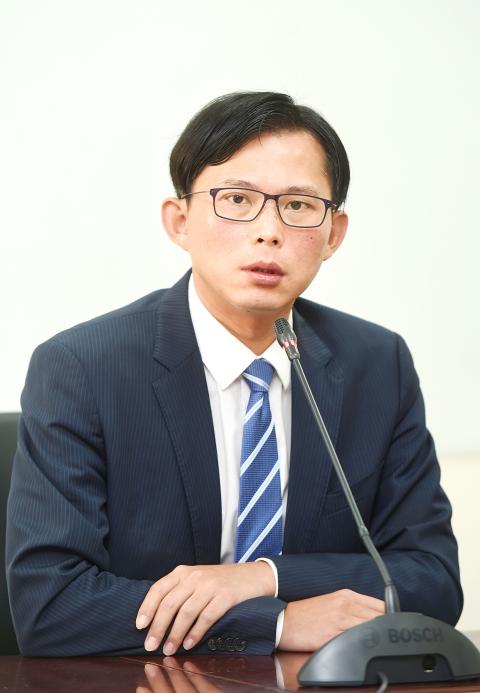
Photo: Fang Pin-chao, Taipei Times
Asked if he would consider running for president, Huang said: “I am not interested [in running] and that is not on my to-do list.”
He reiterated that his current priorities are to complete his job as a legislator and promote reforms in Taiwan, he said.
Wu had made the announcement before the proposal was formally discussed at the NPP decisionmaking committee, Miaoli County Councilor Tseng Wen-hsueh (曾玟學) said on Facebook yesterday.
Despite being a member of the committee, he, like Huang, had heard nothing about the matter, Tseng said.
Party regulations mandate that the drafting of nomination regulations must be initiated by the nomination panel and confirmed by the decisionmaking committee, he said, adding that it should not be initiated by the secretary-general.
He had just submitted to the committee an official proposal to discuss whether the NPP should nominate its own presidential candidate next year, Tseng said.
“The party must first reach a conclusion on that question, instead of engaging in meaningless political manipulations,” he said.
Committee member Hsiao Hsin-cheng (蕭新晟) also criticized the party for bypassing the committee in the drafting of presidential nomination regulations.
“When members of the decisionmaking committee are excluded from the party’s decisionmaking process, we might as well quit,” he said.
The lack of transparency in the party could cause members to leave, he added.
NPP Chairman Hsu Yung-ming (徐永明) is insistent on nominating Huang, but the latter is apparently unwilling, he said.
The drafting of nomination rules is simply part of the process to build a more complete party system for elections, Wu said.
“We can draft the regulations first and think about possible candidates later,” she added.
While Huang appears to be against the idea, Wu said they would communicate with the former chairman on the matter later.
Hsu last week said that if the NPP is to nominate its own presidential candidate next year, party headquarters would consider drafting Huang.
Hsu also said that the idea was not yet a formal proposal and that Huang would have to be persuaded into accepting the arrangement.
Additional reporting by CNA
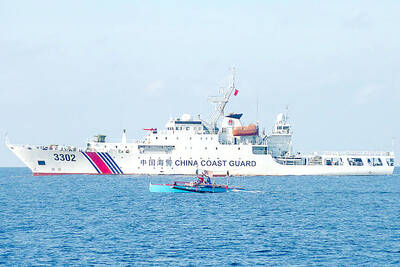
EXPANSIONIST: China deploys an average of 40 to 50 warships and coast guard vessels daily in the South China Sea, despite pledges not to militarize the region, an official said China is attempting to expand its influence across the First Island Chain and increase pressure on Japan by sending coast guard vessels into waters off of Taiwan under the pretext of maritime negotiations with Japan and the Philippines, a national security official said yesterday. China’s recent actions in the waters east of Taiwan and Japan and the Philippines’ exclusive economic zones (EEZ) are attempts to establish dominance in First Island Chain waters, said the official who declined to be named, adding that this is “expansion disguised as law enforcement.” Framing China’s actions solely as a cross-strait issue is a serious misjudgment that
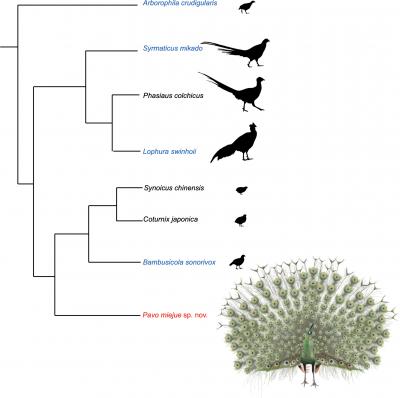
Through analyzing fossil evidence, a research team at National Taiwan University (NTU) discovered the largest endemic bird to have lived in Taiwan, naming it Pavo miejue, or extinct peafowl (滅絕孔雀). The Mikado pheasant, which is printed on the back of the NT$1,000 bank note, was previously believed to be the biggest endemic bird to Taiwan. The research team’s findings suggest that Pavo miejue lived during the Pleistocene epoch tens of thousands of years ago. It is the first endemic extinct bird species discovered and formally named in Taiwan. The study was coauthored by NTU Institute of Ecology and Evolutionary Biology professor Tsai Cheng-hsiu (蔡政修),
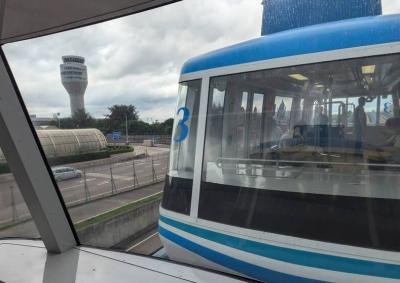
Taiwan Taoyuan International Airport is to suspend its automated Skytrain service connecting Terminal 1 and Terminal 2 starting on July 1 to facilitate connection works for the upcoming Terminal 3, the airport operator said today. Passengers and staff who need to travel between the two terminals after the suspension can instead use the Taoyuan MRT or the airport's 24-hour shuttle bus service, Taoyuan International Airport Corp said. The Taoyuan MRT Airport Line directly links the two terminals, while the shuttle buses are to operate around the clock, the company added. The Skytrain provides free transportation between the airport’s two terminals for travelers and
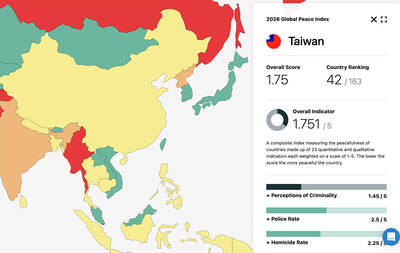
Taiwan ranked 42nd in terms of peacefulness among 163 countries, down five places from last year, according to this year’s Global Peace Index. With an overall score of 1.751, Taiwan dropped from 37th last year, the report published by the global Institute for Economics and Peace showed. The overall score measures a country’s level of peacefulness using 23 quantitative and qualitative indicators across three domains — ongoing domestic and international conflict, societal safety and security, and militarization. While Taiwan ranked 42nd worldwide, it was listed in ninth place among the 19 Asian-Pacific countries in the report, after New Zealand, Singapore, Japan, Malaysia,


 RSS
RSS