


Children and adolescents should rest or drink water instead of energy drinks when they are tired, as long-term or excessive intake of energy drinks can have negative effects on intellectual development, the John Tung Foundation said yesterday.
The foundation published a survey conducted last month on energy drink consumption by those aged 13 to 22 that showed that about 60 percent of respondents have tried energy drinks, but 65 percent of them did not check their ingredients.
Common reasons for consuming energy drinks included for refreshment, to ease fatigue, for the taste, to replenish energy during or after exercise and to improve sports performance, the survey showed.
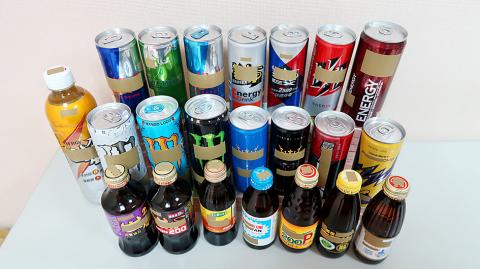
Photo courtesy of the John Tung Foundation
The foundation conducted another survey in July and last month that examined the ingredients of 24 energy drinks sold at convenience stores, supermarkets and hypermarkets.
It showed that all 24 contained caffeine, while common ingredients included taurine, legal stimulants such as guarana and B vitamins.
The drinks are commonly carbonated, fruit-flavored and sweetened with sugar or artificial substances such as sucralose, acesulfame potassium or erythritol, it said.
Hsu Hui-yu (許惠玉), head of the foundation’s food nutrition section, said that caffeine is a central nervous system stimulant found in coffee beans, tea leaves, cocoa beans, guarana, yerba mate and other natural sources, but long-term intake can affect intellectual development.
It can also reduce sleep quality, cause heart palpitations, anxiety and other negative effects in children and teens, Hsu said, adding that Health Canada recommends that adolescents limit caffeine consumption to no more than 2.5 milligrams per kilogram of body weight.
The American Heart Association recommends that those aged 18 or younger should consume less than 25g of added sugar per day, but the foundation found that 11 of the energy drinks that it surveyed each had more than 25g in one can or bottle, she said.
Excessive intake of added sugar can lead to increased risks of tooth decay, obesity, a weakened immune system, irritability, changes in activity levels, increased blood pressure, cardiovascular disease and other diseases, the foundation said.
The American Academy of Pediatrics says that children and adolescents under 19 years old should not consume energy drinks, while some chain supermarkets and public sports centers in the UK have prohibited the sale of energy drinks to children and teens under 16, the foundation said.
People should drink water and rest — stretch or take a nap — when they feel tired and should also exercise regularly, Hsu said.


Kenting National Park service technician Yang Jien-fon (楊政峰) won a silver award in World Grand Prix Photography Awards Spring Season for his photograph of two male rat snakes intertwined in combat. Yang’s colleagues at Kenting National Park said he is a master of nature photography who has been held back by his job in civil service. The awards accept entries in all four seasons across six categories: architectural and urban photography, black-and-white and fine art photography, commercial and fashion photography, documentary and people photography, nature and experimental photography, and mobile photography. Awards are ranked according to scores and divided into platinum, gold and

More than half of the bamboo vipers captured in Tainan in the past few years were found in the city’s Sinhua District (新化), while other districts had smaller catches or none at all. Every year, Tainan captures about 6,000 snakes which have made their way into people’s homes. Of the six major venomous snakes in Taiwan, the cobra, the many-banded krait, the brown-spotted pit viper and the bamboo viper are the most frequently captured. The high concentration of bamboo vipers captured in Sinhua District is puzzling. Tainan Agriculture Bureau Forestry and Nature Conservation Division head Chu Chien-ming (朱健明) earlier this week said that the
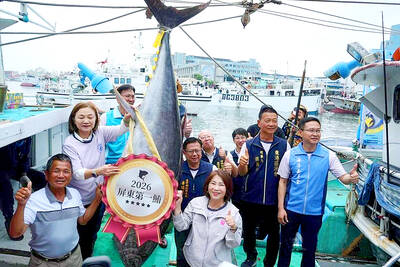
The first bluefin tuna of the season, brought to shore in Pingtung County and weighing 190kg, was yesterday auctioned for NT$10,600 (US$333.5) per kilogram, setting a record high for the local market. The auction was held at the fish market in Donggang Fishing Harbor, where the Siaoliouciou Island-registered fishing vessel Fu Yu Ching No. 2 delivered the “Pingtung First Tuna” it had caught for bidding. Bidding was intense, and the tuna was ultimately jointly purchased by a local restaurant and a local company for NT$10,600 per kilogram — NT$300 ,more than last year — for a total of NT$2.014 million. The 67-year-old skipper
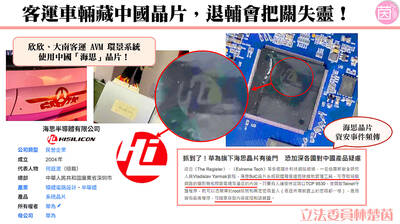
BREACH OF CONTRACT: The bus operators would seek compensation and have demanded that the manufacturer replace the chips with ones that meet regulations Two bus operators found to be using buses with China-made chips are to demand that the original manufacturers replace the systems and provide compensation for breach of contract, the Veterans Affairs Council said yesterday. Democratic Progressive Party Legislator Michelle Lin (林楚茵) yesterday said that Da Nan Bus Co and Shin-Shin Bus Co Ltd have fielded a total of 82 buses that are using Chinese chips. The bus models were made by Tron-E, while the systems provider was CYE Electronics, Lin said. Lin alleged that the buses were using chips manufactured by Huawei subsidiary HiSilicon Co, which presents a national security risk if the


 RSS
RSS