


National Taiwan University professor Cheng Hsiu-ling (鄭秀玲) is to replace New Power Party (NPP) Legislator Kawlo Iyun Pacidal after an external arbitration committee yesterday upheld the party’s decision to revoke Kawlo’s membership, the NPP said.
The party is to file an application with the Central Election Commission to replace Kawlo as soon as possible, so that Cheng can participate in the current legislative session, which began earlier this week, NPP spokesman Chen Chih-ming (陳志明) said.
Kawlo can take legal action if she disagrees with the committee’s conclusion, he added.
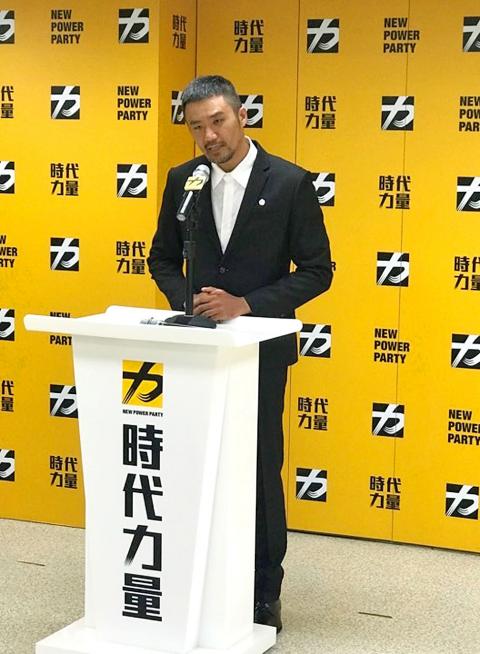
Photo: Peng Wan-hsin, Taipei Times
The NPP’s disciplinary committee on Aug. 6 revoked Kawlo’s membership for tarnishing the party’s image, after Green Party Taiwan found that two non-governmental organizations run by a former assistant of Kawlo had received NT$4 million (US$127,259) in subsidies from the Ministry of Economic Affairs, which the Amis legislator was supervising.
After Kawlo on Aug. 12 filed a complaint against the party’s decision, the case was delivered to an external arbitration committee for review according to party regulations.
“I believe the party decided to find me guilty before properly investigating the case, either because someone in the party hates me or because of a political feud,” she told a news conference at the Legislative Yuan before the external committee announced its decision.
After the NPP announced that it is to apply to replace her with Cheng, Kawlo reiterated that she believes the decision was based on political calculations.
She has not done anything illegal and would not allow the party to continue humiliating her, she said on Facebook.
“I am not calculative in elections and political feuds. I only serve the people,” she wrote.

NATIONAL SECURITY: Authorities are working to confirm the identities of the military personnel involved and investigating possible illegal conduct and regulatory violations Authorities are probing possible national security implications after Kinmen police and immigration officers on Sunday found a Chinese woman allegedly posing as a tourist while engaging in prostitution involving more than 10 military personnel. The woman, surnamed Chen (陳), has since been deported, authorities said, adding that investigators are still working to confirm the identities of those implicated, as the records only listed code names and aliases. The case stemmed from a report received by the Kinmen District Prosecutors’ Office on Friday last week from the Jinhu Precinct of the Kinmen County Police Bureau. On Sunday, police, along with the National Immigration

GLOBALGIVING: ‘ Caving to external pressure is not acceptable for an organization that has cultivated justice reform and human rights for 30 years,’ one NGO said A slew of non-government organizations (NGOs) have withdrawn from the GlobalGiving fundraising platform after it announced it would use “Chinese Taipei” instead of “Taiwan” from next month. The Taiwan Good Rice Association wrote on Facebook on Friday that it was informed on April 28 via a teleconference call of the change, which was made because the platform wanted to operate in China. Taiwan Good Rice is to terminate all cooperative relationships with GlobalGiving in response to the platform’s “unilateral and non-negotiable” decision to remove references to Taiwan, the NGO said. “Taiwan is in the official name of Taiwan Good Rice Association and the
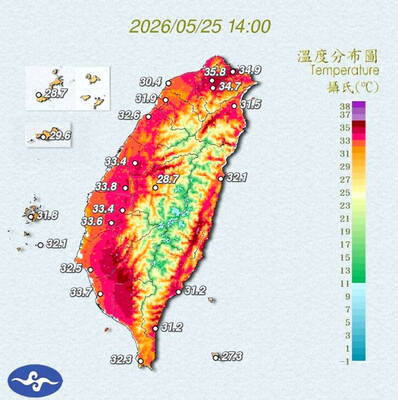
STAY COOL: The HPA recommended that people stay hydrated, use air-conditioning or fans while indoors, wear loose-fitting clothes and walk in the shade while outdoors Employers must implement measures such as installing cooling equipment, and providing drinking water and rest breaks for outdoor workers starting from Monday next week, the Taipei Department of Labor said on Sunday. Employers who fail to comply could face fines of NT$30,000 to NT$300,000 under the Occupational Safety and Health Act (職業安全衛生法), the department said. Businesses in Taipei employing fewer than 100 workers, as well as registered self-employed workers with labor insurance coverage, could receive on-site assessments and guidance from occupational safety consultants to help them apply for central government subsidies to implement or improve heat-protection measures, it said. Under the Ministry of

Chinese Nationalist Party (KMT) Chairwoman Cheng Li-wun (鄭麗文) yesterday briefed her party’s Central Standing Committee regarding her scheduled visit to the US between Monday next week and June 16, saying that her purpose would be to persuade the US that the Republic of China (ROC) Constitution was a “one China” constitution that would foster stable and peaceful cross-strait relations. The ROC Constitution is the most important defense for all Taiwanese citizens, as it upholds our democracy and has contributed to our robust economy, which aligns with international and US interests, she said. “We would not be troublemakers and drag the US under,”


 RSS
RSS