


Control Yuan members Tien Chiu-chin (田秋堇) and Tsai Chung-yi (蔡崇義) have urged the government to tighten regulations governing the use of vegetable oils in chocolates, and establish safety limits for the use of coconut oil in food products, and the agency said it would review such regulations.
Regulations published by the Ministry of Health and Welfare in June 2016 require the packaging of milk, dark and white chocolate products to list their quantity of dry cocoa solids, non-fat cocoa solids, cocoa fat and related information, but they do not apply to chocolate products containing more than 90 percent of filling or brown chocolates, contain as little as 1 percent cocoa and are manufactured using large amounts of coconut oil, Tien and Tsai said.
Given the way the regulations are worded, chocolate products need only contain a small amount of rice cracker, hazelnut or raisins to be considered to contain filling and therefore be exempt from the rules about cocoa content, they said.
This is a violation of consumers’ right to know what they are consuming, they said.
“The Codex Alimentarius stipulates that after additives are deducted, a chocolate product’s vegetable oil content should not account for more than 5 percent of its total content,” they said.
Products sold in Taiwan already exceeded this limit, and there is no upper limit on what percentage of a product’s content could be comprised of additives, Tien and Tsai said.
“Food and Drug Administration [FDA] inspections do not check for the amount of vegetable oil in chocolate products, or how much cocoa fat alternatives are used,” they said.
They also urged the ministry to set limits on the amount of glycidyl fatty acid esters from coconut oil in food products.
Heating coconut oil above 200?C causes the formation of glycidyl fatty acid esters, which are contaminants that are potentially cancinogenic in humans when broken down by the digestive system.
The European Food Safety Authority last year set a limit of 1mg of glycidyl fatty acid esters per kilogram of food product, but the ministry has yet to follow suit, Tien and Tsai said.
FDA Northern Center official Wei Jen-ting (魏任廷) on Sunday said the ministry’s 2016 regulations covering dark, milk and white chocolate products were largely based on international regulations.
The FDA would discuss the regulations, taking into account the Control Yuan members’ findings, he said.
The FDA would also look at regulations limiting use of coconut oil, based on the rules set last year by the EU, he said.
The Codex Alimentarius is an international collection of standards, guidelines and codes of practice adopted by the Codex Alimentarius Commission to protect consumer health and promote fair practices in food trade.
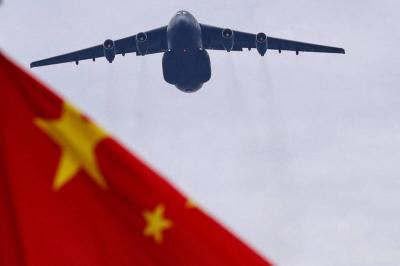
Beijing could eventually see a full amphibious invasion of Taiwan as the only "prudent" way to bring about unification, the US Department of Defense said in a newly released annual report to Congress. The Pentagon's "Annual Report to Congress: Military and Security Developments Involving the People's Republic of China 2025," was in many ways similar to last year’s report but reorganized the analysis of the options China has to take over Taiwan. Generally, according to the report, Chinese leaders view the People's Liberation Army's (PLA) capabilities for a Taiwan campaign as improving, but they remain uncertain about its readiness to successfully seize

Taiwan is getting a day off on Christmas for the first time in 25 years. The change comes after opposition parties passed a law earlier this year to add or restore five public holidays, including Constitution Day, which falls on today, Dec. 25. The day marks the 1947 adoption of the constitution of the Republic of China, as the government in Taipei is formally known. Back then the Chinese Nationalist Party (KMT) governed China from Nanjing. When the KMT, now an opposition party in Taiwan, passed the legislation on holidays, it said that they would help “commemorate the history of national development.” That

Taiwan has overtaken South Korea this year in per capita income for the first time in 23 years, IMF data showed. Per capita income is a nation’s GDP divided by the total population, used to compare average wealth levels across countries. Taiwan also beat Japan this year on per capita income, after surpassing it for the first time last year, US magazine Newsweek reported yesterday. Across Asia, Taiwan ranked fourth for per capita income at US$37,827 this year due to sustained economic growth, the report said. In the top three spots were Singapore, Macau and Hong Kong, it said. South

Snow fell on Yushan (Jade Mountain, 玉山) yesterday morning as a continental cold air mass sent temperatures below freezing on Taiwan’s tallest peak, the Central Weather Administration (CWA) said. Snowflakes were seen on Yushan’s north peak from 6:28am to 6:38am, but they did not fully cover the ground and no accumulation was recorded, the CWA said. As of 7:42am, the lowest temperature recorded across Taiwan was minus-5.5°C at Yushan’s Fengkou observatory and minus-4.7°C at the Yushan observatory, CWA data showed. On Hehuanshan (合歡山) in Nantou County, a low of 1.3°C was recorded at 6:39pm, when ice pellets fell at Songsyue Lodge (松雪樓), a


 RSS
RSS