


The Ministry of Transportation and Communications yesterday expressed reservations about using vehicle age as a standard to remove tour buses from the roads, saying that it is not the only factor affecting transportation safety.
Tour bus safety has become a top concern following fatal incidents involving tour buses, including a Feb. 14, 2017, crash that killed 33 people and injured 11 on the Chiang Wei-shui Memorial Freeway (Freeway No. 5) in Taipei’s Muzha (木柵) area.
At a meeting of the legislature’s Transportation Committee yesterday, lawmakers proposed amendments to the Highway Act (公路法) to enhance tour bus safety.
Photo: Cheng Wei-chi, Taipei Times
Chinese Nationalist Party (KMT) Legislator John Wu (吳志揚) said that the ministry should set up a mechanism that looks at vehicle age, mileage, maintenance records and other criteria to determine whether a bus should be removed from service.
People First Party Legislator Lee Hung-chun (李鴻鈞) said that tour bus operators given C or D grades for performance should be ordered to address problems or be forced to partially cease operations.
The ministry could also cancel business licenses if operators are found to have overworked drivers, Lee said.
The ministry said that it does not use vehicle age as a criterion to manage tour buses, because it is not the only factor that affects safety, which has more to do with maintenance, driver behavior and frequency of bus use.
Current regulations are already stricter than what the legislators proposed, it said.
Democratic Progressive Party Legislator Yeh Yi-jin (葉宜津) said that the nation has 27 tour bus operators whose performance has been rated below C in two or more consecutive evaluations.
“Does the Directorate-General of Highways [DGH] have a mechanism to suspend their services?” Yeh asked.
Operators that voluntarily install safety equipment on buses should pay a lower business license tax, she added.
Tour bus operators receiving a C or D grade does mean that they have failed an evaluation, the DGH said, adding that the evaluations focus on service quality.
They would be fined immediately and asked to address the issues within a designated period if they are found to have breached the regulations, it said.
The DGH increases inspections on such operators, it said.
The Tourism Bureau has banned operators with a C or D rating from accepting group bookings, the DGH said.
It has canceled business licenses for four tour bus operators, while five have been asked to partially suspend operations, it said.
Although it is the Ministry of Labor’s responsibility to determine whether an operator has overworked its drivers, if an operator did not fulfill its obligations in managing its fleet, the DGH would look at canceling its business license and revoking its tour bus licenses, the agency said.

Taiwanese can file complaints with the Tourism Administration to report travel agencies if their activities caused termination of a person’s citizenship, Mainland Affairs Council Minister Chiu Chui-cheng (邱垂正) said yesterday, after a podcaster highlighted a case in which a person’s citizenship was canceled for receiving a single-use Chinese passport to enter Russia. The council is aware of incidents in which people who signed up through Chinese travel agencies for tours of Russia were told they could obtain Russian visas and fast-track border clearance, Chiu told reporters on the sidelines of an event in Taipei. However, the travel agencies actually applied

New measures aimed at making Taiwan more attractive to foreign professionals came into effect this month, the National Development Council said yesterday. Among the changes, international students at Taiwanese universities would be able to work in Taiwan without a work permit in the two years after they graduate, explainer materials provided by the council said. In addition, foreign nationals who graduated from one of the world’s top 200 universities within the past five years can also apply for a two-year open work permit. Previously, those graduates would have needed to apply for a work permit using point-based criteria or have a Taiwanese company
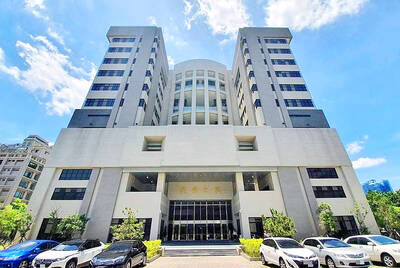
The Shilin District Prosecutors’ Office yesterday indicted two Taiwanese and issued a wanted notice for Pete Liu (劉作虎), founder of Shenzhen-based smartphone manufacturer OnePlus Technology Co (萬普拉斯科技), for allegedly contravening the Act Governing Relations Between the People of the Taiwan Area and the Mainland Area (臺灣地區與大陸地區人民關係條例) by poaching 70 engineers in Taiwan. Liu allegedly traveled to Taiwan at the end of 2014 and met with a Taiwanese man surnamed Lin (林) to discuss establishing a mobile software research and development (R&D) team in Taiwan, prosecutors said. Without approval from the government, Lin, following Liu’s instructions, recruited more than 70 software

Taiwanese singer Jay Chou (周杰倫) plans to take to the courts of the Australian Open for the first time as a competitor in the high-stakes 1 Point Slam. The Australian Open yesterday afternoon announced the news on its official Instagram account, welcoming Chou — who celebrates his 47th birthday on Sunday — to the star-studded lineup of the tournament’s signature warm-up event. “From being the King of Mandarin Pop filling stadiums with his music to being Kato from The Green Hornet and now shifting focus to being a dedicated tennis player — welcome @jaychou to the 1 Point Slam and #AusOpen,” the


 RSS
RSS