


Musician and actress Ouyang Nana (歐陽娜娜) yesterday reignited public criticism for writing on a Chinese microblogging account: “Let our motherland be proud of us” after a post on Thursday that said: “I am proud to be Chinese.”
Ouyang reposted yesterday’s comment on Facebook, prompting more than 75,000 mostly critical comments and 4,000 shares.
The Chinese-language China Times on Friday published a story quoting Ouyang in an interview in China as encouraging Taiwanese to “bravely express themselves, unite and let the “motherland” be proud of us.”

Photo: Chen Yi-chuan, Taipei Times
The newspaper quoted her as saying that whether she were from Hong Kong, Beijing, Taiwan or anywhere else, she would still be “Chinese,” and this was her true feeling and came from the bottom of her heart.
The 18-year-old might have been pressed into making the statements in response to accusations from Chinese Internet commenters calling her a “Taiwanese separatist,” Chinese-language media reported.
The accusations might be rooted in a statement her father, Chinese Nationalist Party (KMT) spokesman Ouyang Lung (歐陽龍), made three years ago about Taiwan being a “country,” reports said.
At the time, Ouyang Lung was also accused by Chinese netizens of being a Taiwanese separatist.
After Ouyang Nana’s post on Thursday sparked controversy, Ouyang Lung said that his daughter was a “sacrificial victim of strained cross-strait relations,” and that she was not in the wrong for calling herself a “proud Chinese.”
His daughter has had her films dropped from Chinese television stations in recent months, which he said was probably because of the criticism of her.
Accusations against himself were also baseless, as he has always supported the so-called “1992 consensus,” Ouyang Lung said.
The “1992 consensus” is a term former Mainland Affairs Council chairman Su Chi (蘇起) in 2006 admitted making up in 2000 that refers to a tacit understanding between the KMT and the Chinese Communist Party that both sides of the Taiwan Strait acknowledge there is “one China,” with each side having its own interpretation of what “China” means.
Comments on Professional Technology Temple (PTT) — Taiwan’s largest academic online bulletin board — have mostly criticized Ouyang Nana.
One person wrote: “Have you gained your Chinese citizenship yet?” while another said: “This is absolutely not a performance. It’s quite frightening how powerful money is!”
One commenter claiming wrote that despite being ethnically Chinese, they were first and foremost Malaysian.
“If you ask me where I come from, I will say I’m from Malaysia, and I’m proud of that,” they wrote. “My identity is based on where I was born, where I grew up, where the food I eat is from and where my accent developed.”

Taiwanese can file complaints with the Tourism Administration to report travel agencies if their activities caused termination of a person’s citizenship, Mainland Affairs Council Minister Chiu Chui-cheng (邱垂正) said yesterday, after a podcaster highlighted a case in which a person’s citizenship was canceled for receiving a single-use Chinese passport to enter Russia. The council is aware of incidents in which people who signed up through Chinese travel agencies for tours of Russia were told they could obtain Russian visas and fast-track border clearance, Chiu told reporters on the sidelines of an event in Taipei. However, the travel agencies actually applied
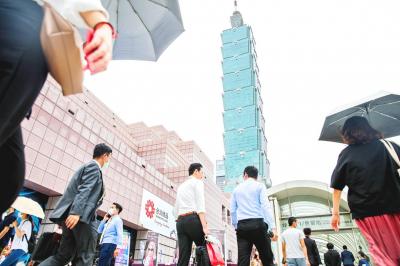
Japanese footwear brand Onitsuka Tiger today issued a public apology and said it has suspended an employee amid allegations that the staff member discriminated against a Vietnamese customer at its Taipei 101 store. Posting on the social media platform Threads yesterday, a user said that an employee at the store said that “those shoes are very expensive” when her friend, who is a migrant worker from Vietnam, asked for assistance. The employee then ignored her until she asked again, to which she replied: "We don't have a size 37." The post had amassed nearly 26,000 likes and 916 comments as of this

New measures aimed at making Taiwan more attractive to foreign professionals came into effect this month, the National Development Council said yesterday. Among the changes, international students at Taiwanese universities would be able to work in Taiwan without a work permit in the two years after they graduate, explainer materials provided by the council said. In addition, foreign nationals who graduated from one of the world’s top 200 universities within the past five years can also apply for a two-year open work permit. Previously, those graduates would have needed to apply for a work permit using point-based criteria or have a Taiwanese company
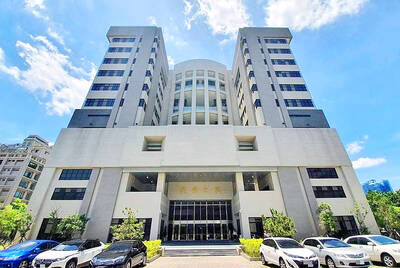
The Shilin District Prosecutors’ Office yesterday indicted two Taiwanese and issued a wanted notice for Pete Liu (劉作虎), founder of Shenzhen-based smartphone manufacturer OnePlus Technology Co (萬普拉斯科技), for allegedly contravening the Act Governing Relations Between the People of the Taiwan Area and the Mainland Area (臺灣地區與大陸地區人民關係條例) by poaching 70 engineers in Taiwan. Liu allegedly traveled to Taiwan at the end of 2014 and met with a Taiwanese man surnamed Lin (林) to discuss establishing a mobile software research and development (R&D) team in Taiwan, prosecutors said. Without approval from the government, Lin, following Liu’s instructions, recruited more than 70 software


 RSS
RSS