


Local industries should upgrade their production techniques to curb carbon emissions, and the nation should phase out nuclear power to avoid leaving more nuclear waste to future generations, former Academia Sinica president Lee Yuan-tseh (李遠哲) told an energy conference in Taipei.
The conference was hosted by the Taiwan Environmental Protection Union (TEPU) and other anti-nuclear groups, following another energy forum on Sunday organized by former president Ma Ying-jeou (馬英九) and former premier Jiang Yi-huah (江宜樺) that called for maintaining nuclear power.
Advocates of nuclear power have gained more momentum after most people voted in favor of abolishing the “nuclear-free homeland by 2025” policy in a referendum on Nov. 24 last year.
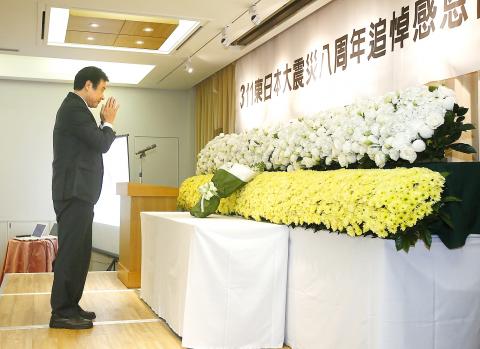
Photo: Fang Pin-chao, Taipei Times
Attendees — including Democratic Progressive Party Legislator-at-large Chen Man-li (陳曼麗) and New Power Party Legislator Huang Kuo-chang (黃國昌) — first prayed for victims of the Fukushima Dai-ichi nuclear power plant disaster on March 11, 2011.
Phasing out nuclear power is not only a security concern, but would also curb nuclear waste, said Lee, Taiwan’s first Nobel laureate in chemistry in 1986, adding that the older generation should not leave nuclear waste to future generations for their own convenience.
The nation needs to develop small-scale renewable energy generation systems to curb fossil fuel pollution and global warming, he said.
The global community might start tracking companies’ carbon footprints in two or three years, so local firms should start cutting their use of fossil fuels, he said, reiterating his suggestion that the government implement a carbon tax to curtail emissions.
The TEPU is working on two referendum proposals, including one recommending that the mothballed Fourth Nuclear Power Plant compound be converted into a site for renewable power research and development, union founding chairman Shih Shin-min (施信民) said.
The second proposal asks: “Do you agree that any construction or extended operation plans for nuclear power plants can only begin after they are approved by local referendum voters within the 50km-radius of the plants?”
The proposals are aimed at countering two referendum proposals by nuclear power advocates that seek to continue construction of the mothballed plant and to extend the permits of three operational nuclear power plants, Shih said.
The annual parade against nuclear power is scheduled for April 27, which would focus on renewable power development, Green Citizens’ Action Alliance deputy secretary-general Hung Shen-han (洪申翰) said.
Separately, President Tsai Ing-wen (蔡英文) wrote on Facebook that the Fukushima Dai-ichi disaster pushed Taiwanese to seriously consider energy issues and the then-Chinese Nationalist Party (KMT) administration to mothball the plant.
While people hold varied views about when the nuclear-free homeland policy should be achieved, it is the nation’s common goal to ensure that the next generation has safe power generation, Tsai wrote.
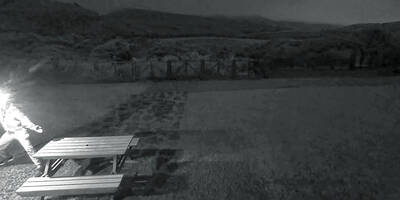
Yangmingshan National Park authorities yesterday urged visitors to respect public spaces and obey the law after a couple was caught on a camera livestream having sex at the park’s Qingtiangang (擎天崗) earlier in the day. The Shilin Police Precinct in Taipei said it has identified a suspect and his vehicle registration number, and would summon him for questioning. The case would be handled in accordance with public indecency charges, it added. The couple entered the park at about 11pm on Thursday and began fooling around by 1am yesterday, the police said, adding that the two were unaware of the park’s all-day live

Yangmingshan National Park’s Qingtiangang (擎天崗) nature area has gone viral after a park livestream camera observed a couple in the throes of intimate congress, which was broadcast live on YouTube, drawing large late-night crowds and sparking a backlash over noise, bright lights and disruption to wildlife habitat. The area’s livestream footage appeared to show a couple engaging in sexual activity on a picnic table in the park on Friday last week, with the uncensored footage streamed publicly online. The footage quickly spread across social media, prompting a tide of visitors to travel to the site to “check in” and recreate the
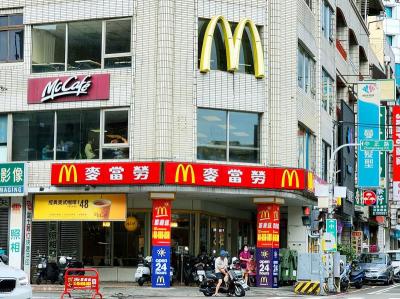
Fast food chain McDonald's is to raise prices by up to NT$5 on some products at its restaurants across Taiwan, starting on Wednesday next week, the company announced today. The prices of all extra value meals and sharing boxes are to increase by NT$5, while breakfast combos and creamy corn soup would go up by NT$3, the company said in a statement. The price of the main items of those meals, if ordered individually, would remain the same. Meanwhile, the price of a medium-sized lemon iced tea and hot cappuccino would rise by NT$3, extra dipping sauces for chicken nuggets would go up

Minister of Digital Affairs Lin Yi-ching (林宜敬) yesterday cited regulatory issues and national security concerns as an expert said that Taiwan is among the few Asian regions without Starlink. Lin made the remarks on Facebook after funP Innovation Group chief executive officer Nathan Chiu (邱繼弘) on Friday said Taiwan and four other countries in Asia — China, North Korea, Afghanistan and Syria — have no access to Starlink. Starlink has become available in 166 countries worldwide, including Ukraine, Malaysia, the Philippines and Vietnam, in the six years since it became commercial, he said. While China and North Korea block Starlink, Syria is not


 RSS
RSS