


Liberty Times (LT): “Our Youth in Taiwan” (我們的青春,在台灣), a documentary about the 2014 Sunflower movement, last year won best documentary at the Taipei Film Festival and the Golden Horse Awards. The title of the film reveals two key points: Youth and Taiwan. What were your considerations in naming it that?
Fu Yue (傅榆): In the film, the exchange student from China, Cai Boyi (蔡博藝), wrote a book titled I Am in Taiwan (我在臺灣,我正青春) about her observations and reflections while studying in Taiwan. I thought this title was very good and fit her personality and what she did. Precisely because she is still young and still curious, she absorbs new ideas like a sponge.
This film also talks about the youth of the filmmaker and those who were filmed. After the editing was complete, I told Cai: “This documentary is no longer simply talking about the youth of you and [Sunflower movement leader] Chen Wei-ting (陳為廷), but has turned into our youth.”

Photo: Chang Chia-ming, Taipei Times
She agreed that the title Our Youth in Taiwan was good because this youth belongs to us. This is a film that documents part of our growth process.
Including “Taiwan” in the title of the film was my insistence. I once went through a process of searching for my identity. Strictly speaking, I am a second-generation Southeast Asian-Chinese. My father is a Malaysian-Chinese and my mother is an Indonesian-Chinese. After searching for many years, I have come to identity myself as Taiwanese.
I hope that the place, country and environment we live in would improve. I am just a regular person, yet I hope Taiwan can break out of its international diplomatic and economic predicament, and even allow more people around the world to pay attention to the nation’s situation. Therefore I wanted to put “Taiwan” in the title.
If, in the future, this film is screened overseas, audiences would be able to tell from the title that this film is about people and events in Taiwan.
LT: In the film, the director becomes one of the characters; the director is no longer simply documenting the events from the sidelines. What are your thoughts on inserting yourself into the documentary?
Fu: Originally, I did not want to do this. I edited 12 versions of the film. The first version was 200 minutes long. At the time, I found myself at a low point. I completed the rough cut that the bidding process needed with a “just get it over with” attitude.
When I showed it to director Shen Ko-shang (沈可尚), he said that while it was excellent, he could not tell what the film wanted to express. “Where are you? What are your reflections?” he asked. He suggested that I add narration.
At the time, I felt a bit defeated, because I believed excellent documentaries should be like A Rolling Stone (築巢人), for which Shen took the Taipei Film Festival’s NT$1 million [US$32,360] top prize, which communicated 1,000 words using only the lens.
The advice Shen gave me then was: “Everything in the film is in the past.”
He suggested that I go back and discuss the present with Chen and Cai. So I edited another 100-minute version in which I asked them to look back on their past selves.
In the filming process this time around, I lost my composure and cried. It was out of control — very embarrassing, but also very honest. Thus, in the third version, I included the crying. I slowly adjusted that cut into the final product.
My friends disapproved of my inclusion in the film. Even my husband was unsure whether this was a good idea. However, Shen was supportive. He also encouraged me to trust my instincts and produce a documentary in which I appear.
LT: Did you “gain” or “lose” anything in the process of making it?
Fu: “Losses” and “gains” were as regular as the rise and fall of waves over the period [of filmmaking], but the “gains” greatly outnumbered the “losses.”
From 2011, I followed Chen and Cai, the Kuokuang Petrochemical Technology Co protests, the Hualon Corp strike, protests against the media monopoly, protests against the [farmland expropriation in Miaoli County’s] Dapu Borough (大埔) and other social movements.
It was when the Sunflower movement arose and the occupation of the Legislative Yuan occurred that I realized that these people I was filming were at the core of social development in Taiwan. At least 500,000 people took part in the Sunflower movement, with about 10,000 at the center. Chen was among the ones at the core of that center. Being at the very core and capturing decisionaking as it was happening, and then looking out at the roughly 490,000 other supporters outside caused this sense of superiority to well up in my heart.
However, after I was done filming, I realized that I was only one of those 490,000 common people. I was just one of 490,000 people who poured their hopes for social change into a movement.
I was once heated about it, believing that if I threw myself into a social movement I might have been able to change society. However, watching the movement from start to finish, I came to understand that its expectations and disappointments — whether many or few — what people refer to as the “harm of social movements.”
Chen and Cai were never at the frontline of social movements again. I filmed their gradual fall from the limelight and I also reached a very low ebb.
I wondered, what meaning does my filming of their failure hold for society and for myself? In the later years of filming, I lost my passion for it, but I had to finish what I started, so I was compelled to continue. Going back and re-examining what I had filmed over the years, it seemed to have lost its meaning for me.
In my dejected state, I sought out Chen and Cai, asking them to look at my unedited film and to do a formal interview.
They did not cry, but I cried. I cried over my past struggles, over the lofty ambition I once had and over the ideals we once shared.
These tears were a turning point for me. I figured out that those tears had sprung forth from a sense of unrequited longing that I held for social movements.
LT: What was the motivation behind your decision to screen the film on the anniversary of the day the protesters walked out of the Legislative Yuan, as opposed to the day when they occupied the main chamber?
Fu: My choice of April 10 was not to commemorate the end of the movement. I feel that the day the protesting students walked out of the Legislative Yuan has a lot to do with the way Taiwan is today.
On the day they walked out, there were a lot of conflicts that could not be resolved. This hurt many people to varying degrees. That is why Taiwan is like it is today.
The Sunflower movement was like a political enlightenment for many young people. Many have hopes that through such a large movement, any injustice can be changed.
This energy influenced the 2014 local elections and the 2016 presidential election. Many protesters threw themselves into politics, hoping to bring a revolution from inside the political system. However, the parties took turns taking office and the energy of the social movement slowly dissipated.
Once people realize that social movements cannot change everything at once, disappointment fills the air. During the movement, there were all these voices — approval or criticism — coming from inside and out, and I understood both. At the time I thought to myself: “Democracy is difficult [to enact]. Everyone has their own struggles ... how exactly can things be made better?”
What I hope to get across is, just because democracy presents challenges, that does not mean we should not enact democracy. Rather, only once we understand the limits of our democracy can we improve it and allow it to grow.
LT: Having won Best Documentary at the Golden Horse Awards, “Our Youth in Taiwan” would represent Taiwan with a chance to be nominated at next year’s Academy Awards. You said you hope that through the film, more people would become aware of Taiwan’s predicament. Do you have any plans for putting the film on the global stage?
Fu: I am organizing a crowdfunding campaign with four stages and a target of NT$4 million. I hope the film will enter the Academy Awards from its initial screening, allowing it the opportunity to be screened all over the world.
To be honest, although the film is to represent Taiwan for Best Documentary, it only has an entrance ticket. Each year, contenders have to face at least 200 outstanding documentaries, while more than 6,000 members of the Academy of Motion Picture Arts and Sciences have voting rights. I still do not know how to get these people to see my film.
Veterans in the field have encouraged me, saying this money needs to be spent because it is like “planting a seed.” Once the seeds grow, more people will know about Taiwan’s situation and the voice of Taiwan.
Translated by staff writers Sherry Hsiao and William Hetherington

Kenting National Park service technician Yang Jien-fon (楊政峰) won a silver award in World Grand Prix Photography Awards Spring Season for his photograph of two male rat snakes intertwined in combat. Yang’s colleagues at Kenting National Park said he is a master of nature photography who has been held back by his job in civil service. The awards accept entries in all four seasons across six categories: architectural and urban photography, black-and-white and fine art photography, commercial and fashion photography, documentary and people photography, nature and experimental photography, and mobile photography. Awards are ranked according to scores and divided into platinum, gold and

More than half of the bamboo vipers captured in Tainan in the past few years were found in the city’s Sinhua District (新化), while other districts had smaller catches or none at all. Every year, Tainan captures about 6,000 snakes which have made their way into people’s homes. Of the six major venomous snakes in Taiwan, the cobra, the many-banded krait, the brown-spotted pit viper and the bamboo viper are the most frequently captured. The high concentration of bamboo vipers captured in Sinhua District is puzzling. Tainan Agriculture Bureau Forestry and Nature Conservation Division head Chu Chien-ming (朱健明) earlier this week said that the
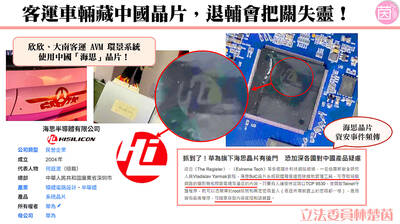
BREACH OF CONTRACT: The bus operators would seek compensation and have demanded that the manufacturer replace the chips with ones that meet regulations Two bus operators found to be using buses with China-made chips are to demand that the original manufacturers replace the systems and provide compensation for breach of contract, the Veterans Affairs Council said yesterday. Democratic Progressive Party Legislator Michelle Lin (林楚茵) yesterday said that Da Nan Bus Co and Shin-Shin Bus Co Ltd have fielded a total of 82 buses that are using Chinese chips. The bus models were made by Tron-E, while the systems provider was CYE Electronics, Lin said. Lin alleged that the buses were using chips manufactured by Huawei subsidiary HiSilicon Co, which presents a national security risk if the

The National Immigration Agency has banned two Chinese from returning to Taiwan, after they published social media content it described as disrespectful to national sovereignty. The agency imposed a two-month ban on a Chinese man surnamed Liang (梁) and a permanent ban on a woman surnamed Yang (楊), an influencer with 23 million followers, in October last year and last week respectively. Minister of the Interior Liu Shyh-fang (劉世芳) yesterday said on the sidelines of a legislative meeting that Chinese visitors to Taiwan are required to comply with the rules and regulations governing their entry permits. The government has handled the ban and


 RSS
RSS