


Premier Su Tseng-chang (蘇貞昌) yesterday shrugged off accusations that his call to replace police department chiefs after nightclub brawls was directed at cities and counties governed by the Chinese Nationalist Party (KMT).
Su on Wednesday at a Cabinet-level social security meeting said that “special entertainment businesses must not sell narcotics or be involved in fighting or killing. There must not be any brawling at their front doors.”
“Special entertainment businesses” are nightclubs or bars that offer bar girls or prostitution.
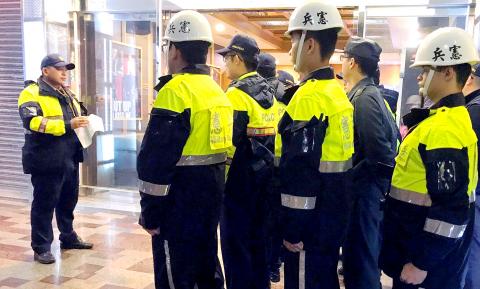
Photo: Hsieh Chieh-yu, Taipei Times
“If a fight breaks out in front of a bar or nightclub, the police chief of that city or county should be replaced,” Su was quoted as saying.
Although he did not name anyone, Su’s remarks came just hours after three melees in Kaohsiung and a few days after a fight at X-Cube, a Taichung nightclub, in which nine people were injured.
The remarks sparked anger among police, with some saying that a chief could be targeted by hiring people to brawl outside a nightclub, reports said.
Ahead of a question-and-answer session at the legislature yesterday, Su fielded questions from the media regarding whether his remarks were aimed at KMT mayors.
“I demanded that bars and nightclubs not turn a blind eye to drug dealing, homicide, fighting or drunk driving, activities that the public hates,” Su said. “The owners think that the police are indecisive and the government is incompetent, which has led to the prevalence” of drug dealing, fighting and homicide.
“The owners are not ordinary citizens. I want to tell them: Do not underestimate the government’s resolve,” he said.
Kaohsiung Mayor Han Kuo-yu (韓國瑜) said that he objected to Su’s warning to police chiefs, as it burdens them with tremendous mental pressure.
The municipal government can only ask police to step up efforts to carry out unannounced inspections of bars and nightclubs, as the implications of replacing a police chief whenever there is a brawl are too great, Han said.
Additional reporting by CNA
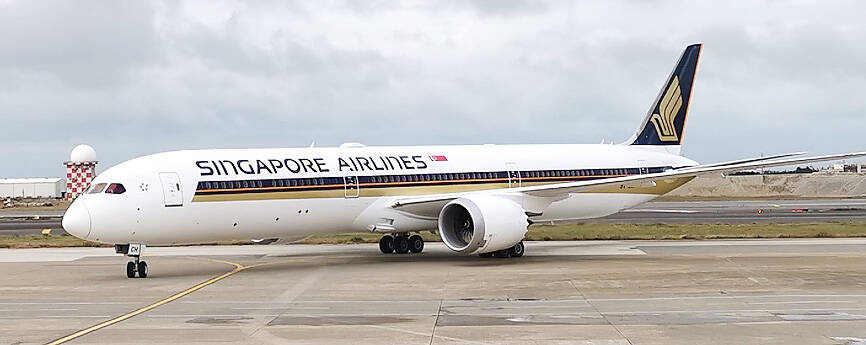
INCREASED CAPACITY: The flights on Mondays, Wednesdays, Fridays and Sundays would leave Singapore in the morning and Taipei in the afternoon Singapore Airlines is adding four supplementary flights to Taipei per week until May to meet increased tourist and business travel demand, the carrier said on Friday. The addition would raise the number of weekly flights it operates to Taipei to 18, Singapore Airlines Taiwan general manager Timothy Ouyang (歐陽漢源) said. The airline has recorded a steady rise in tourist and business travel to and from Taipei, and aims to provide more flexible travel arrangements for passengers, said Ouyang, who assumed the post in July last year. From now until Saturday next week, four additional flights would depart from Singapore on Monday, Wednesday, Friday
Taiwan’s three major international carriers are increasing booking fees, with EVA Airways having already increased the charge to US$28 per flight segment from US$25, while China Airlines (CAL) and Starlux Airlines are set to follow suit. Booking fees are charged by airlines through a global distribution system (GDS) and passed on to passengers. Carriers that apply the fees include CAL, EVA, Starlux and Tigerair Taiwan. A GDS is a computerized network operated by a company that connects airlines with travel agents and ticketing platforms, allowing reservations to be made and processed in real time. Major players include Amadeus, Sabre and Travelport. EVA Air began
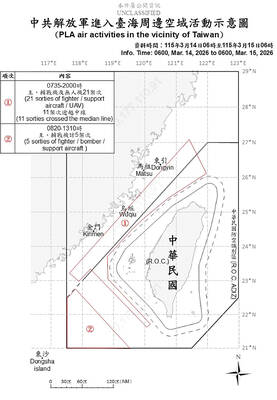
The Ministry of National Defense yesterday reported the return of large-scale Chinese air force activities after their unexplained absence for more than two weeks, which had prompted speculation regarding Beijing’s motives. China usually sends fighter jets, drones and other military aircraft around the nation on a daily basis. Interruptions to such routine are generally caused by bad weather. The Ministry of National Defense said it had detected 26 Chinese military aircraft in the Taiwan Strait over the previous 24 hours. It last reported that many aircraft on Feb. 25, when it spotted 30 aircraft, saying Beijing was carrying out another “joint combat
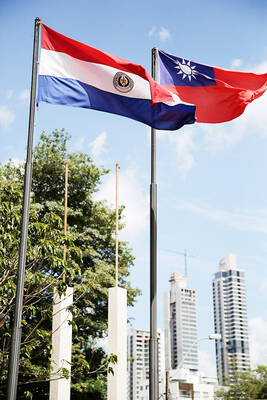
When Paraguayan opposition lawmaker Leidy Galeano returned from an all-expenses-paid tour of six Chinese cities late last year, she was convinced Paraguay risked missing out on major economic gains by sticking with longtime ally Taipei over Beijing — a message that participants on the trip heard repeatedly from Chinese officials. “Everything I saw there, I wanted for my country,” said Galeano, a member of the newly-formed Yo Creo party whose senior figures have spoken favorably about China. This trip and others like it — which people familiar with the visits said were at the invitation of the Chinese consulate in Sao Paulo


 RSS
RSS