


New Taipei City Deputy Mayor Lee Ssu-chuan (李四川) is to serve as deputy mayor for Kaohsiung mayor-elect Han Kuo-yu (韓國瑜) of the Chinese Nationalist Party (KMT), the incoming mayor’s office said on Saturday night, adding that the two share similar ideas about Kaohsiung’s prospects.
After winning the Kaohsiung mayoral election on Nov. 24, Han is to take office on Dec. 25.
Following his announcement on Dec. 3 that former minister of transportation and communications Yeh Kuang-shih (葉匡時) would become one of Kaohsiung’s deputy mayors, Han confirmed media reports that Lee would be the second deputy.
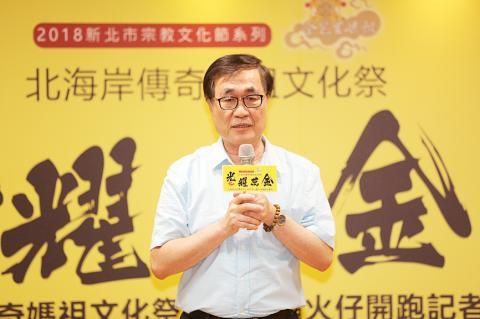
Photo courtesy of New Taipei City Government
Lee’s strong sense of duty and his education and work experience make him an optimal candidate for the post, Han said through his nominee for Kaohsiung Information Bureau director-general, Anne Wang (王淺秋).
Prior to his current position in New Taipei City, Lee served as Executive Yuan secretary-general, and deputy commissioner and director of the then-Taipei County department of public works, Wang said.
Han and Lee would make “a great team,” given that they share similar political ideals, as well as characteristics typical of country folk, Wang quoted Han as saying.
Lee yesterday said that he was born into a fishers’ family on Pingtung County’s Siaoliouciou Island (小琉球), and spent most of his working life as a public servant in Taipei.
He has not had a lot to do with Han previously, Lee said, adding that he missed several calls from him until Han’s daughter, Han Bing (韓冰), contacted him through her secretary.
After several meetings with Han Kuo-yu, Lee said that he found the mayor-elect to be a candid and zealous person who wants to improve the livelihood of farmers and fishers.
He gained outgoing New Taipei City Mayor Eric Chu’s (朱立倫) approval before accepting the Kaohsiung post, Lee said.
Asked whether he aimed to help Chu in a potential 2020 presidential bid by consolidating Chu’s support base in Kaohsiung, Lee said he does not hold that much sway and elections are not as important as promoting good policies.
He would seek to replicate the successes of the New Taipei City Government in Kaohsiung by promoting public care centers for infants and elderly people, promoting organic lunches for students, increasing interaction between the two cities, and improving roads and the tourism industry, Lee said, adding that facilitating negotiations among government agencies is one of his strengths.
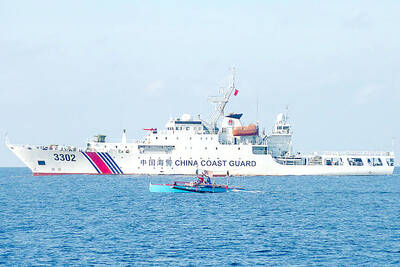
EXPANSIONIST: China deploys an average of 40 to 50 warships and coast guard vessels daily in the South China Sea, despite pledges not to militarize the region, an official said China is attempting to expand its influence across the First Island Chain and increase pressure on Japan by sending coast guard vessels into waters off of Taiwan under the pretext of maritime negotiations with Japan and the Philippines, a national security official said yesterday. China’s recent actions in the waters east of Taiwan and Japan and the Philippines’ exclusive economic zones (EEZ) are attempts to establish dominance in First Island Chain waters, said the official who declined to be named, adding that this is “expansion disguised as law enforcement.” Framing China’s actions solely as a cross-strait issue is a serious misjudgment that
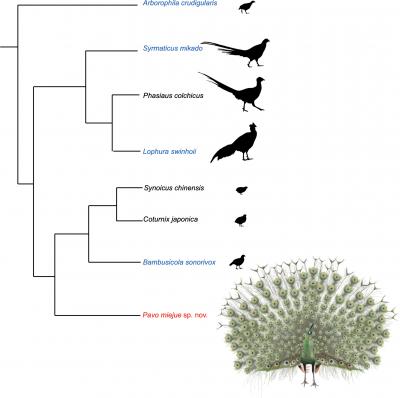
Through analyzing fossil evidence, a research team at National Taiwan University (NTU) discovered the largest endemic bird to have lived in Taiwan, naming it Pavo miejue, or extinct peafowl (滅絕孔雀). The Mikado pheasant, which is printed on the back of the NT$1,000 bank note, was previously believed to be the biggest endemic bird to Taiwan. The research team’s findings suggest that Pavo miejue lived during the Pleistocene epoch tens of thousands of years ago. It is the first endemic extinct bird species discovered and formally named in Taiwan. The study was coauthored by NTU Institute of Ecology and Evolutionary Biology professor Tsai Cheng-hsiu (蔡政修),
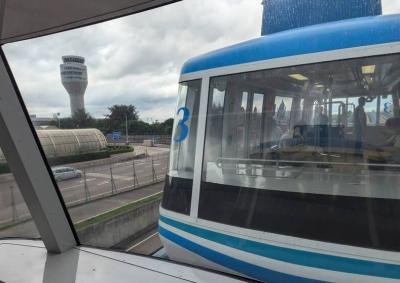
Taiwan Taoyuan International Airport is to suspend its automated Skytrain service connecting Terminal 1 and Terminal 2 starting on July 1 to facilitate connection works for the upcoming Terminal 3, the airport operator said today. Passengers and staff who need to travel between the two terminals after the suspension can instead use the Taoyuan MRT or the airport's 24-hour shuttle bus service, Taoyuan International Airport Corp said. The Taoyuan MRT Airport Line directly links the two terminals, while the shuttle buses are to operate around the clock, the company added. The Skytrain provides free transportation between the airport’s two terminals for travelers and
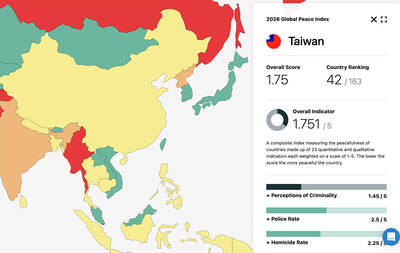
Taiwan ranked 42nd in terms of peacefulness among 163 countries, down five places from last year, according to this year’s Global Peace Index. With an overall score of 1.751, Taiwan dropped from 37th last year, the report published by the global Institute for Economics and Peace showed. The overall score measures a country’s level of peacefulness using 23 quantitative and qualitative indicators across three domains — ongoing domestic and international conflict, societal safety and security, and militarization. While Taiwan ranked 42nd worldwide, it was listed in ninth place among the 19 Asian-Pacific countries in the report, after New Zealand, Singapore, Japan, Malaysia,


 RSS
RSS