


Lawmakers on the legislature’s Transportation Committee yesterday asked the National Communications Commission (NCC) to punish broadcast media that air disinformation ahead of the Nov. 24 elections.
Issues related to the spread of fake news again drew the committee’s attention after the Democratic Progressive Party’s candidate Chen Chi-mai (陳其邁) was accused of cheating during a debate on Saturday for Kaohsiung’s mayoral candidates by wearing an earphone.
Although Chen denied the allegation and the Kaohsiung City Election Committee, after examining video footage of the debate, issued a news release dismissing the idea, the story spread on the Internet and continues to be aired in broadcasts.
DPP Legislator Cheng Pao-ching (鄭寶清) said media outlets often do not thoroughly verify information before publishing it, because they want to publish the information as soon as possible to draw traffic to their Web sites and boost page views.
The commission is not powerless to counter the spread of fake news, since Article 27 of the Satellite Broadcasting Act (衛星廣播電視法) requires broadcast media to verify information before airing it, he said.
Outlets that contravene the act can be fined between NT$200,000 and NT$2 million (US$6,475 and US$64,570) and the commission could also order the cancelation of a program’s broadcast and its commercials, he said.
DPP Legislator Hsiao Bi-khim (蕭美琴) said: “The government has lagged behind those of other nations in updating legislation against the publication and dissemination of fake news, such as the EU’s Code of Practice on Disinformation.”
The commission should work with other nations to jointly counter disinformation by proposing initiatives in international entities such as APEC, Hsiao said.
DPP Legislator Lin Jing-yi (林靜儀), who has been promoting marriage equality, said that organizations against same-sex marriage have been spreading false information on gender equality and sex education amid the debate on referendums being held alongside the Nov. 24 elections.
Lin asked NCC Chairwoman Nicole Chan (詹婷怡) if the commission could handle the matter through the Television Programs Classification Handling Regulations (電視節目分級處理辦法) or the Radio and Television Act (廣播電視法).
Chan said the commission’s job was to ensure that all broadcast media adhere to Article 27 of the Satellite Broadcasting Act.
Any controversial content would be referred to an independent content review committee of experts, she said, adding that such a committee would check the authenticity of the challenged content, determine if the content damaged public interests and if the broadcaster verified the information before publishing it.
As for opinions expressed by candidates during televised debates, the NCC would have to consult with the Central Election Commission to see if there was a code of conduct regulating candidates’ remarks and behavior, Chan said.
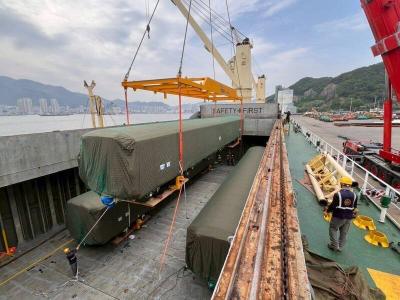
The first of 10 new high-capacity trains purchased from South Korea’s Hyundai Rotem arrived at the Port of Taipei yesterday to meet the demands of an expanding metro network, Taipei Rapid Transit Corp (TRTC) said yesterday. The train completed a three-day, 1,200km voyage from the Port of Masan in South Korea, the company said. Costing NT$590 million (US$18.79 million) each, the new six-carriage trains feature a redesigned interior based on "human-centric" transportation concepts, TRTC said. The design utilizes continuous longitudinal seating to widen the aisles and optimize passenger flow, while also upgrading passenger information displays and driving control systems for a more comfortable
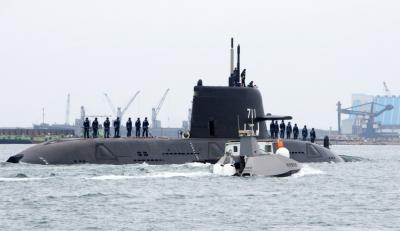
Taiwan's first indigenous defense submarine, the SS-711 Hai Kun (海鯤, or Narwhal), departed for its 13th sea trial at 7am today, marking its seventh submerged test, with delivery to the navy scheduled for July. The outing also marked its first sea deployment since President William Lai (賴清德) boarded the submarine for an inspection on March 19, drawing a crowd of military enthusiasts who gathered to show support. The submarine this morning departed port accompanied by CSBC Corp’s Endeavor Manta (奮進魔鬼魚號) uncrewed surface vessel and a navy M109 assault boat. Amid public interest in key milestones such as torpedo-launching operations and overnight submerged trials,
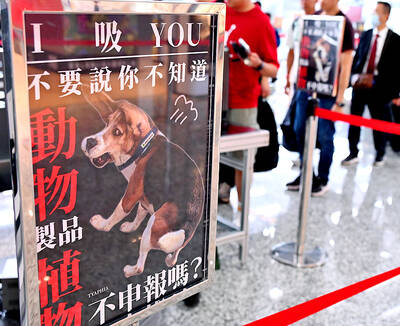
Quarantine awareness posters at Taiwan Taoyuan International Airport have gone viral for their use of wordplay. Issued by the airport branch of the Animal and Plant Health Inspection Agency, the posters feature sniffer dogs making a range of facial expressions, paired with advisory messages built around homophones. “We update the messages for holidays and campaign needs, periodically refreshing materials to attract people’s attention,” quarantine officials said. “The aim is to use the dogs’ appeal to draw focus to quarantine regulations.” A Japanese traveler visiting Taiwan has posted a photo on X of a poster showing a quarantine dog with a

SECURITY RISK: A university student sent a general alarm signal to THSRC’s control center on April 5, causing four operating trains to temporarily halt services The Ministry of Transportation and Communications yesterday pledged to submit a report on ways to harden the communication security of railway systems after a university student hacked into Taiwan High Speed Rail Corp’s (THSRC) radio communications system and disrupted operations of four high-speed rail trains last month. Investigation by the police and prosecutors found that the university student and radio enthusiast, surnamed Lin (林), first used a software-defined radio (SDR) filter to analyze THSRC signals, downloaded the data to a computer, cracked the parameters and then programmed the codes into his radio devices. Lin then sent a general alarm signal to


 RSS
RSS