


Clinical studies suggest that chronic or serious sinusitis might be associated with vitamin D deficiency, a medical team at Taichung’s Cheng Ching Hospital said.
Sinusitis is an inflammation or swelling of the tissue lining the sinuses, and is also known as a sinus infection or rhinosinusitis.
The team said that it analyzed blood samples of 41 patients with chronic sinusitis who had undergone surgery and were receiving further treatment, but were making slow progress, and found that they had relatively low concentrations of vitamin D.
The study was conducted between June last year and June, department of otorhinolaryngology director Chen Chung-hsiung (陳忠雄) said.
The average vitamin D concentration in the blood samples of 26 patients with nasal polyp was 20 nanograms per mililiter (ng/mL), with the lowest being 7.4ng/ml, while the average vitamin D concentration in the samples of 15 patients without nasal polyp was 21ng/mL, with the lowest being 12.8ng/mL, he said.
People without chronic sinusitis have average vitamin D concentrations of 30ng/mL in their blood, he added.
Most people know that vitamin D helps increase the absorption of calcium and is essential to proper bone health, but the team discovered that low vitamin D levels could result in worsened sinusitis or poor recovery after treatment, Chen said.
However, while people with sinusitis are advised to consume adequate amounts of vitamin D, they should first see a doctor and have their blood tested, and take supplements according to a doctor’s prescription to prevent vitamin D intoxication, he said.
Vitamin D intoxication can lead to buildup of excessive amounts calcium in the blood, heart and kidneys, and can cause the formation of calcium stones or calcification of blood vessels and organ tissues, he added.
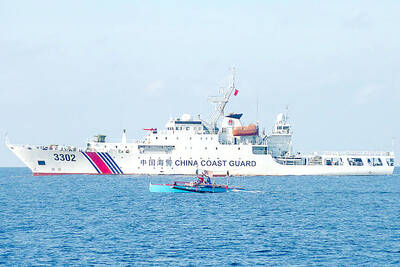
EXPANSIONIST: China deploys an average of 40 to 50 warships and coast guard vessels daily in the South China Sea, despite pledges not to militarize the region, an official said China is attempting to expand its influence across the First Island Chain and increase pressure on Japan by sending coast guard vessels into waters off of Taiwan under the pretext of maritime negotiations with Japan and the Philippines, a national security official said yesterday. China’s recent actions in the waters east of Taiwan and Japan and the Philippines’ exclusive economic zones (EEZ) are attempts to establish dominance in First Island Chain waters, said the official who declined to be named, adding that this is “expansion disguised as law enforcement.” Framing China’s actions solely as a cross-strait issue is a serious misjudgment that

BAIT AND SWITCH: Allowing KMT-run counties to sell to China while the threat of abrupt cancelations hangs overhead is another form of coercion, officials said Beijing is using agricultural purchase offers announced during the Straits Forum to deepen Taiwan’s dependence on the Chinese market, a Taiwanese official said yesterday as they criticized the Taitung County commissioner’s participation in the initiative. During the Straits Forum held in Xiamen on Saturday, Chinese officials announced a sales and purchase agreement for agricultural products from some counties led by the Chinese Nationalist Party (KMT). Taitung County Commissioner Yao Ching-ling (饒慶鈴), who was barred from attending the event in person by the Mainland Affairs Council, participated via video. Under the agreement, China would purchase atemoyas, pomeloes, tea and grouper harvested in Taitung,
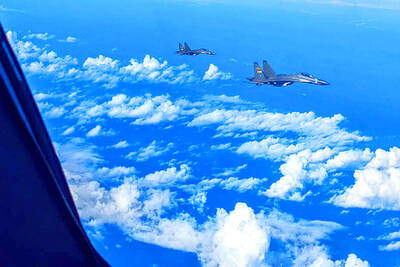
SHIFTING FIRE: While the tempo of purely military exercises around Taiwan has gone down somewhat, Beijing is working to isolate Lai diplomatically from support abroad Chinese President Xi Jinping (習近平) is shifting tactics in his campaign to pressure Taiwan, ramping up diplomatic isolation of the nation while dialing down provocative displays of military aggression. Taiwan recorded a daily average of five Chinese military aircraft crossing the Taiwan Strait’s buffer line with China through May this year — half the number logged in the same period last year. In March, Beijing did not send a single fighter jet near Taiwan for seven days, the longest absence on record outside of typhoon season. In comparison, China sent 153 planes near Taiwan during one day at its peak in

Meetings between Chinese Nationalist Party (KMT) Chairwoman Cheng Li-wun (鄭麗文) and people with alleged links to China during her US trip have drawn attention from US security circles, a source said. During a two-week visit to the US beginning on June 1, Cheng held a series of public engagements with people reportedly under scrutiny by US security agencies over alleged links to China, surveillance of dissidents in operations directed from Beijing, and cross-border influence activities, the source said yesterday. In one instance, China Fujian Association chairman Chen Heng (陳恒) appeared alongside Cheng in photographs. Chen and another man, Lu Jianwang (盧建旺), were among


 RSS
RSS