


The government should think long and hard before pursuing legal action to counter Beijing’s demand that international airlines designate Taiwan as part of China, or the effort could prove “expensive and time-consuming,” Democratic Progressive Party Legislator Lo Chih-cheng (羅致政) said yesterday.
The government is also considering calling for a boycott of carriers that complied with Beijing’s demand.
“We will tell our people: ‘Those are the airlines that caved in to China; it is your choice [whether to use them],’” National Security Council Secretary-General David Lee (李大維) said on Tuesday.
Although pursuing legal action against the carriers would be a complex process and “might take two to three years” to reach a ruling, “it will signal that we are fighting back, that we will not just sit idly by,” Lee said.
Asked for comment, Lo, a member of the legislature’s Foreign Affairs and National Defense Committee, said the government needs to think through the possible scenarios should it decide to pursue legal action over the matter.
“The government should first clarify who suffers most from Beijing pressuring foreign airlines to designate Taiwan as part of China, and study where and when to file a possible legal suit accordingly,” said Lo, an assistant professor at Soochow University’s Department of Political Science.
Whether the legal suit should be filed at the WTO, where Taiwan is a member, or in the nations where the carriers are based needs to be considered, he said.
The government should also consider what kind of ruling it would have a chance of winning, before deciding whether to take legal action, Lo said.
“Otherwise, the move would be very expensive, time-consuming and futile,” he said.
The name changes came after the Chinese Civil Aviation Administration in April sent a letter to 44 international airlines demanding that they identify Taiwan, Macau and Hong Kong as part of China.
Several airlines, including Air Canada and Lufthansa, have complied and refer to Taiwanese destinations, such as Taipei, as being in “Taiwan, China” or “Taiwan, CN.”
No Taiwanese carriers have been asked by China to change the nation’s designation, making it difficult for Taiwan to take legal action at the WTO on grounds that Taiwanese customers’ interests have been harmed, a source familiar with international litigation said yesterday.
It is also highly unlikely that Taiwan could ask other nations, such as the US and Japan, to file a lawsuit on its behalf, since both nations have carriers that chose to change Taiwan’s designation, the source added.
Moreover, whether Taiwanese customers’ interests have been harmed is debatable, as the name change has not caused financial losses to airline passengers, the source said.
All these factors make it very difficult for the government to take legal action, he added.
Ministry of Foreign Affairs spokesman Andrew Lee (李憲章) said the government has not made a final decision on whether to take legal action.
“Such measures are still being discussed and evaluated, we will make the final decision as to if and when to take action by making national interests our top priority,” he said.
Meanwhile, Li Kexin (李克新), a minister at the Chinese embassy in the US, told a forum in Washington on Tuesday that the US government must encourage its airlines to comply with Beijing’s “one China” principle.
“If you want to do business in a country, you must comply with the laws of that country,” Li told the forum at the Institute for China-America Studies, adding that failure to do so would result in disciplinary measures.
“China wants a candid relationship with the US and any issue is open for discussion, except the ‘Taiwan problem,’” Li said.
“For China, Taiwan is not a foreign relations topic, it is an issue of sovereignty,” he added.
Under the “one China” framework, the US-Taiwan relationship can also advance, but there are some who want to destroy that framework, Li said.
The US’ Taiwan Travel Act is “a grave mistake,” he said.
The act, signed by US President Donald Trump on March 16, encourages mutual visits between Taiwanese and US high-level officials.
Li also criticized the US’ National Defense Authorization Act for Fiscal Year 2018, which contains provisions favorable to Taiwan’s defense, saying: “These moves will make the possible impossible.”
No Chinese official will ever compromise on the issue of Taiwan, he added.

Taiwanese can file complaints with the Tourism Administration to report travel agencies if their activities caused termination of a person’s citizenship, Mainland Affairs Council Minister Chiu Chui-cheng (邱垂正) said yesterday, after a podcaster highlighted a case in which a person’s citizenship was canceled for receiving a single-use Chinese passport to enter Russia. The council is aware of incidents in which people who signed up through Chinese travel agencies for tours of Russia were told they could obtain Russian visas and fast-track border clearance, Chiu told reporters on the sidelines of an event in Taipei. However, the travel agencies actually applied

New measures aimed at making Taiwan more attractive to foreign professionals came into effect this month, the National Development Council said yesterday. Among the changes, international students at Taiwanese universities would be able to work in Taiwan without a work permit in the two years after they graduate, explainer materials provided by the council said. In addition, foreign nationals who graduated from one of the world’s top 200 universities within the past five years can also apply for a two-year open work permit. Previously, those graduates would have needed to apply for a work permit using point-based criteria or have a Taiwanese company
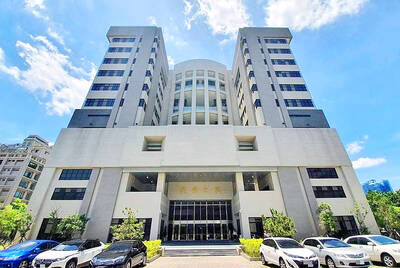
The Shilin District Prosecutors’ Office yesterday indicted two Taiwanese and issued a wanted notice for Pete Liu (劉作虎), founder of Shenzhen-based smartphone manufacturer OnePlus Technology Co (萬普拉斯科技), for allegedly contravening the Act Governing Relations Between the People of the Taiwan Area and the Mainland Area (臺灣地區與大陸地區人民關係條例) by poaching 70 engineers in Taiwan. Liu allegedly traveled to Taiwan at the end of 2014 and met with a Taiwanese man surnamed Lin (林) to discuss establishing a mobile software research and development (R&D) team in Taiwan, prosecutors said. Without approval from the government, Lin, following Liu’s instructions, recruited more than 70 software

Taiwanese singer Jay Chou (周杰倫) plans to take to the courts of the Australian Open for the first time as a competitor in the high-stakes 1 Point Slam. The Australian Open yesterday afternoon announced the news on its official Instagram account, welcoming Chou — who celebrates his 47th birthday on Sunday — to the star-studded lineup of the tournament’s signature warm-up event. “From being the King of Mandarin Pop filling stadiums with his music to being Kato from The Green Hornet and now shifting focus to being a dedicated tennis player — welcome @jaychou to the 1 Point Slam and #AusOpen,” the


 RSS
RSS