


Hotel operators are taking steps to promote green travel, and reduce waste from single-use toiletries and discarded food.
The average hotel guest produces two to three times more trash per day than they do at home, a study by the Industrial Technology Research Institute has shown, said Hsiao Teng-yuan (蕭登元), the chair of National Kaohsiung University of Hospitality and Tourism’s Department of Leisure and Recreation Management.
In addition to waste produced by single-use toiletries, many hotel restaurants also cause excessive food waste, Hsiao said on Sunday, adding that some hotel operators have waste companies transport food waste to pig farms to be used as feed.
The amount of food waste produced by non-hotel restaurants could also become a serious problem for Taiwan, he added.
Restaurants can only ask guests to take only what they can eat to prevent food waste, Hsiao said.
To encourage green travel, LDC Hotels & Resorts Group this year started offering a 10 percent discount on room rates to guests who bring their own toiletries in some of its hotels.
Giardino, a buffet restaurant that was managed by the group’s affiliate FDC International Hotels Corp, in 2016 partnered with a food bank to deliver surplus food to low-income households and elderly people, the group said.
The group is assessing surplus food plans for its other restaurants after Giardino closed earlier this month, it said.
Leofoo Tourism Group has announced that from next month it will not provide single-use toiletries or refill supplies for multi-night stays at its hotels, unless guests specifically ask for them.
Guests at Leofoo Resort Guanshi who bring their own toiletries and reusable cups are to receive discounts on their purchases, Leofoo said.
Its hotels go through 39,975 sets of toothbrush and toothpaste, 7,750 razors and nearly 8,000 shower caps per month on average, Leofoo added.
Regent Taipei said it places cards on beds and in bathrooms to encourage guests to reuse their linens or towels during multi-night stays.
The Environmental Protection Administration (EPA) in March last year began requiring large-scale produce vendors to publish online the amount and destination of discarded food products.
From March last year to April, 1,273 vendors covered by the regulation discarded a total of 6,630.4 tonnes of food products, or more than 500 tonnes per month on average, EPA data showed.
The majority of the discarded food products were delivered to pig farms or composting facilities, the EPA said.

LOUD AND PROUD Taiwan might have taken a drubbing against Australia and Japan, but you might not know it from the enthusiasm and numbers of the fans Taiwan might not be expected to win the World Baseball Classic (WBC) but their fans are making their presence felt in Tokyo, with tens of thousands decked out in the team’s blue, blowing horns and singing songs. Taiwanese fans have packed out the Tokyo Dome for all three of their games so far and even threatened to drown out home team supporters when their team played Japan on Friday. They blew trumpets, chanted for their favorite players and had their own cheerleading squad who dance on a stage during the game. The team struggled to match that exuberance on the field, with
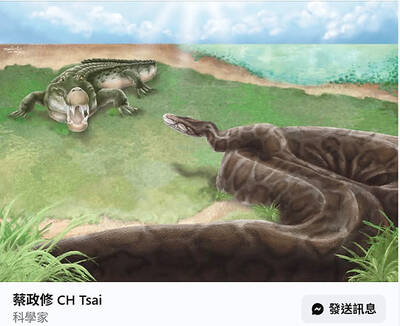
Taiwanese paleontologists have discovered fossil evidence that pythons up to 4m long inhabited Taiwan during the Pleistocene epoch, reporting their findings in the international scientific journal Historical Biology. National Taiwan University (NTU) Institute of Ecology and Evolutionary Biology associate professor Tsai Cheng-hsiu (蔡政修) led the team that discovered the largest snake fossil ever found in Taiwan. The single trunk vertebra was discovered in Tainan at the Chiting Formation, dated to between 400,000 and 800,000 years ago in the Middle Pleistocene, the paper said. The area also produced Taiwan’s first avian fossil, as well as crocodile, mammoth, saber-toothed cat and rhinoceros fossils, it said. Discoveries

Taiwanese paleontologists have discovered fossil evidence that pythons up to 4m long inhabited Taiwan during the Pleistocene epoch, reporting their findings in the international scientific journal Historical Biology. National Taiwan University (NTU) Institute of Ecology and Evolutionary Biology associate professor Tsai Cheng-hsiu (蔡政修) led the team that discovered the largest snake fossil ever found in Taiwan. A single trunk vertebra was discovered in Tainan at the Chiting Formation, dated to between 800,000 to 400,000 years ago in the Middle Pleistocene, the paper said. The area also produced Taiwan’s first avian fossil, as well as crocodile, mammoth, sabre-toothed cat and rhinoceros fossils, it said. Discoveries
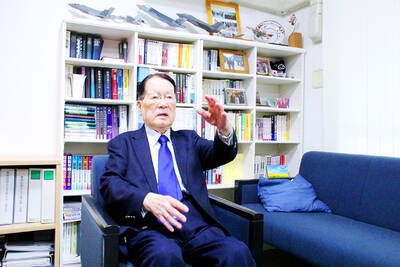
Whether Japan would help defend Taiwan in case of a cross-strait conflict would depend on the US and the extent to which Japan would be allowed to act under the US-Japan Security Treaty, former Japanese minister of defense Satoshi Morimoto said. As China has not given up on the idea of invading Taiwan by force, to what extent Japan could support US military action would hinge on Washington’s intention and its negotiation with Tokyo, Morimoto said in an interview with the Liberty Times (sister paper of the Taipei Times) yesterday. There has to be sufficient mutual recognition of how Japan could provide


 RSS
RSS