


The controversy over the Shenao Power Plant heated up yesterday as Environmental Protection Administration (EPA) and New Taipei City Government officials quibbled over the project’s potential impact on a fisheries conservation area and other issues.
State-run Taiwan Power Co (Taipower) wants to build a coal-fired plant on the site of the old Shenao plant, which was near Rueifang District’s (瑞芳) Shenao Harbor (深澳灣).
The company’s original plan to build a new plant on the site passed an environmental impact assessment (EIA) in 2006, and the EPA on March 14 approved the firm’s environmental impact difference analysis report covering proposed changes to the project.
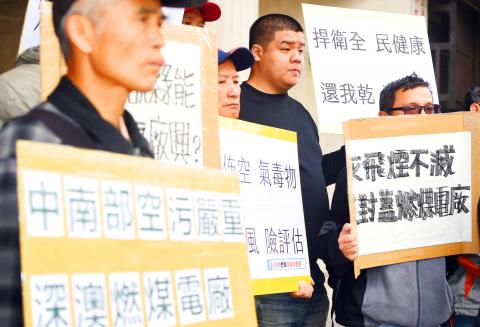
Photo: Liao Chen-huei, Taipei Times
That decision triggered widespread controversy and protests by local residents, environmental groups and lawmakers.
The controversy reached a new peak after New Taipei City Mayor Eric Chu (朱立倫) on Tuesday last week posted on Facebook that construction of wave breakers for the project would overlap with a marine conservation area that was established in November 2014.
The EPA and Taipower chose to ignore the demarcation lines of the conservation area, Chu wrote.
Dozens of residents from Rueifang and other New Taipei City districts yesterday launched a protest at 9am in front of the Legislative Yuan in Taipei, where the Social Welfare and Environmental Hygiene Committee was scheduled to review government reports on the project.
More than 400 Rueifang residents have signed a petition against the project, including 17 of the district’s 34 borough wardens, Anti-Shenao Plant Self-Help Group director Chen Chih-chiang (陳志強) said.
Ruifang residents have limited access to information, and many only became aware of the construction project after the EPA’s March 14 decision attracted widespread media coverage, Chen said,
Most residents do not support the project, despite Taipower’s claims to the contrary, Chen said.
New Power Party Executive Chairman Huang Kuo-chang (黃國昌), who represents Rueifang and adjacent districts, said the EPA has shown an “arrogance of power” by neglecting the potential impact on public health and the local ecology of a new coal-fired power plant.
Huang urged residents in Taipei, Keelung, Taoyaun and Yilan County to reject the project.
If the New Taipei City Government was really concerned about the marine conservation area, it should have spoken up at earlier EIA meetings, rather than criticizing the EIA decision after it was passed, Environmental Protection Administration Deputy Minister Chan Shun-kuei (詹順貴) told lawmakers at yesterday’s meeting.
Chan said he wondered if Chu was using the Shenao project for political gain.
However, New Taipei City Environmental Protection Department specialist Sun Chung-wei (孫忠偉) told lawmakers that the Fisheries Agency and other experts voiced concerns about the conservation area during the first EIA committee meeting on the proposed changes to the Shenao project on June 15 last year.
Sun was invited to speak to the legislative committee by Chinese Nationalist Party (KMT) Legislator Arthur Chen (陳宜民).
While the New Taipei City Fisheries and Fishing Port Affairs Management Office did not present a “new” opinion during later EIA committee meetings, that did not mean it agreed to the project, Sun said.
However, Chan said that Sun was using a fallacious argument and trying to evade responsibility, as the conservation area had been demarcated by the city government.
Chan and EPA Minister Lee Ying-yuan (李應元) told lawmakers that they stood by their decisions on the power plant’s EIA and would accept a Control Yuan investigation if one were deemed necessary.
The city’s Environmental Protection Department reacted angrily to Chan’s comments, calling a news conference at 2pm at New Taipei City Hall in Banciao District (板橋) to protest his remarks.
The city government has been opposed to the project due to its potential impact on air quality, public health and the area’s ecology, department Director-General Liu Ho-jan (劉和然) said, adding he no longer respected Chan for choosing to publicly humiliate Sun.
Asked to comment on former premier Su Tseng-chang’s (蘇貞昌) remark that he would not support a power plant that pollutes and is not secure, Liu said it was impossible to have a power plant that would not cause air pollution, not to mention that the Shenao plant would use coal.
Su is the Democratic Progressive Party’s candidate for New Taipei City mayor in the November elections.
The EPA has yet to hold a meeting to confirm Taipower’s written report on the Shenao project, but the city government will surely take legal action if the agency officially approves it, Liu said.
Meanwhile, Chen said the New Taipei City Government could have been more aggressive about its position during the EIA procedure, and it now appears to be using the Shenao project as an election issue.
Ruifang residents are consulting legal experts about launching an administrative appeal against the EPA’s decision, Chen said.
Under Taipower’s proposed construction plan for the Shenao plant, the first of its two generators is to become operational in 2025.
Additional reporting by staff writer

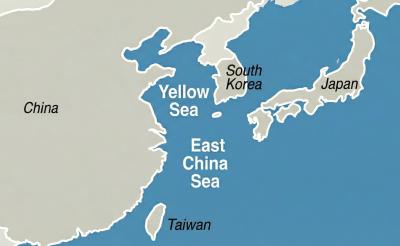
China has reserved offshore airspace in the Yellow Sea and East China Sea from March 27 to May 6, issuing alerts usually used to warn of military exercises, although no such exercises have been announced, the Wall Street Journal (WSJ) reported yesterday. Reserving such a large area for 40 days without explanation is an “unusual step,” as military exercises normally only last a few days, the paper said. These alerts, known as Notice to Air Missions (Notams), “are intended to inform pilots and aviation authorities of temporary airspace hazards or restrictions,” the article said. The airspace reserved in the alert is
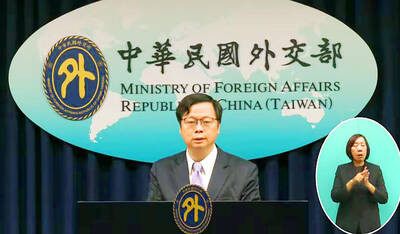
NAMING SPAT: The foreign ministry called on Denmark to propose an acceptable solution to the erroneous nationality used for Taiwanese on residence permits Taiwan has revoked some privileges for Danish diplomatic staff over a Danish permit that lists “Taiwan” as “China,” Eric Huang (黃鈞耀), head of the Ministry of Foreign Affairs’ Department of European Affairs, told a news conference in Taipei yesterday. Reporters asked Huang whether the Danish government had responded to the ministry’s request that it correct the nationality on Danish residence permits of Taiwanese, which has been listed as “China” since 2024. Taiwan’s representative office in Denmark continues to communicate with the Danish government, and the ministry has revoked some privileges previously granted to Danish representatives in Taiwan and would continue to review

More than 6,000 Taiwanese students have participated in exchange programs in China over the past two years, despite the Mainland Affairs Council’s (MAC) “orange light” travel advisory, government records showed. The MAC’s publicly available registry showed that Taiwanese college and university students who went on exchange programs across the Strait numbered 3,592 and 2,966 people respectively. The National Immigration Agency data revealed that 2,296 and 2,551 Chinese students visited Taiwan for study in the same two years. A review of the Web sites of publicly-run universities and colleges showed that Taiwanese higher education institutions continued to recruit students for Chinese educational programs without

A bipartisan group of US senators has introduced a bill to enhance cooperation with Taiwan on drone development and to reduce reliance on supply chains linked to China. The proposed Blue Skies for Taiwan Act of 2026 was introduced by Republican US senators Ted Cruz and John Curtis, and Democratic US senators Jeff Merkley and Andy Kim. The legislation seeks to ease constraints on Taiwan-US cooperation in uncrewed aerial systems (UAS), including dependence on China-sourced components, limited access to capital and regulatory barriers under US export controls, a news release issued by Cruz on Wednesday said. The bill would establish a "Blue UAS


 RSS
RSS