


As the Ministry of National Defense continues to struggle to meet recruitment targets for an all-volunteer force, lawmakers across party lines have said they are concerned about the effect the recruitment drives are having on the armed forces’ image.
Under the ministry’s timetable, the armed forces should have enough volunteers to staff 90 percent of positions by the end of the year, the state-run Military News Agency said on March 22.
It is 17,000 enlistments short of that goal, the report said.
The pressure to meet recruitment goals has prompted some military units to adopt inventive recruiting methods, the report said.
Some of those methods have been criticized as undignified.
One air force battalion commander personally led recruiters on an enlistment drive in the Old Street area of New Taipei City’s Tamsui District (淡水).
Several units allegedly disseminated photographs of attractive female military personnel on social media as a recruiting tool, but some of the women complained of online harassment, while critics panned use of social media as detrimental to the military’s reputation.
The armed forces have been hard-pressed to find recruits since the all-volunteer program’s rollout, Democratic Progressive Party Legislator Lo Chih-cheng (羅致政) said.
Strange recruiting tactics are a consequence of the ministry’s erroneous policy putting the onus of meeting goals on field units, which has led to some unit commanders being givin recruitment quotas, the lawmaker said.
“Troop recruitment should have been the sole responsibility of the National Armed Forces Recruitment Center and not a concern for the rest of the military,” he said. “These publicity stunts degrade the solemnity of military service. Our soldiers should not be turned into insurance salespeople peddling products.”
The ministry should rely on proven methods to recruit qualified volunteers and avoid fixating on quantitative metrics while neglecting quality, he said.
Chinese Nationalist Party (KMT) Legislator Ko Chih-en (柯志恩) said the recruitment stunts objectified women and had harmed the image of the armed forces.
“The military is suffering from shortages of volunteer soldiers and officers because pay and benefits are not attractive,” she said.
A military career also entails the loss of personal freedoms that many young people find unpalatable, Ko said.
“To inspire patriotism, the ministry must burnish the image and values of the armed forces and ensure that soldiering is a well-compensated and honorable profession,” she said. “Young people need to see that joining the military makes them part of a proud, select elite before we can ask them to join.”
Army Commander General Wang Shin-lung (王信龍) on Friday told a panel reviewing recruitment policies that the military is committed to keeping field units’ focus on operational capabilities and training.
Commanders and ministry officials should strive to maintain the positive image of soldiers, while recruiting efforts should focus on the dedication to defend the nation against aggression, Wang said.

Fast food chain McDonald's is to raise prices by up to NT$5 on some products at its restaurants across Taiwan, starting on Wednesday next week, the company announced today. The prices of all extra value meals and sharing boxes are to increase by NT$5, while breakfast combos and creamy corn soup would go up by NT$3, the company said in a statement. The price of the main items of those meals, if ordered individually, would remain the same. Meanwhile, the price of a medium-sized lemon iced tea and hot cappuccino would rise by NT$3, extra dipping sauces for chicken nuggets would go up
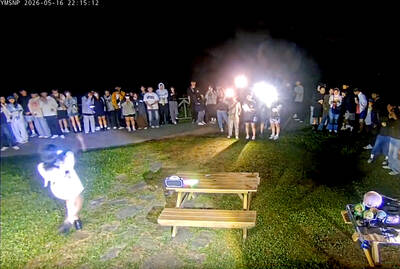
Yangmingshan National Park’s Qingtiangang (擎天崗) nature area has gone viral after a park livestream camera observed a couple in the throes of intimate congress, which was broadcast live on YouTube, drawing large late-night crowds and sparking a backlash over noise, bright lights and disruption to wildlife habitat. The area’s livestream footage appeared to show a couple engaging in sexual activity on a picnic table in the park on Friday last week, with the uncensored footage streamed publicly online. The footage quickly spread across social media, prompting a tide of visitors to travel to the site to “check in” and recreate the

Minister of Digital Affairs Lin Yi-ching (林宜敬) yesterday cited regulatory issues and national security concerns as an expert said that Taiwan is among the few Asian regions without Starlink. Lin made the remarks on Facebook after funP Innovation Group chief executive officer Nathan Chiu (邱繼弘) on Friday said Taiwan and four other countries in Asia — China, North Korea, Afghanistan and Syria — have no access to Starlink. Starlink has become available in 166 countries worldwide, including Ukraine, Malaysia, the Philippines and Vietnam, in the six years since it became commercial, he said. While China and North Korea block Starlink, Syria is not
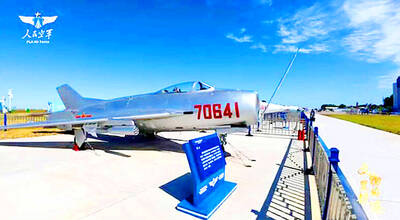
GROUNDED: A KMT lawmaker proposed eliminating drone development programs and freezing funding for counterdrone systems, despite China’s adoption of the technology China has deployed attack drones at air bases near the Taiwan Strait in a strategy aimed at overwhelming Taiwan’s air defense systems through saturation attacks, the Mainland Affairs Council (MAC) said. The council’s latest quarterly report on China said that satellite imagery and open-source intelligence indicate that the Chinese People’s Liberation Army (PLA) had converted retired J-6 fighter jets into J-6W drones, which the PLA has stationed at six air bases near Taiwan, five in China’s Fujian Province and one in Guangdong Province. The report cited J. Michael Dahm, a senior fellow at the US-based Mitchell Institute, as saying that China has


 RSS
RSS