


The Taiwanese animated film On Happiness Road (幸福路上) on Monday was awarded the grand prize in the featured film category at the Tokyo Anime Award Festival at AnimeJapan.
AnimeJapan, called the Tokyo International Animation Fair before it merged with the Anime Contents Expo, is one of the largest anime expos in the world.
On Happiness Road explores Taiwanese history from 1975 to the present through the lens of its protagonist, Lin Shu-chi (林淑琪), or Chi, who was born on the day Chiang Kai-shek (蔣介石) died.

Photo: CNA
The theme and setting of the film mirrors that of its creator and director, Sung Hsin-ying (宋欣穎), a child of the 1970s who studied political science in college and briefly worked as a journalist before studying film in Japan and the US.
At the ceremony, Sung received the award from Doug Sweetland, director of the animated film Storks.
After thanking the cast and the production team, Sung said she hopes On Happiness Road will be screened in more countries to show Taiwan’s story to the world.
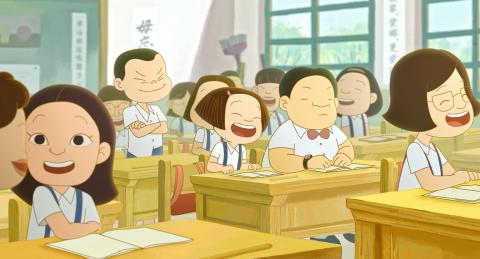
Photo courtesy of ifilm
“On Happiness Road realized animation’s full potential. It is imaginative, spans many eras and inspires reflection on the meaning of life,” Sweetland said.
Sung said previously in an interview with the Chinese-language Liberty Times (sister newspaper of the Taipei Times) that Chi’s story is inspired by her own experiences during Taiwan’s democratization.
Like herself, Chi witnessed the end of Chiang’s public adoration and the rise of Hoklo (commonly known as Taiwanese) from a banned language to that of the cultural mainstream, Sung said.
Animation was the appropriate medium to portray the magic realism that has overtaken the reality of that period, she said.
When On Happiness Road premiered in January in Taiwan, Minister of Culture Cheng Li-chiun (鄭麗君) said: “Everyone in the audience fell into a reverie of their past and was reminded of the Lin Shu-chi within themselves that they have forgotten in the bustle of daily life.”
The film began as an animated short, which Sung remade into a feature after it won the grand prize at the Taipei Film Festival in 2013 and received more than NT$1 million (US$34,180) in funding from the Golden Horse Film Project Promotion program and the Ministry of Culture.
Actress Gwei Lun-mei (桂綸鎂) and director Wei Te-sheng (魏德聖) contributed their voices for the characters free of charge, while pop star Jolin Tsai (蔡依林) performed for the soundtrack.
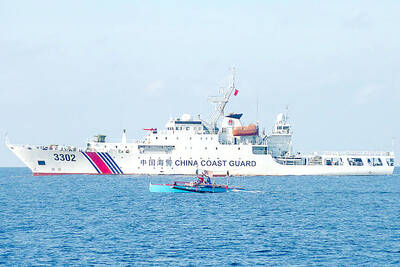
EXPANSIONIST: China deploys an average of 40 to 50 warships and coast guard vessels daily in the South China Sea, despite pledges not to militarize the region, an official said China is attempting to expand its influence across the First Island Chain and increase pressure on Japan by sending coast guard vessels into waters off of Taiwan under the pretext of maritime negotiations with Japan and the Philippines, a national security official said yesterday. China’s recent actions in the waters east of Taiwan and Japan and the Philippines’ exclusive economic zones (EEZ) are attempts to establish dominance in First Island Chain waters, said the official who declined to be named, adding that this is “expansion disguised as law enforcement.” Framing China’s actions solely as a cross-strait issue is a serious misjudgment that
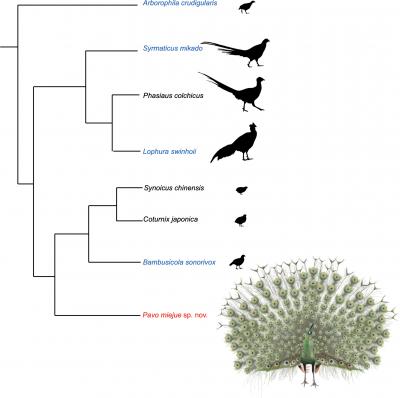
Through analyzing fossil evidence, a research team at National Taiwan University (NTU) discovered the largest endemic bird to have lived in Taiwan, naming it Pavo miejue, or extinct peafowl (滅絕孔雀). The Mikado pheasant, which is printed on the back of the NT$1,000 bank note, was previously believed to be the biggest endemic bird to Taiwan. The research team’s findings suggest that Pavo miejue lived during the Pleistocene epoch tens of thousands of years ago. It is the first endemic extinct bird species discovered and formally named in Taiwan. The study was coauthored by NTU Institute of Ecology and Evolutionary Biology professor Tsai Cheng-hsiu (蔡政修),
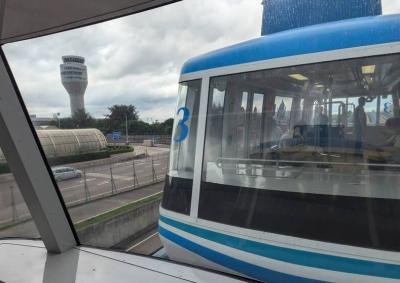
Taiwan Taoyuan International Airport is to suspend its automated Skytrain service connecting Terminal 1 and Terminal 2 starting on July 1 to facilitate connection works for the upcoming Terminal 3, the airport operator said today. Passengers and staff who need to travel between the two terminals after the suspension can instead use the Taoyuan MRT or the airport's 24-hour shuttle bus service, Taoyuan International Airport Corp said. The Taoyuan MRT Airport Line directly links the two terminals, while the shuttle buses are to operate around the clock, the company added. The Skytrain provides free transportation between the airport’s two terminals for travelers and
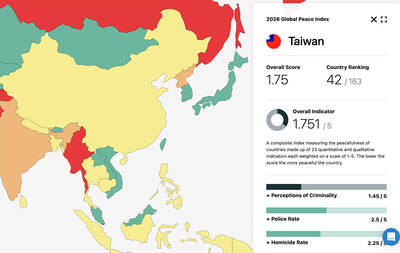
Taiwan ranked 42nd in terms of peacefulness among 163 countries, down five places from last year, according to this year’s Global Peace Index. With an overall score of 1.751, Taiwan dropped from 37th last year, the report published by the global Institute for Economics and Peace showed. The overall score measures a country’s level of peacefulness using 23 quantitative and qualitative indicators across three domains — ongoing domestic and international conflict, societal safety and security, and militarization. While Taiwan ranked 42nd worldwide, it was listed in ninth place among the 19 Asian-Pacific countries in the report, after New Zealand, Singapore, Japan, Malaysia,


 RSS
RSS