


Despite living in a nation overshadowed by ethnic divides and a long-lived, corrupt ruling party that cracks down on activists, representatives of the Malaysia-based Coalition for Clean and Fair Elections (Bersih 2.0) showed themselves unfazed, saying that they are convinced that people’s dream for a clean electoral system can transcend racial lines and survive despite a culture of fear of authorities.
“When this coalition was formed, civic society was not really directly involved,” Bersih 2.0 chairperson Maria Chin Abdullah said in an interview with the Taipei Times in Taipei on Saturday.
A coalition of 93 NGOs dedicated to pushing for clean elections and electoral reforms, Bersih 2.0 is the recipient of this year’s Asia Democracy and Human Rights Award, which is awarded by the Taiwan Foundation for Democracy.
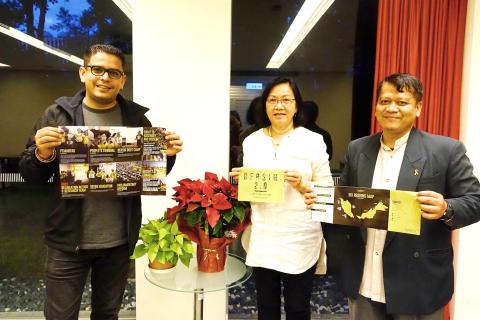
Photo: Stacy Hsu, Taipei Times
When the coalition was first established in 2005, some of its initiators were members of political parties, but it subsequently underwent a structural reform in 2009 and was reborn as a non-partisan group.
Eight years on, Bersih 2.0, which enjoys widespread recognition at home, is finally seeing its achievements recognized in the region, having won the Taiwanese award only a year after winning South Korea’s Gwangju Prize for Human Rights.
Maria Abdullah looked back at a major turning point for the coalition: its first rally as a non-partisan coalition in 2011.
“None of us had organized big rallies before. We were actually quite fearful and worried if we would even get 1,000 [participants],” she said. “But because of the manner in which the government attacked us, it gave us free publicity, but of course in a negative way.”
The movement’s leaders were arrested on the morning of the rally, but people somehow gathered anyway and marched on, and the rally eventually attracted a record number of 50,000 participants, Maria Abdullah said, adding that the number was unprecedented in Malaysia at the time due to a deeply entrenched fear of “getting in trouble with the authorities.”
She said the event proved to be a catalyst for change, as it shattered the myth that Malaysians cannot unite because of ethnic divisions and prompted people to connect with each other through social media, where they had vibrant political discussions.
“People felt empowered, I would say, that they can come together, regardless of race and religion, and that they can actually [speak] out,” she said. “Only when you engage yourselves in the process, then you realize: ‘Oh, I can actually do something.’ And not just by yourself, but with a group of people.”
Knowing that rallies alone could not effect far-reaching changes, Bersih 2.0 set up a series of voter education programs to raise social awareness about what constitutes a clean election.
The coalition in January last year initiated a free three-day democracy bootcamp targeting Malaysians between 18 and 35 years old, which is held once every two months, six times a year, Bersih 2.0 coalition manager Mandeep Singh said.
“The bootcamp is about democracy, elections and why elections are important,” Mandeep said. “Of course we want to reach out to young people who are first-timers and want to know about democracy, but we put more emphasis on the importance of participating [in] elections.”
“Participating [in] elections is not just coming out to vote,” he said, adding that one of the bootcamp’s main goals is to recruit volunteers from among the participants to help the coalition observe and monitor elections.
The coalition also launched a “convoy program” that makes stops across the country to have what it called “national conversations” with the people, talking to them about important issues in languages that they understand, Bersih 2.0 deputy chairman Shahrul Aman Mohd Saari said.
Bershi also encourages young people to challenge the government’s redrawing of electoral boundaries, which Mandeep said happens every eight to 10 years to maximize the electoral advantages of the ruling party.
“Delineation is a process where the ruling party, together with the Election Commission, legalize cheating. It means election results will be determined now, not on the voting day,” Mandeep said.
Despite regular elections, Malaysia has been governed by the Barisan Nasional (National Front) party and its predecessor, the Alliance coalition, since the nation gained independence in 1957.
According to this year’s Freedom in the World report by US-based Freedom House, the party has maintained power by manipulating electoral districts, appealing to ethnic nationalism and suppressing criticism through restrictive speech laws and politicized prosecutions of opposition leaders.
Bersih 2.0 activists have faced crackdowns and demonization by the Malaysian government: In November last year, Maria Abdullah was briefly detained without trial, while her coalition has been maliciously labeled as anti-Islam or “backed by Jewish supporters.”
The movement persevered and continued to channel the power of the people, gradually forcing the Malaysian government to make concessions, its leaders said.
“The government reluctantly responded to our demands by first creating the Parliamentary Select Committee on Electoral Reform [in 2011]… They actually made 22 recommendations on how the reform should be done and we were invited to give our feedback,” Maria Abdullah said.
The government has introduced indelible ink, which the coalition had requested, to eliminate so-called “phantom voters,” and has allowed Malaysians overseas to vote, she said.
“Even though it was like throwing crumbs to us, it was something we actually achieved,” she added.
Maria Abdullah said she plans to use the US$100,000 in award money to expand the coalition’s reach to marginalized groups in remote areas.
“Fundraising is quite hard in Malaysia. What we intend to use the money [on] is really on voters’ education,” Maria Abdullah said. “We will actually be expanding our constituency and getting more young people and women to be more aware about the situation, about their right to vote, and what they can do besides casting their votes once every five years.”
Asked whether another rally would be held, given that Malaysia’s next general election is around the corner, Maria Abdullah shook her head.
Plagued by corruption and slow economic growth, Malaysia is at a critical juncture, she said, in an apparent reference to an international money laundering scandal that has embroiled state fund 1Malaysia Development Berhad (1MDB) and has implicated Malaysian Prime Minister Najib Razak and other high-ranking officials.
“For him [Najib], the issue now for the coming election is his survival,” Maria Abdullah said.
That is why the coalition needs to strengthen its work at the ground level and reach more voters, rather than most likely bringing together the same people for another rally, she said.
The key to bringing about electoral reform is taking away voters’ fear and making them feel that they have the power to effect change by voicing their demands, Maria Abdullah said, summarizing the coalition’s experience.
“Politicians only listen to the people. That is where we come in. We tell the people, we raise awareness, we give them hope [that they can take] action and [help them] feel their power in the whole scheme of things,” Shahrul said.
Looking beyond Malaysia, Mandeep said he hopes the award will serve as an encouragement to fellow campaigners in ASEAN countries, where electoral systems are lacking or dysfunctional, to also rise.
“It is a struggle and it is a journey,” he said. “When you get an award, you feel inspired, but this struggle needs to be continued with or without it.”

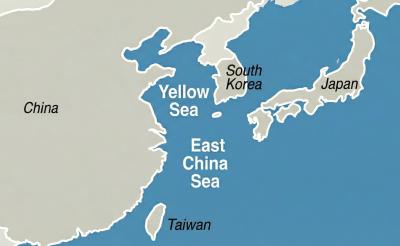
China has reserved offshore airspace in the Yellow Sea and East China Sea from March 27 to May 6, issuing alerts usually used to warn of military exercises, although no such exercises have been announced, the Wall Street Journal (WSJ) reported yesterday. Reserving such a large area for 40 days without explanation is an “unusual step,” as military exercises normally only last a few days, the paper said. These alerts, known as Notice to Air Missions (Notams), “are intended to inform pilots and aviation authorities of temporary airspace hazards or restrictions,” the article said. The airspace reserved in the alert is

More than 6,000 Taiwanese students have participated in exchange programs in China over the past two years, despite the Mainland Affairs Council’s (MAC) “orange light” travel advisory, government records showed. The MAC’s publicly available registry showed that Taiwanese college and university students who went on exchange programs across the Strait numbered 3,592 and 2,966 people respectively. The National Immigration Agency data revealed that 2,296 and 2,551 Chinese students visited Taiwan for study in the same two years. A review of the Web sites of publicly-run universities and colleges showed that Taiwanese higher education institutions continued to recruit students for Chinese educational programs without

A bipartisan group of US senators has introduced a bill to enhance cooperation with Taiwan on drone development and to reduce reliance on supply chains linked to China. The proposed Blue Skies for Taiwan Act of 2026 was introduced by Republican US senators Ted Cruz and John Curtis, and Democratic US senators Jeff Merkley and Andy Kim. The legislation seeks to ease constraints on Taiwan-US cooperation in uncrewed aerial systems (UAS), including dependence on China-sourced components, limited access to capital and regulatory barriers under US export controls, a news release issued by Cruz on Wednesday said. The bill would establish a "Blue UAS

The Republic of China Army Command yesterday relieved Kinmen Defense Battalion commander after authorities indicted the officer on charges connected to using methamphetamine. The Kinmen District Prosecutors’ Office on Wednesday detained Colonel He (何) after the Coast Guard linked him to drug shipments and proceeded to charge him yesterday for using and possessing crystal meth. The man was released on a NT$50,000 bail and banned from leaving Kinmen, the office said. Army Chief of Staff Lieutenant General Chen Chien-yi (陳建義) told a news conference yesterday that He has been removed and another officer is taking over the unit as the acting commander. The military


 RSS
RSS