


Democratic Progressive Party (DPP) lawmakers yesterday proposed amendments to remove references to “national unification” from the Act Governing Relations Between the People of the Taiwan Area and the Mainland Area (兩岸人民關係條例).
The amendments were sponsored by DPP legislators Su Chen-ching (蘇震清), Chiu Yi-ying (邱議瑩), Huang Wei-che (黃偉哲) and others in the party.
The draft amendments would affect several parts of the act, including Article 1, which states: “This act is ... enacted for the purposes of ensuring security and public welfare ... before national unification,” they said.
President Tsai Ing-wen (蔡英文) in her inaugural address on May 20 last year pledged to helm the nation’s cross-strait policy within the confines of the act and the Constitution.
When asked whether changing the act could have diplomatic ramifications, Su said that Taiwan is entitled to make its own decisions as a sovereign and independent nation.
“The Constitution protects citizens’ right to choose a national identity. The law should not use biased or presumptuous language to impose a specific national identity on the citizens,” Su said.
Multiple polls have shown that the public wants Taiwan to become a “real” nation and his proposal is aimed at bringing the issue to the fore, he said.
“We appreciate the nation’s precarious diplomatic situation and that the government is dealing with difficult challenges, but we have to confront our problems and should not limit our response to maintaining the ‘status quo,’ especially in light of China’s relentless persecution of Taiwan,” Su said.
“I hope we can let the world hear the voice of Taiwanese through the legislative amendment process,” he said.
However, Su said that he is uncertain about the proposal’s chances of passing a committee review.
Huang said Taiwan is a free and democratic nation where people are free to subscribe to various ideologies, and the law should not impose an ideology on the public.
Although the preamble to the Additional Articles of the Constitution explicitly refers to “national unification,” it is unnecessary to repeat the wording in other laws and striking out the phrase should not be a constitutional issue, Huang said.
Another proposed amendment would forbid Chinese from engaging in activities that are detrimental to Taiwan’s national security while they are in Taiwan, the lawmakers said.
A separate proposed amendment would require former Taiwanese who gave up their citizenship while in China to reapply for Republic of China citizenship before returning to Taiwan, they said.
The proposed amendments are aimed at fighting Beijing-backed political agitation conducted by Chinese or former Taiwanese, the lawmakers said.
The Mainland Affairs Council said it respects the lawmakers’ authority to legislate and it might discuss their proposals in a legislative session in a bid to form a consensus.
The council is in the process of reviewing the nation’s laws and regulations to counter Chinese efforts aimed at undermining Taiwan’s security and national interests, it added.

The Centers for Disease Control (CDC) yesterday reported the first case of a new COVID-19 subvariant — BA.3.2 — in a 10-year-old Singaporean girl who had a fever upon arrival in Taiwan and tested positive for the disease. The girl left Taiwan on March 20 and the case did not have a direct impact on the local community, it said. The WHO added the BA.3.2 strain to its list of Variants Under Monitoring in December last year, but this was the first imported case of the COVID-19 variant in Taiwan, CDC Deputy Director-General Lin Ming-cheng (林明誠) said. The girl arrived in Taiwan on

South Korea is planning to revise its controversial electronic arrival card, a step Taiwanese officials said prompted them to hold off on planned retaliatory measures, a South Korean media report said yesterday. A Yonhap News Agency report said that the South Korean Ministry of Foreign Affairs is planning to remove the “previous departure place” and “next destination” fields from its e-arrival card system. The plan, reached after interagency consultations, is under review and aims to simplify entry procedures and align the electronic form with the paper version, a South Korean ministry official said. The fields — which appeared only on the electronic form
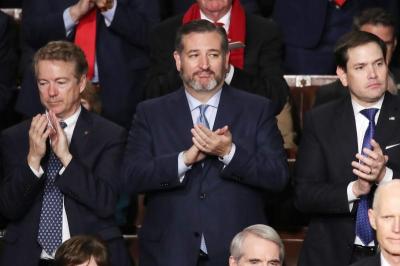
A bipartisan group of US senators has introduced a bill to enhance cooperation with Taiwan on drone development and to reduce reliance on supply chains linked to China. The proposed Blue Skies for Taiwan Act of 2026 was introduced by Republican US senators Ted Cruz and John Curtis, and Democratic US senators Jeff Merkley and Andy Kim. The legislation seeks to ease constraints on Taiwan-US cooperation in uncrewed aerial systems (UAS), including dependence on China-sourced components, limited access to capital and regulatory barriers under US export controls, a news release issued by Cruz on Wednesday said. The bill would establish a "Blue UAS

The Ministry of Foreign Affairs (MOFA) is suspending retaliation measures against South Korea that were set to take effect tomorrow, after Seoul said it is updating its e-arrival system, MOFA said today. The measures were to be a new round of retaliation after Taiwan on March 1 changed South Korea's designation on government-issued alien resident certificates held by South Korean nationals to "South Korea” from the "Republic of Korea," the country’s official name. The move came after months of protests to Seoul over its listing of Taiwan as "China (Taiwan)" in dropdown menus on its new online immigration entry system. MOFA last week


 RSS
RSS