


Dassault Aviation and two other French aerospace companies on Wednesday said they had been fined a combined 227 million euro (US$267 million) in Taiwan, settling what sources familiar with the case have described as a 25-year-old dispute over an arms sale.
Warplane maker Dassault said it had been fined 134 million euro, while radar supplier Thales said it was due to pay 64 million euro and enginemaker Safran said it accounted for 29 million.
“The industrial companies are considering the steps to be taken following this decision,” the companies said in separate statements.
The total fine corresponds to the amount the government had been seeking in arbitration over the allegedly wrongful use of commissions in the sale of 60 Mirage fighters to the island in 1992.
It follows a then-record bribes fine of 630 million euro imposed by a French court on the French government and Thales in 2011 over the use of commissions to sell frigates to Taiwan in 1991, a deal that led to a major kickbacks scandal in France.
Dassault said the new case dated back to 1992 and two people close to the matter said it concerned the sale of Mirage jets.
None of the three companies made provisions for the fines.
Taiwan pursued the three companies for US$260 million in 2002, but dropped the case a year later, only to relaunch its claim for EU$226 million, claiming this represented the use of commissions that had been banned in the fighter contract.
The arms deals led to a chill of several years in relations between France and China.
The scandal surrounding French arms sales to Taiwan in the early 1990s was one of a series of cases that underpinned accusations of widespread corruption during the final years of then-French president Francois Mitterrand.
It engulfed senior executives at the former Elf oil company and lay at the heart of the tortuous “Clearstream” affair a decade ago, in which a prime minister was accused of plotting to smear his rival, future French president Nicolas Sarkozy.
The fog over France’s deals with Taiwan is clearing just as the French aerospace industry faces new turmoil over the use of sales agents at planemaker Airbus, which said it might have to pay significant fines amid UK and French investigations.
Airbus has said it shared its own findings on suspect paperwork with UK authorities, triggering the probes, but is said to be shaken internally by the affair, which has placed growing pressure on Airbus chief executive Tom Enders.
Legal experts estimate that Airbus could eventually face fines of several billion euros, eclipsing the financial fallout from France’s Taiwan arms deals or a bribery fine of £687 million (US$908 million at the current exchange rate) imposed on Rolls-Royce in Britain earlier this year.
The Ministry of National Defense did not publish a response as of press time yesterday.

Actor Darren Wang (王大陸) was sentenced to six months in prison, commutable to a fine, by the New Taipei District Court today for contravening the Personal Data Protection Act (個人資料保護法) in a case linked to an alleged draft-dodging scheme. Wang allegedly paid NT$3.6 million (US$114,380) to an illegal group to help him evade mandatory military service through falsified medical documents, prosecutors said. He transferred the funds to Chen Chih-ming (陳志明), the alleged mastermind of a draft-evasion ring, although he lost contact with him as he was already in detention on fraud charges, they said. Chen is accused of helping a

SECURITY: Starlink owner Elon Musk has taken pro-Beijing positions, and allowing pro-China companies to control Taiwan’s critical infrastructure is risky, a legislator said Starlink was reluctant to offer services in Taiwan because of the nation’s extremely high penetration rates in 4G and 5G services, the Ministry of Digital Affairs said yesterday. The ministry made the comments at a meeting of the legislature’s Transportation Committee, which reviewed amendments to Article 36 of the Telecommunications Management Act (電信管理法). Article 36 bans foreigners from holding more than 49 percent of shares in public telecommunications networks, while shares foreigners directly and indirectly hold are also capped at 60 percent of the total, unless specified otherwise by law. The amendments, sponsored by Chinese Nationalist Party (KMT) Legislator Ko
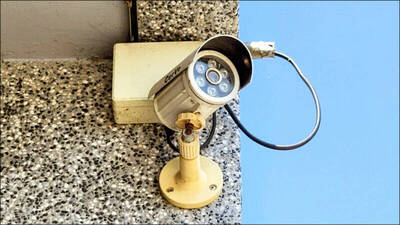
UNREASONABLE SURVEILLANCE: A camera targeted on an road by a neighbor captured a man’s habitual unsignaled turn into home, netting him dozens of tickets The Taichung High Administrative Court has canceled all 45 tickets given to a man for failing to use a turn signal while driving, as it considered long-term surveillance of his privacy more problematic than the traffic violations. The man, surnamed Tseng (曾), lives in Changhua County and was reported 45 times within a month for failing to signal while driving when he turned into the alley where his residence is. The reports were filed by his neighbor, who set up security cameras that constantly monitored not only the alley but also the door and yard of Tseng’s house. The surveillance occurred from July
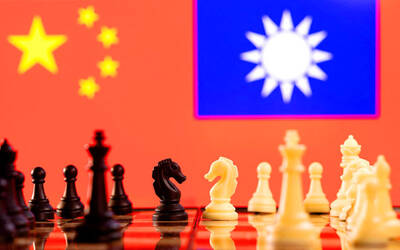
‘SAME OLD TRICK’: Even if Beijing resumes individual travel to Taiwan, it would only benefit Chinese tourism companies, the Economic Democracy Union convener said China’s 10 new “incentives” are “sugar-coated poison,” an official said yesterday, adding that Taiwanese businesses see them clearly for what they are, but that Beijing would inevitably find some local collaborators to try to drums up support. The official, speaking on condition of anonymity, made the remark ahead of a news conference the General Chamber of Commerce is to hold today. The event, titled “Industry Perspectives on China’s Recent Pro-Taiwan Policies,” is expected to include representatives from industry associations — such as those in travel, hotels, food and agriculture — to request the government cooperate with China’s new measures, people familiar with


 RSS
RSS