


Ten of the nation’s 15 grand justices are eligible for government pensions and should recuse themselves from any constitutional hearing on pension reform, two Democratic Progressive Party (DPP) legislators said yesterday.
Opponents of the pension reform bill for civil servants and public-school teachers passed last month have announced plans to begin a legal battle to overturn the legislation as soon as it takes effect in July next year.
While the Judicial Yuan Organization Act (司法院組織法) allows the appointment of lawyers and applicants who have “research law and have rich political experience” as grand justices, most appointees have come from the ranks of senior judges, prosecutors and legal academics who have accumulated many years of service, which often make them eligible for government pension benefits.
Of the 15 justices, Huang Hsi-chun (黃璽君), Tsai Chung-tun (蔡炯燉), Wu Chen-huan (吳陳鐶), Tsai Ming-cheng (蔡明誠) and Chen Be-yue (陳碧玉) have already accumulated “seniority” of more than 25 years, making them eligible for pensions benefits.
Council of Grand Justices members Chan San-lin (詹森林), Lin Jyun-yi (林俊益), Chang Chiung-wen (張瓊文), Lo Chang-fa (羅昌發) and Hwang Jau-yuan (黃昭元) have accumulated seniority of more than 15 years, making them eligible for pension benefits after they turn 60 if they return to government or teaching after completing their terms.
Of the council’s members, only career lawyers Huang Horng-shya (黃虹霞) and Huang Jui-ming (黃瑞明) have no years of seniority.
Under the Constitutional Interpretation Procedure Act (司法院大法官審理案件法), grand justices should use the Code of Administrative Procedure (行政訴訟法) — and by extension the Code of Civil Procedure (民事訴訟法) — rules to recuse themselves from any legal disputes where their participation could raise concerns about partiality, as well as any in which they have previously directly participated, DPP Legislator Tsai Yi-yu (蔡易餘) said.
Even if the Chinese Nationalist Party (KMT) fails to garner the cross-party coalition necessary to reach the 38-legislator threshold to directly apply for a constitutional interpretation, pension reform opponents would still apply after losing an administrative appeal to overturn the reforms, he said, calling on all justices with eligibility to receive pensions to recuse themselves as interested parties.
DPP Legislator Chuang Ruei-hsiung (莊瑞雄) said that at least half of the Council of Grand Justices’ members must participate in reviews of cases for the result to be valid under the Constitutional Interpretation Procedure Act, raising questions about whether the council should even accept the case given the number of justices with pension eligibility.
Because choosing to accept the case without the recusal of all interested justices could raise questions about the final rulings’ impartiality, justices should carefully consider the ethical and legal issues involved in taking on the case because of the potential for the council’s reputation to be deeply damaged, he said.
The legislature on Wednesday last week passed the Act Governing Civil Servants’ Retirement, Discharge and Pensions (公務人員退休資遣撫卹法), which slashed civil servants’ retirement benefits.
The act stipulates that the preferential, government-subsidized 18 percent interest rate on savings for those who receive NT$32,160 per month or more in retirement income is to be reduced to 9 percent from July 1, 2018 to Dec. 31, 2020, and cut to zero from Jan. 1, 2021.
In the case of retirees who opted for lump sum retirement payments rather than monthly pensions, the preferential interest rate is to decrease to 6 percent over a six-year period.
The bill would also gradually lower the income replacement rate for pensioners who are receiving NT$32,160 per month or more.
Additional reporting by Abraham Gerber and CNA

LOUD AND PROUD Taiwan might have taken a drubbing against Australia and Japan, but you might not know it from the enthusiasm and numbers of the fans Taiwan might not be expected to win the World Baseball Classic (WBC) but their fans are making their presence felt in Tokyo, with tens of thousands decked out in the team’s blue, blowing horns and singing songs. Taiwanese fans have packed out the Tokyo Dome for all three of their games so far and even threatened to drown out home team supporters when their team played Japan on Friday. They blew trumpets, chanted for their favorite players and had their own cheerleading squad who dance on a stage during the game. The team struggled to match that exuberance on the field, with
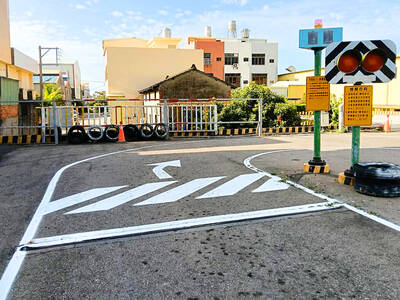
UPDATED TEST: The new rules aim to assess drivers’ awareness of risky behaviors and how they respond under certain circumstances, the Highway Bureau said Driver’s license applicants who fail to yield to pedestrians at intersections or to check blind spots, or omit pointing-and-calling procedures would fail the driving test, the Highway Bureau said yesterday. The change is set to be implemented at the end of the month, and is part of the bureau’s reform of the driving portion of the test, which has been criticized for failing to assess whether drivers can operate vehicles safely. Sedan drivers would be tested regarding yielding to pedestrians and turning their heads to check blind spots, while drivers of large vehicles would be tested on their familiarity with pointing-and-calling
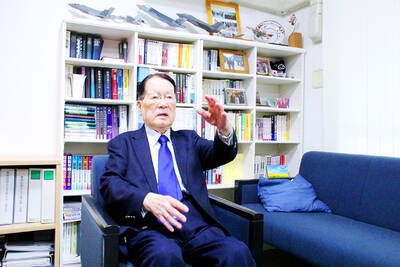
Whether Japan would help defend Taiwan in case of a cross-strait conflict would depend on the US and the extent to which Japan would be allowed to act under the US-Japan Security Treaty, former Japanese minister of defense Satoshi Morimoto said. As China has not given up on the idea of invading Taiwan by force, to what extent Japan could support US military action would hinge on Washington’s intention and its negotiation with Tokyo, Morimoto said in an interview with the Liberty Times (sister paper of the Taipei Times) yesterday. There has to be sufficient mutual recognition of how Japan could provide

A Taiwanese man apologized on Friday after saying in a social media post that he worked with Australia to provide scouting reports on Taiwan’s team, enabling Australia’s victory in this year’s World Baseball Classic (WBC), saying it was a joke and that he did not hold any position with foreign teams or Taiwan’s sports training center. Chen Po-hao (陳柏豪) drew the rage of many Taiwan baseball fans when he posted online on Thursday night, claiming credit for Australia’s 3-0 win over Taiwan in the opening game for Pool C, saying he worked as a physical therapist with the national team and


 RSS
RSS