


Two former presidents embroiled in separate legal battles were summoned to courts yesterday.
Former president Chen Shui-bian (陳水扁), on medical parole, did not show up at the Taiwan High Court, while former president Ma Ying-jeou (馬英九) defended himself at the Taipei District Court.
Tseng Te-shui (曾德水), the presiding judge at the Taiwan High Court, summoned Chen and his defense lawyers to appear at yesterday’s hearing for a retrial of allegations of bribe-taking and corruption during a series of bank mergers.
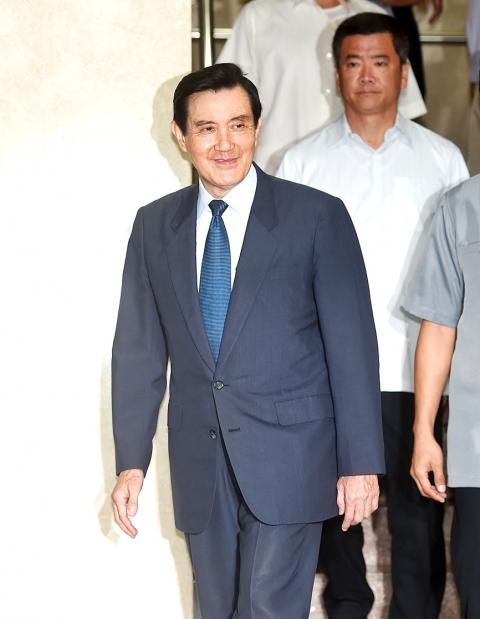
Photo: Fang Pin-chao, Taipei Times
Chen and his attorney, Jerry Cheng (鄭文龍), applied beforehand to be absent from the hearing, while the two other lawyers, Shih Yi-lin (石宜琳) and Hung Kwei-san (洪貴參), said medical evaluation was not part of their professional training and they were unable to give opinions on Chen’s health situation.
Tseng proceeded with the hearing, despite Chen’s and his legal team’s absence, and reviewed video of Chen’s appearances at social functions.
Tseng said the former president had been walking and speaking in a normal manner, and that he had not seen signs of stuttering or impairment when talking with others.
“The video also showed Chen held conversations with other guests, was able to eat with chopsticks at dinner banquets and held a glass as a gesture of appreciation to other guests. His hands were not shaking as they did before,” Tseng said.
Tseng said these indicated Chen’s health had been restored and “can be used as a reference point for summoning him to court to stand trial.”
He said he will discuss the matter with the two other judges and will consider holding another hearing to evaluate Chen’s medical condition.
Tseng suggested that he might revoke the medical parole and restart the trial.
“According to the Supreme Court, the doctor’s opinions shall only be taken as reference. The law also stipulates that rescinding the order to suspend a trial is a procedural matter, which will not require presentation of conclusive evidence,” he said.
Chen’s office issued a statement, saying: “The court is not an expert in medical evaluation. Professional medical teams are needed to verify if Chen is fit to stand trial.”
Separately yesterday, Ma appeared at a hearing at the Taipei District Court in connection with allegations of illegal wiretapping stemming from 2013.
Former prosecutor-general Huang Shih-ming (黃世銘) has been convicted of leaking information from a judicial investigation to Ma, contravening the Communication Security and Surveillance Act (通訊監察保護法) and the Personal Information Protection Act (個人資料保護法).
Ma criticized the prosecutors, saying they had based the prosecution on flimsy evidence, hearsay and speculation.
“The prosecutors are so out of touch with reality, the extent of it is rarely seen in the world,” he said. “This is not any ordinary case, but it is a litigation on constitutional interpretation... According to all the evidence and facts, I am not guilty.”
“We indicted former president Ma and he appeared not very happy about it,” Prosecutor Liang Kuang-tsung (梁光宗) said.
“Ma had twice leaked classified information, which had damaged the principle of separation of powers, and contravened the authority of the legislature. He also interfered in the independence of public prosecutors to conduct judicial investigation... If a president can meddle in a judicial investigation including obtaining information through wiretapping, then independence of the judiciary would be meaningless,” Liang said.
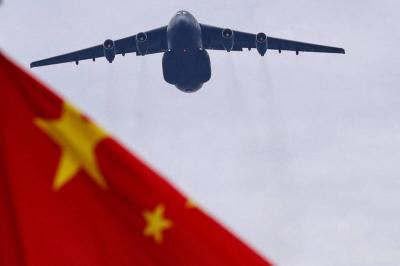
Beijing could eventually see a full amphibious invasion of Taiwan as the only "prudent" way to bring about unification, the US Department of Defense said in a newly released annual report to Congress. The Pentagon's "Annual Report to Congress: Military and Security Developments Involving the People's Republic of China 2025," was in many ways similar to last year’s report but reorganized the analysis of the options China has to take over Taiwan. Generally, according to the report, Chinese leaders view the People's Liberation Army's (PLA) capabilities for a Taiwan campaign as improving, but they remain uncertain about its readiness to successfully seize
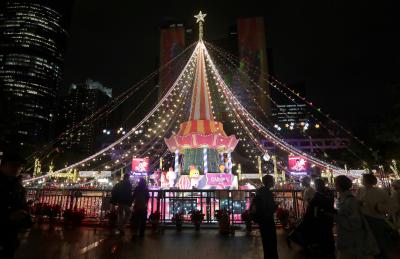
Taiwan is getting a day off on Christmas for the first time in 25 years. The change comes after opposition parties passed a law earlier this year to add or restore five public holidays, including Constitution Day, which falls on today, Dec. 25. The day marks the 1947 adoption of the constitution of the Republic of China, as the government in Taipei is formally known. Back then the Chinese Nationalist Party (KMT) governed China from Nanjing. When the KMT, now an opposition party in Taiwan, passed the legislation on holidays, it said that they would help “commemorate the history of national development.” That

Taiwan has overtaken South Korea this year in per capita income for the first time in 23 years, IMF data showed. Per capita income is a nation’s GDP divided by the total population, used to compare average wealth levels across countries. Taiwan also beat Japan this year on per capita income, after surpassing it for the first time last year, US magazine Newsweek reported yesterday. Across Asia, Taiwan ranked fourth for per capita income at US$37,827 this year due to sustained economic growth, the report said. In the top three spots were Singapore, Macau and Hong Kong, it said. South

Snow fell on Yushan (Jade Mountain, 玉山) yesterday morning as a continental cold air mass sent temperatures below freezing on Taiwan’s tallest peak, the Central Weather Administration (CWA) said. Snowflakes were seen on Yushan’s north peak from 6:28am to 6:38am, but they did not fully cover the ground and no accumulation was recorded, the CWA said. As of 7:42am, the lowest temperature recorded across Taiwan was minus-5.5°C at Yushan’s Fengkou observatory and minus-4.7°C at the Yushan observatory, CWA data showed. On Hehuanshan (合歡山) in Nantou County, a low of 1.3°C was recorded at 6:39pm, when ice pellets fell at Songsyue Lodge (松雪樓), a


 RSS
RSS