


Publisher and former national policy adviser Rex How (郝明義) has launched an online petition urging the government to conduct a thorough review of and hold a public debate on the Forward-looking Infrastructure Development Program to prevent unnecessary spending.
The eight-year, NT$882.49 billion (US$29.24 billion) project is expected to be approved in the extraordinary legislative session starting tomorrow, but How and a coalition of campaigners yesterday launched a signature drive to call on the government to re-examine the program.
They asked the government to elucidate the necessity of each of the infrastructure projects in the program, their source of funding, and benefit and social impact, as well as possible alternatives to each program and an estimated number of jobs to be created.
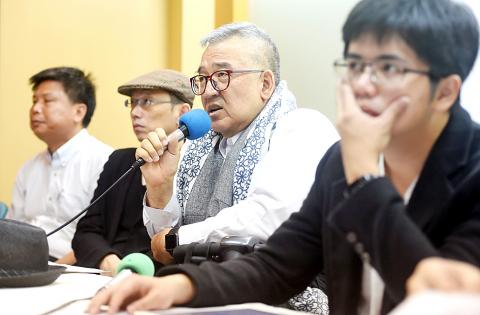
Photo: Liao Chen-huei, Taipei Times
The drive was launched through the National Development Council’s policy discussion forum, as the government is required to reply to any petition launched on the forum which is signed by more than 5,000 people within two months.
Campaigners include former Democratic Progressive Party legislator Lin Choi-shui (林濁水), National Chengchi University land economics professor Hsu Shih-jung (徐世榮), government watchdog site Watchout chief executive Lin Tzu-yi (林祖儀) and democracy activist Dennis Wei (魏揚).
A description running only a few hundred words was provided for a NT$30 billion light rail project in Hsinchu City in the program’s official document, suggesting a hasty budgeting practice that failed to take into to account the necessity of proposed projects, How said.
“A draft act on the program received the approval of a legislative committee, but not a single word of the act was modified,” How said, criticizing the review process.
National Association for the Promotion of Community Universities secretary-general Yang Chih-pin (楊志彬) said most major water and flood management infrastructure were built in the past decade and there should be no urgency to build new water supply facilities as the program emphasizes.
“The government should instead focus on water conservation and pollution remediation to ensure environmental and ecological protection,” Yan said.
The program might result in more spending than expected because extra construction costs often emerge in public infrastructure projects, artist Yao Jui-chung (姚瑞中) said, citing additional spending in more than 90 percent of public construction projects last year.
Yao, who has published five books documenting the so-called “mosquito halls” — a reference to buildings that are underutilized — said the government risks creating more underutilized infrastructure if it does not thoroughly review the program.
Hsu criticized the program for what he said its inferior planning and an authoritarian decisionmaking process.
The program’s official report is shallow in content, Hsu said, adding that it might have been hastily drafted by think tanks and consultancy firms.
The program, like all major construction projects, has to undergo a four-step process that involves submission of plans for construction, environmental protection, land use and expropriation, but the Executive Yuan has approved the construction portion of the program before the other plans were submitted, which would make the reviewing of the remaining three portions of the program merely a rubber-stamp process, he added.
“This is the authoritarianism that the Chinese Nationalist Party [KMT] established. It was anticipated that the Democratic Progressive Party administration would make some changes, but nothing has changed,” Hsu said.

The manufacture of the remaining 28 M1A2T Abrams tanks Taiwan purchased from the US has recently been completed, and they are expected to be delivered within the next one to two months, a source said yesterday. The Ministry of National Defense is arranging cargo ships to transport the tanks to Taiwan as soon as possible, said the source, who is familiar with the matter. The estimated arrival time ranges from late this month to early next month, the source said. The 28 Abrams tanks make up the third and final batch of a total of 108 tanks, valued at about NT$40.5 billion

Travel agencies in Taiwan are working to secure alternative flights for travelers bound for New Zealand for the Lunar New Year holiday, as Air New Zealand workers are set to strike next week. The airline said that it has confirmed that the planned industrial action by its international wide-body cabin crew would go ahead on Thursday and Friday next week. While the Auckland-based carrier pledged to take reasonable measures to mitigate the impact of the workers’ strike, an Air New Zealand flight arriving at Taipei from Auckland on Thursday and another flight departing from Taipei for Auckland on Saturday would have to
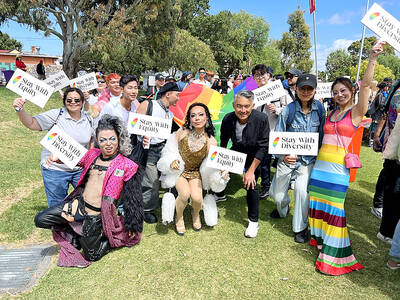
A group from the Taiwanese Designers in Australia association yesterday represented Taiwan at the Midsumma Pride March in Melbourne. The march, held in the St. Kilda suburb, is the city’s largest LGBTQIA+ parade and the flagship event of the annual Midsumma Festival. It attracted more than 45,000 spectators who supported the 400 groups and 10,000 marchers that participated this year, the association said. Taiwanese Designers said they organized a team to march for Taiwan this year, joining politicians, government agencies, professionals and community organizations in showing support for LGBTQIA+ people and diverse communities. As the first country in Asia to legalize same-sex
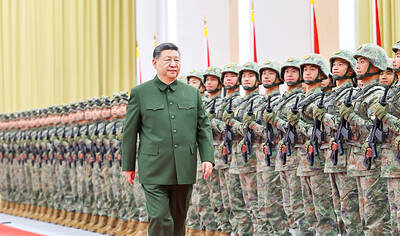
MOTIVES QUESTIONED The PLA considers Xi’s policies toward Taiwan to be driven by personal considerations rather than military assessment, the Epoch Times reports Chinese President Xi Jinping’s (習近平) latest purge of the Chinese People’s Liberation Army (PLA) leadership might have been prompted by the military’s opposition to plans of invading Taiwan, the Epoch Times said. The Chinese military opposes waging war against Taiwan by a large consensus, putting it at odds with Xi’s vision, the Falun Gong-affiliated daily said in a report on Thursday, citing anonymous sources with insight into the PLA’s inner workings. The opposition is not the opinion of a few generals, but a widely shared view among the PLA cadre, the Epoch Times cited them as saying. “Chinese forces know full well that


 RSS
RSS