


Following its failure to secure an invitation to this year’s meeting of the World Health Assembly (WHA), Taiwan should seek international participation as an independent nation, rather than as an entity whose involvement is contingent on China’s attitude, academics said yesterday.
Beijing rejected Taiwan’s bid to join the meeting, although the Mainland Affairs Council (MAC) twice sought to communicate with China on the matter — in March and this month.
President Tsai Ing-wen (蔡英文) described the nation’s attendance at this year’s WHA as “an important indicator of cross-strait relations” during a media interview aimed at urging Beijing to allow Taiwan’s WHA bid.
Taiwan was also denied participation in the International Civil Aviation Organization assembly, which took place in Canada last year, despite the MAC’s attempt to negotiate with China over the bid.
Beijing has not changed its attitude toward Taipei since Tsai took office, but her administration has misjudged cross-strait relations, National Tsing Hua University law professor Huang Chu-cheng (黃居正) said.
“Her administration [should not] continue to become entangled in [international] situations that are determined by China,” Huang said.
The government has to review its foreign policy by first understanding Taiwan’s status in international law, which defines an international organization as a body joined by individual nations under the terms of international agreements, he said.
“How can Taiwan seek international participation if it cannot be sure of its status as a country independent from China?” Huang asked.
Taiwan should not join international organizations as “Chinese Taipei” or as an observer, but should instead seek “formal membership unrelated to China,” he said.
Otherwise, Taipei could invite the misunderstanding that it is competing with Beijing to represent China, he said.
The policy of maintaining the “status quo” in cross-strait relations should also be re-examined because it appears to promote the “status quo” of Beijing’s “one China” principle, he said.
“[The government] might speak equivocally and fool Taiwanese with beautiful lies, but the same strategy is useless in the international arena, which requires an unambiguous” assertion of statehood, Huang said.
Taiwan should seek to participate on the global stage as an independent sovereign country; a bid which might fail, but unless it tries, Taiwan’s only options are dictated by China, he said.
Taiwan should seek participation in the UN General Assembly in September, although the Tsai administration’s did not apply to do so last year, National Taiwan University law professor Chiang Huang-chih (姜皇池) said.
The government should ask Taiwan’s diplomatic allies to file proposals with the UN, he added.
“A certain degree of momentum has to be maintained. Although China is going to crush and beat us, we have to keep taking actions to create a separate path for Taiwan from China,” Chiang said. “There will never be a chance if we do not try.”
Minister of Health and Welfare Chen Shih-chung (陳時中), who led the Taiwanese delegation that interacted with international health officials on the sidelines of the WHA meeting in Geneva, Switzerland, on Sunday returned to Taiwan and is due make a report on the delegation’s findings at the legislature tomorrow and at the Executive Yuan on Thursday.
The delegation achieved fruitful results, with 59 bilateral meetings held — the same number of meetings convened last year — despite Chinese suppression, an unnamed official said.
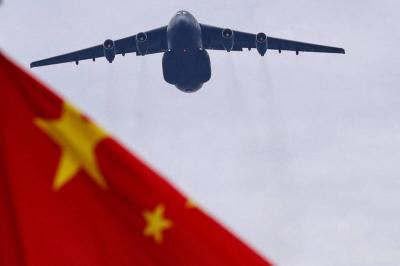
Beijing could eventually see a full amphibious invasion of Taiwan as the only "prudent" way to bring about unification, the US Department of Defense said in a newly released annual report to Congress. The Pentagon's "Annual Report to Congress: Military and Security Developments Involving the People's Republic of China 2025," was in many ways similar to last year’s report but reorganized the analysis of the options China has to take over Taiwan. Generally, according to the report, Chinese leaders view the People's Liberation Army's (PLA) capabilities for a Taiwan campaign as improving, but they remain uncertain about its readiness to successfully seize
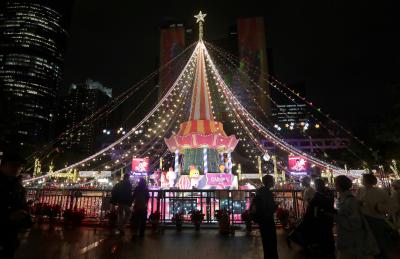
Taiwan is getting a day off on Christmas for the first time in 25 years. The change comes after opposition parties passed a law earlier this year to add or restore five public holidays, including Constitution Day, which falls on today, Dec. 25. The day marks the 1947 adoption of the constitution of the Republic of China, as the government in Taipei is formally known. Back then the Chinese Nationalist Party (KMT) governed China from Nanjing. When the KMT, now an opposition party in Taiwan, passed the legislation on holidays, it said that they would help “commemorate the history of national development.” That

Taiwan has overtaken South Korea this year in per capita income for the first time in 23 years, IMF data showed. Per capita income is a nation’s GDP divided by the total population, used to compare average wealth levels across countries. Taiwan also beat Japan this year on per capita income, after surpassing it for the first time last year, US magazine Newsweek reported yesterday. Across Asia, Taiwan ranked fourth for per capita income at US$37,827 this year due to sustained economic growth, the report said. In the top three spots were Singapore, Macau and Hong Kong, it said. South

Snow fell on Yushan (Jade Mountain, 玉山) yesterday morning as a continental cold air mass sent temperatures below freezing on Taiwan’s tallest peak, the Central Weather Administration (CWA) said. Snowflakes were seen on Yushan’s north peak from 6:28am to 6:38am, but they did not fully cover the ground and no accumulation was recorded, the CWA said. As of 7:42am, the lowest temperature recorded across Taiwan was minus-5.5°C at Yushan’s Fengkou observatory and minus-4.7°C at the Yushan observatory, CWA data showed. On Hehuanshan (合歡山) in Nantou County, a low of 1.3°C was recorded at 6:39pm, when ice pellets fell at Songsyue Lodge (松雪樓), a


 RSS
RSS