


A language test center in Taipei yesterday said that it is working toward offering language proficiency tests for Southeast Asian languages.
The Language Training and Testing Center said it plans to introduce authorized tests for Southeast Asian languages, as it has done for the Japanese and Korean languages.
The largest foreign language test center in the nation is collecting data and coordinating with the authorities in Southeast Asian nations to obtain accreditation to administer the tests, research and development head Jessica Wu (吳若蕙) said.
Encouraged by the government’s “new southbound policy,” the center began offering Vietnamese language classes earlier this year, but has not yet been accredited to administer proficiency tests in that language, Wu said.
The policy seeks to develop closer ties with Southeast and South Asian nations, as well as New Zealand and Australia.
Although Vietnam and other Southeast Asian nations conduct language proficiency tests, the tests are not available in foreign nations, she said.
Taiwan could become the first nation in the world to offer tests for people learning the languages, Wu said.
She said young and middle-aged people would likely be the most interested in the languages, because it would give them an advantage in the job market.
The core curriculum of the nation’s K-12 education system includes languages of the home nations of new immigrants.
In related news, demand for Japanese-language classes has been growing among Taiwanese, many of whom are likely interested in Japanese tourism and TV dramas, the center said.
Of the 870,000 people worldwide who took the Japanese-Language Proficiency Test (JLPT) last year, about 80,000 were from Taiwan, said the center, which is authorized to administer the test in the nation.
The number was second only to 217,000 Chinese and surpassed 79,000 South Koreans who took the test, the center said, citing statistics from the Japan Foundation, a co-organizer of the JLPT.
Between 2011 and last year, the number of people in Taiwan taking the test rose 51 percent, the center said.
The jump is remarkable given the relatively small size of the nation’s population and would probably be even higher if self-taught people were taken into account, it said.
Taiwan has the sixth-highest number of Japanese-teaching institutions and the fifth-largest number of Japanese teachers and students in the world, the statistics show.
More than 60 percent of JLPT candidates in Taiwan are between the ages of 16 and 25, Wu said.
However, the number of older candidates has been increasing, Wu said, adding that it could be caused by the popularity of the Japanese culture.
The JLPT is divided into five levels, from N1 to N5, and the results are accepted as qualification for admission to Japanese universities, and for employment and promotion in Japan, Wu said.
People who major in Japanese are required to pass the highest levels of N1 or N2, while exchange students in Japan are required to pass at least the N3 level, she said.
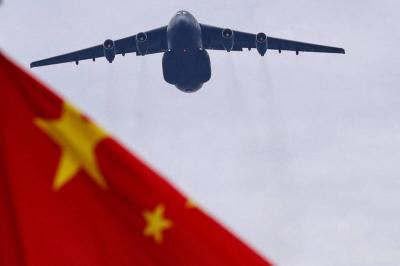
Beijing could eventually see a full amphibious invasion of Taiwan as the only "prudent" way to bring about unification, the US Department of Defense said in a newly released annual report to Congress. The Pentagon's "Annual Report to Congress: Military and Security Developments Involving the People's Republic of China 2025," was in many ways similar to last year’s report but reorganized the analysis of the options China has to take over Taiwan. Generally, according to the report, Chinese leaders view the People's Liberation Army's (PLA) capabilities for a Taiwan campaign as improving, but they remain uncertain about its readiness to successfully seize

Taiwan is getting a day off on Christmas for the first time in 25 years. The change comes after opposition parties passed a law earlier this year to add or restore five public holidays, including Constitution Day, which falls on today, Dec. 25. The day marks the 1947 adoption of the constitution of the Republic of China, as the government in Taipei is formally known. Back then the Chinese Nationalist Party (KMT) governed China from Nanjing. When the KMT, now an opposition party in Taiwan, passed the legislation on holidays, it said that they would help “commemorate the history of national development.” That

Taiwan has overtaken South Korea this year in per capita income for the first time in 23 years, IMF data showed. Per capita income is a nation’s GDP divided by the total population, used to compare average wealth levels across countries. Taiwan also beat Japan this year on per capita income, after surpassing it for the first time last year, US magazine Newsweek reported yesterday. Across Asia, Taiwan ranked fourth for per capita income at US$37,827 this year due to sustained economic growth, the report said. In the top three spots were Singapore, Macau and Hong Kong, it said. South

Snow fell on Yushan (Jade Mountain, 玉山) yesterday morning as a continental cold air mass sent temperatures below freezing on Taiwan’s tallest peak, the Central Weather Administration (CWA) said. Snowflakes were seen on Yushan’s north peak from 6:28am to 6:38am, but they did not fully cover the ground and no accumulation was recorded, the CWA said. As of 7:42am, the lowest temperature recorded across Taiwan was minus-5.5°C at Yushan’s Fengkou observatory and minus-4.7°C at the Yushan observatory, CWA data showed. On Hehuanshan (合歡山) in Nantou County, a low of 1.3°C was recorded at 6:39pm, when ice pellets fell at Songsyue Lodge (松雪樓), a


 RSS
RSS