


The Legislative Yuan’s Internal Administration Committee on Wednesday passed a review of a bill to promote Aboriginal languages, which would grant them the legal status of “national languages” and funnel subsidies for their promotion.
Following two days of clause-by-clause review, which saw the participation of Council of Indigenous Peoples Minister Icyang Parod, the bill was passed by the committee and is to be submitted to a general assembly without further cross-caucus negotiations.
Local governments with authority over designated Aboriginal areas are to be responsible for hiring full-time staff to promote Aboriginal languages, according to the bill, which also requires the central government to help local governments and Aboriginal communities create organizations to promote Aboriginal languages.

Photo: CNA
The central government must consult Aboriginal communities and create Aboriginal-language dictionaries, databases and neologisms for their use, the bill reads.
The central government would also be responsible for regularly surveying the native language fluency of Aborigines, as well as organizing free certification processes for language competency.
Three years after the bill is promulgated into law, people of Aboriginal descent taking special civil servant exams or applying for public grants to study abroad would be required to acquire native language fluency certificates, according to the draft.
The committee said the bill was drafted to follow the Universal Declaration of Linguistic Rights, allowing Aboriginal languages to be used as official languages in the areas they are commonly spoken.
The bill stipulates that government offices, schools and state-owned businesses may use the common local language in official documents, while Aborigines may speak their native tongue for administrative and judicial purposes, with the central government responsible for hiring translators in such situations.
Schools would be required to provide Aboriginal-language classes under the guidelines for the 12-year basic national education curriculum and the central government is to encourage the use of Aboriginal languages in classrooms.
Educational authorities are to train teachers with the appropriate language fluency in order to help local governments, which are to employ such teachers full time, the bill reads.
The bill requires the central government to list budget items dedicated to the preservation of Aboriginal languages, while media content that has received state subsidies to promote Aboriginal languages must use those languages for at least 50 percent of their broadcast time.

Eight Chinese naval vessels and 24 military aircraft were detected crossing the median line of the Taiwan Strait between 6am yesterday and 6am today, the Ministry of National Defense said this morning. The aircraft entered Taiwan’s northern, central, southwestern and eastern air defense identification zones, the ministry said. The armed forces responded with mission aircraft, naval vessels and shore-based missile systems to closely monitor the situation, it added. Eight naval vessels, one official ship and 36 aircraft sorties were spotted in total, the ministry said.
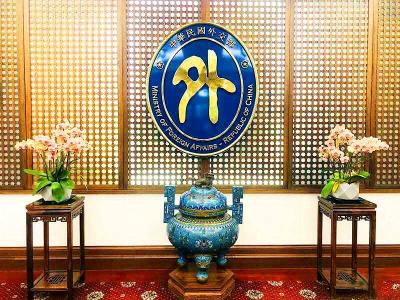
The Ministry of Foreign Affairs (MOFA) today said that if South Korea does not reply appropriately to its request to correct Taiwan’s name on its e-Arrival card system before March 31, it would take corresponding measures to alter how South Korea is labeled on the online Taiwan Arrival Card system. South Korea’s e-Arrival card system lists Taiwan as “China (Taiwan)” in the “point of departure” and “next destination” fields. The ministry said that it changed the nationality for South Koreans on Taiwan’s Alien Resident Certificates from “Korea” to “South Korea” on March 1, in a gesture of goodwill and based on the

Taiwanese officials were shown the first of 66 F-16V fighter jets purchased by Taiwan from the United States, the Ministry of National Defense said yesterday, adding the aircraft has completed an initial flight test and is expected to be delivered later this year. A delegation led by Deputy Minister of National Defense Hsu Szu-chien (徐斯儉) visited Lockheed Martin’s F-16 C/D Block 70 (also known as F-16V) assembly line in South Carolina on March 16 to view the aircraft. The jet will undergo a final acceptance flight in the US before being delivered to Taiwan, the
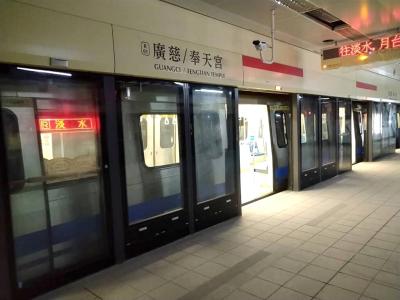
The New Taipei Metro's Sanyin Line and the eastern extension of the Taipei Metro's Tamsui-Xinyi Line (Red Line) are scheduled to begin operations in June, the National Development Council said today. The Red Line, which terminates at Xiangshan Station, would be connected by the 1.4km extension to a new eastern terminal, Guangci/Fengtian Temple Station, while the Sanyin Line would link New Taipei City's Tucheng and Yingge stations via Sanxia District (三峽). The council gave the updates at a council meeting reviewing progress on public construction projects for this year. Taiwan's annual public infrastructure budget would remain at NT$800 billion (US$25.08 billion), with NT$97.3


 RSS
RSS