


The Democratic Progressive Party (DPP) caucus is considering legislation that would allow authorities to seize the assets of suspected drug dealers to cut off funding for drug trafficking and help the nation in its war on drugs.
DPP Legislator Chiang Yung-chang (江永昌) is to propose an amendment to the Narcotics Hazard Prevention Act (毒品危害防制條例) that would allow prosecutors to confiscate illegal sources of income of suspected drug dealers to cut off financial flows to drug syndicates.
At present, law enforcement officials cannot seize the assets of suspected drug dealers unless the items are proven to be illegal.
The amendment would allow prosecutors to impound suspected illegal gains unless the owner can prove they have not been obtained illegally, Chiang said.
The amendment hews to the spirit of newly enacted amendments to the Money Laundering Control Act (洗錢防制法), which authorize prosecutors to confiscate suspected illegal assets of people facing money-laundering charges, Chiang added.
There were 34,492 crimes reported last year, and about one-third were drug-related offenses, DPP Legislator Tsai Yi-yu (蔡易餘) said, adding that the ratio is likely to remain the same this year.
“The use of prohibited substances is rampant in the country. The time has come to declare war on drugs,” Tsai said.
With the proposed amendment, prosecutors can probe people and companies linked to drug suspects and seize suspicious assets, Tsai said.
Drug use is high among teenagers and high-school students, and stricter regulations and law enforcement are needed to prevent drug abuse, DPP Legislator Wang Ding-yu (王定宇) said.
Ketamine, a prohibited substance commonly abused by high-school students, is a category 3 narcotic, the use and possession of which is punishable by lenient sentences, with the court often acquitting people found to possess 20g of ketamine, Wang said.
Wang said he would seek to adjust the categorization of ketamine to make it a category 2 drug, the use of which is a heavier crime.
Alternatively, penalties may be raised for the possession of even a slight amount of ketamine, he said.
The amendment would also seek to raise penalties for those selling drugs to teenagers or students, Wang added.
“It is our generation’s fault if children and teenagers continue to be exposed to drugs. We have to take responsibility and solve the drug problem,” he said.
Wang added that the DPP would not accept the idea of decriminalizing drugs, which was proposed during the National Congress on Judicial Reform last month.

Taiwanese can file complaints with the Tourism Administration to report travel agencies if their activities caused termination of a person’s citizenship, Mainland Affairs Council Minister Chiu Chui-cheng (邱垂正) said yesterday, after a podcaster highlighted a case in which a person’s citizenship was canceled for receiving a single-use Chinese passport to enter Russia. The council is aware of incidents in which people who signed up through Chinese travel agencies for tours of Russia were told they could obtain Russian visas and fast-track border clearance, Chiu told reporters on the sidelines of an event in Taipei. However, the travel agencies actually applied
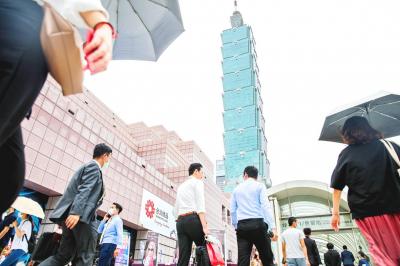
Japanese footwear brand Onitsuka Tiger today issued a public apology and said it has suspended an employee amid allegations that the staff member discriminated against a Vietnamese customer at its Taipei 101 store. Posting on the social media platform Threads yesterday, a user said that an employee at the store said that “those shoes are very expensive” when her friend, who is a migrant worker from Vietnam, asked for assistance. The employee then ignored her until she asked again, to which she replied: "We don't have a size 37." The post had amassed nearly 26,000 likes and 916 comments as of this

New measures aimed at making Taiwan more attractive to foreign professionals came into effect this month, the National Development Council said yesterday. Among the changes, international students at Taiwanese universities would be able to work in Taiwan without a work permit in the two years after they graduate, explainer materials provided by the council said. In addition, foreign nationals who graduated from one of the world’s top 200 universities within the past five years can also apply for a two-year open work permit. Previously, those graduates would have needed to apply for a work permit using point-based criteria or have a Taiwanese company
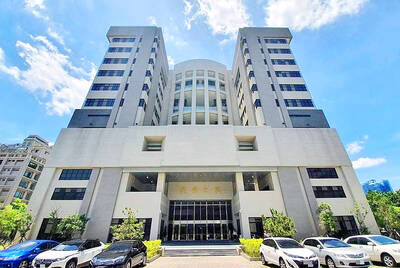
The Shilin District Prosecutors’ Office yesterday indicted two Taiwanese and issued a wanted notice for Pete Liu (劉作虎), founder of Shenzhen-based smartphone manufacturer OnePlus Technology Co (萬普拉斯科技), for allegedly contravening the Act Governing Relations Between the People of the Taiwan Area and the Mainland Area (臺灣地區與大陸地區人民關係條例) by poaching 70 engineers in Taiwan. Liu allegedly traveled to Taiwan at the end of 2014 and met with a Taiwanese man surnamed Lin (林) to discuss establishing a mobile software research and development (R&D) team in Taiwan, prosecutors said. Without approval from the government, Lin, following Liu’s instructions, recruited more than 70 software


 RSS
RSS