


Ministry of Transportation and Communications officials are scheduled to meet this month to discuss the possibility of making wearing seat belts mandatory on large buses.
The issue resurfaced in public discussions last month after a tour bus accident on the Chiang Wei-shui Freeway (National Freeway No. 5) in February killed 33 people and injured 11.
Prosecutors said in the first phase of the investigation that the accident was caused by excessive speed. The bus was traveling at 84kph in a 50kph zone.
Regulations stipulate that bus drivers and passengers in certain seats are required to wear seat belts, including passengers sitting next to the driver, in the row of seats next to the bus’ back door and the middle seat in the back row.
Ministry data shows that passengers who do not wear a seat belt are 3.6 times more likely to be killed in a traffic accident than those who do. Passengers sitting in the back seat of a bus and who are not wearing a seat belt are 2.7 times more likely to be killed in a traffic accident.
The Institute of Transportation submitted the results of a study into similar regulations in other countries to the Directorate-General of Highways (DGH) for further deliberations.
Since 2006, the EU has required large buses to make seat belts available to drivers and passengers, and many EU nations have mandated that drivers and passengers wear a seat belt when traveling on freeways or long-distance intercity bus services. The rules do not apply to inner-city buses.
The research showed that some countries require child safety seats to be installed in buses.
DGH officials said it is likely to propose that bus passengers fasten their seat belts when traveling on freeways or expressways.
Their decision is to be finalized at a meeting this month when officials meet with experts and other parties that might be affected by the legislation, they said, adding that amendments would have to be made to enforce the legislation.
Notices advising passengers of the requirement would need to be displayed, and if passengers refuse to comply with the regulation after being reminded by the bus driver, it would be the passenger, not the bus driver, who should pay a fine, the DGH said, adding that the rules would be the same as those applied to taxi drivers and their customers.
Car drivers and back seat passengers face a fine of NT$1,500 each for not wearing seat belts when traveling on regular roads, and between NT$3,000 and NT$6,000 when traveling on a freeway or an expressway.
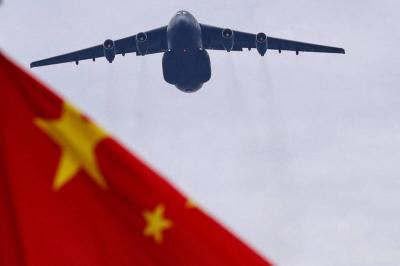
Beijing could eventually see a full amphibious invasion of Taiwan as the only "prudent" way to bring about unification, the US Department of Defense said in a newly released annual report to Congress. The Pentagon's "Annual Report to Congress: Military and Security Developments Involving the People's Republic of China 2025," was in many ways similar to last year’s report but reorganized the analysis of the options China has to take over Taiwan. Generally, according to the report, Chinese leaders view the People's Liberation Army's (PLA) capabilities for a Taiwan campaign as improving, but they remain uncertain about its readiness to successfully seize
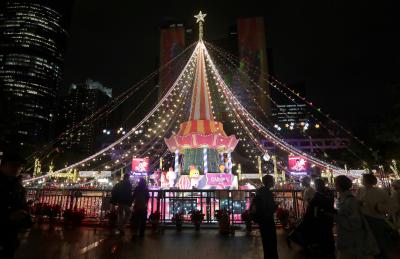
Taiwan is getting a day off on Christmas for the first time in 25 years. The change comes after opposition parties passed a law earlier this year to add or restore five public holidays, including Constitution Day, which falls on today, Dec. 25. The day marks the 1947 adoption of the constitution of the Republic of China, as the government in Taipei is formally known. Back then the Chinese Nationalist Party (KMT) governed China from Nanjing. When the KMT, now an opposition party in Taiwan, passed the legislation on holidays, it said that they would help “commemorate the history of national development.” That

Taiwan has overtaken South Korea this year in per capita income for the first time in 23 years, IMF data showed. Per capita income is a nation’s GDP divided by the total population, used to compare average wealth levels across countries. Taiwan also beat Japan this year on per capita income, after surpassing it for the first time last year, US magazine Newsweek reported yesterday. Across Asia, Taiwan ranked fourth for per capita income at US$37,827 this year due to sustained economic growth, the report said. In the top three spots were Singapore, Macau and Hong Kong, it said. South

Snow fell on Yushan (Jade Mountain, 玉山) yesterday morning as a continental cold air mass sent temperatures below freezing on Taiwan’s tallest peak, the Central Weather Administration (CWA) said. Snowflakes were seen on Yushan’s north peak from 6:28am to 6:38am, but they did not fully cover the ground and no accumulation was recorded, the CWA said. As of 7:42am, the lowest temperature recorded across Taiwan was minus-5.5°C at Yushan’s Fengkou observatory and minus-4.7°C at the Yushan observatory, CWA data showed. On Hehuanshan (合歡山) in Nantou County, a low of 1.3°C was recorded at 6:39pm, when ice pellets fell at Songsyue Lodge (松雪樓), a


 RSS
RSS