


Censorship from China, cyberbullying and the so-called “digital divide” are the biggest challenges confronting freedom of speech in Taiwan, Minister of the Interior Yeh Jiunn-rong (葉俊榮) said.
Yeh made the remarks in a recent interview with the Chinese-language Liberty Times (the Taipei Times’ sister paper) ahead of the nation’s first-ever Freedom of Speech Day on Friday. The ministry last year declared the event would be observed every year on April 7.
Citing US rights watchdog Freedom House’s “Freedom in the World” report for this year that gave Taiwan the highest possible scores for political rights and civil liberties — the nation’s best showings since 2006 — Yeh said Taiwan had made great strides in its transformation from an authoritarian society that habitually censored free speech to a liberal democracy.

Photo: Chu Pei-hsiung, Taipei Times
However, infringements still persist, especially with regards to China’s censorship of Taiwanese freedom of expression in the political and economic spheres, Yeh said.
In addition, online bullying, the spread of fake news and the digital divide also pose challenges to the nation’s freedom of speech, he said.
The digital divide refers to disparities in Internet use that arise from demographics or geography.
In the past, authoritarian states attempting to control discourse were the major threats to freedom of speech, but in the modern era, powerful political or business elites are now attempting to control channels of communication and monopolize the sources of information, he said.
New forms of repression include Beijing’s insistence on celebrities and business owners publicly supporting its positions on Taiwan issues, he said, citing incidents involving Chi Mei Group founder Hsu Wen-lung (許文龍) and singer Chou Tzu-yu (周子瑜).
“Forcing people to make political statements destroys their freedom to abstain from open political expression,” Yeh said.
Powerful hegemonic states such as China might also leverage the global system of free trade to put pressure on neighboring states and remove the free passage of foreign citizens through their national borders, Yeh said.
“Such situations are made possible by the special nature of cross-strait relations and its cost to free speech is a concern,” he said.
The creation of the virtual public space that has occurred over the past two decades has brought new challenges, such as cyberbullying, the dissemination of false information and the difficulty for Internet users to verify online data, he said.
In addition, a significant number of people in Taiwan and in other nations do not use the Internet, so they are unable to contribute to online public discourse, Yeh said, adding that the government should take an interest in the policy implications of the digital divide.
A public conference on the freedom of speech and the government’s relationship to it will be held at National Taiwan University on Friday, he said.
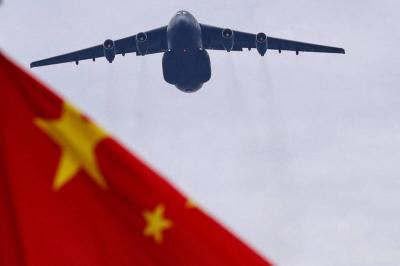
Beijing could eventually see a full amphibious invasion of Taiwan as the only "prudent" way to bring about unification, the US Department of Defense said in a newly released annual report to Congress. The Pentagon's "Annual Report to Congress: Military and Security Developments Involving the People's Republic of China 2025," was in many ways similar to last year’s report but reorganized the analysis of the options China has to take over Taiwan. Generally, according to the report, Chinese leaders view the People's Liberation Army's (PLA) capabilities for a Taiwan campaign as improving, but they remain uncertain about its readiness to successfully seize

Taiwan is getting a day off on Christmas for the first time in 25 years. The change comes after opposition parties passed a law earlier this year to add or restore five public holidays, including Constitution Day, which falls on today, Dec. 25. The day marks the 1947 adoption of the constitution of the Republic of China, as the government in Taipei is formally known. Back then the Chinese Nationalist Party (KMT) governed China from Nanjing. When the KMT, now an opposition party in Taiwan, passed the legislation on holidays, it said that they would help “commemorate the history of national development.” That

Taiwan has overtaken South Korea this year in per capita income for the first time in 23 years, IMF data showed. Per capita income is a nation’s GDP divided by the total population, used to compare average wealth levels across countries. Taiwan also beat Japan this year on per capita income, after surpassing it for the first time last year, US magazine Newsweek reported yesterday. Across Asia, Taiwan ranked fourth for per capita income at US$37,827 this year due to sustained economic growth, the report said. In the top three spots were Singapore, Macau and Hong Kong, it said. South

Snow fell on Yushan (Jade Mountain, 玉山) yesterday morning as a continental cold air mass sent temperatures below freezing on Taiwan’s tallest peak, the Central Weather Administration (CWA) said. Snowflakes were seen on Yushan’s north peak from 6:28am to 6:38am, but they did not fully cover the ground and no accumulation was recorded, the CWA said. As of 7:42am, the lowest temperature recorded across Taiwan was minus-5.5°C at Yushan’s Fengkou observatory and minus-4.7°C at the Yushan observatory, CWA data showed. On Hehuanshan (合歡山) in Nantou County, a low of 1.3°C was recorded at 6:39pm, when ice pellets fell at Songsyue Lodge (松雪樓), a


 RSS
RSS