


A draft bill aimed at reducing unlawful aggression by local organizations with known ties to China would treat certain public disturbances as “foreign aggression,” Democratic Progressive Party (DPP) Legislator Wang Ding-yu (王定宇) said.
Wang’s remarks come following the alleged attempted assault of Hong Kong democracy advocate Joshua Wong (黃之鋒) in January by a group said to be led by Chang Wei (張瑋), the son of China Unification Promotion Party founder and former gang leader Chang An-le (張安樂).
Prosecutors on Friday indicted members of the group on charges of interfering with public functions.

Photo provided by a reader
Since the DPP took office in May last year, Chinese-influenced forces have repeatedly caused disturbances in Taiwan under the guise of legitimate demonstrations, Wang said.
There are two types of protest taking place in the nation, one represents the voice of the people and the other is under the direction of forces outside the nation’s borders, Wang said.
Wang cited the presence of a particular group at recent protests against pension reform, food imports from four Japanese prefectures, the publication of new books discussing the 228 Incident, the relocation or removal of Chiang Kai-shek (蔣介石) statues and the visit to Taiwan by Wong in January.
“It seems the group’s interests are really all-encompassing, but actually its goal is to provoke social disturbances,” Wang said.
Wang cited investigations by a US media organization that showed that the fourth division of the Chinese Ministry of State Security is tasked with security affairs in Taiwan, Hong Kong and Macao.
The head of that ministry has met with Taiwanese known to have gang affiliations, he said.
Wang said the Chinese ministry makes annual payments of between 5 million yuan and 30 million yuan (US$724,375.25 and US$4.35 million) to certain groups in Taiwan to help them provoke social disturbances in the nation.
Wang called on the National Security Bureau and the Investigation Bureau to publish their findings on the issue to let the public “understand China’s intent to undermine social stability.”
The bill would amend acts covering foreign aggression to include “enemies” of the state, with “enemies” defined as “countries or organizations that wage war against, or confront with military force, the Republic of China,” Wang said.
Aside from the threat of using weapons, China regularly engages in espionage and aggressive activities against Taiwan from inside the nation’s borders, Wang said.
China is the nation’s only enemy, Wang said, adding that current laws have limited effect, as they refer to China as the “mainland area” and not a foreign country.
DPP Legislator Lee Chun-yi (李俊俋) said that public disturbances are regularly connected with the pro-unification Concentric Patriotism Association (愛國同心會) and the China Unification Promotion Party, adding that the government can trace the groups’ funding to China.
Lee said other groups such as the Blue Sky Action Alliance (藍天行動聯盟) can also be traced to the same origins, adding that the groups’ activities are organized, systematic criminal behavior, and the government must take action.
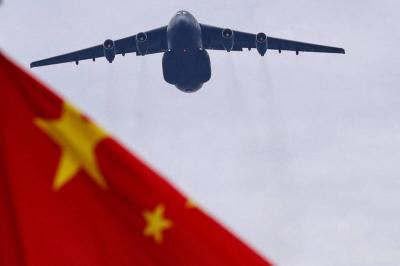
Beijing could eventually see a full amphibious invasion of Taiwan as the only "prudent" way to bring about unification, the US Department of Defense said in a newly released annual report to Congress. The Pentagon's "Annual Report to Congress: Military and Security Developments Involving the People's Republic of China 2025," was in many ways similar to last year’s report but reorganized the analysis of the options China has to take over Taiwan. Generally, according to the report, Chinese leaders view the People's Liberation Army's (PLA) capabilities for a Taiwan campaign as improving, but they remain uncertain about its readiness to successfully seize

Taiwan is getting a day off on Christmas for the first time in 25 years. The change comes after opposition parties passed a law earlier this year to add or restore five public holidays, including Constitution Day, which falls on today, Dec. 25. The day marks the 1947 adoption of the constitution of the Republic of China, as the government in Taipei is formally known. Back then the Chinese Nationalist Party (KMT) governed China from Nanjing. When the KMT, now an opposition party in Taiwan, passed the legislation on holidays, it said that they would help “commemorate the history of national development.” That

Taiwan has overtaken South Korea this year in per capita income for the first time in 23 years, IMF data showed. Per capita income is a nation’s GDP divided by the total population, used to compare average wealth levels across countries. Taiwan also beat Japan this year on per capita income, after surpassing it for the first time last year, US magazine Newsweek reported yesterday. Across Asia, Taiwan ranked fourth for per capita income at US$37,827 this year due to sustained economic growth, the report said. In the top three spots were Singapore, Macau and Hong Kong, it said. South

Snow fell on Yushan (Jade Mountain, 玉山) yesterday morning as a continental cold air mass sent temperatures below freezing on Taiwan’s tallest peak, the Central Weather Administration (CWA) said. Snowflakes were seen on Yushan’s north peak from 6:28am to 6:38am, but they did not fully cover the ground and no accumulation was recorded, the CWA said. As of 7:42am, the lowest temperature recorded across Taiwan was minus-5.5°C at Yushan’s Fengkou observatory and minus-4.7°C at the Yushan observatory, CWA data showed. On Hehuanshan (合歡山) in Nantou County, a low of 1.3°C was recorded at 6:39pm, when ice pellets fell at Songsyue Lodge (松雪樓), a


 RSS
RSS