


The Democratic Progressive Party (DPP) has made little progress in realizing electoral promises to abolish nuclear power by 2025, environmental groups said yesterday, outlining plans to push forward with an annual march against nuclear power next month.
About 20 protesters from various environmental and self-help groups gathered on Ketagalan Boulevard in Taipei, shouting slogans demanding that the government push forward with plans to dispose of nuclear waste while reducing emissions and moving toward renewable energy.
“The DPP has been in office for more than six months, but its progress in fulfilling promises to retire old nuclear plants, dispose of nuclear waste and push for renewable energy has been extremely sluggish, falling far short of the expectations of the public,” Green Citizens’ Action Alliance secretary-general Tsuei Su-hsin (崔愫欣) said.

Photo: CNA
Demonstrations against nuclear power are to be held on March 11 in Taipei, Kaohsiung and Taitung to urge the government to outline specific plans and a timeline for realizing its promises, Tsuei said.
She criticized state-run Taiwan Power Co for proposing a budget that includes funds for maintaining a mothballed facility even after the Legislative Yuan last year voted to cut off funding for the uncompleted facility in New Taipei City’s Gongliao District (貢寮)
“The Legislative Yuan last year passed amendments to the Electricity Act (電業法) stating that the operation of nuclear reactors are to stop by 2025, but our dream of a nuclear-free nation is not just about stopping the use of nuclear power,” Northern Coast Anti-Nuclear Action Alliance executive director Kuo Ching-lin (郭慶霖) said.
Shutting the reactors would just be the beginning of a cleanup process that opponents of nuclear power expect to take up to 25 years, he said, adding that finding a permanent facility to store nuclear waste would be a key challenge.
“Whether the site is to be on Taiwan proper or an outlying island, the choice has to be decided through an open and just public discussion,” he said.
Finding alternative sites for the nuclear waste stored on Orchid Island and reactor sites has been stalled for years, with the Chinese-language United Daily News yesterday reporting that the government intends to select four uninhabited outlying islands for disposal.
“We feel that allowing the central government to make this decision on its own would be putting the cart before the horse, because selection of a site should be the result of a national discussion,” Tsuei said.
The protesters also called for clearer plans on increasing the share of renewable power in the nation’s energy source.
Although President Tsai Ing-wen’s (蔡英文) administration has promised that renewable energy would reach 20 percent of total capacity by 2025, “it has no timeline for achieving this,” said Yang Shun-mei (楊順美), secretary-general of Mom Loves Taiwan, a group against nuclear power, questioning the government’s resolve given that wind and solar power comprise only 2 percent of total capacity.
Citizen of the Earth public relations director Chen Ya-ching (陳雅晶) said that recently passed amendments to the Electricity Act would be insufficient without the passage of new legislation promoting renewable power.

Taiwanese can file complaints with the Tourism Administration to report travel agencies if their activities caused termination of a person’s citizenship, Mainland Affairs Council Minister Chiu Chui-cheng (邱垂正) said yesterday, after a podcaster highlighted a case in which a person’s citizenship was canceled for receiving a single-use Chinese passport to enter Russia. The council is aware of incidents in which people who signed up through Chinese travel agencies for tours of Russia were told they could obtain Russian visas and fast-track border clearance, Chiu told reporters on the sidelines of an event in Taipei. However, the travel agencies actually applied

New measures aimed at making Taiwan more attractive to foreign professionals came into effect this month, the National Development Council said yesterday. Among the changes, international students at Taiwanese universities would be able to work in Taiwan without a work permit in the two years after they graduate, explainer materials provided by the council said. In addition, foreign nationals who graduated from one of the world’s top 200 universities within the past five years can also apply for a two-year open work permit. Previously, those graduates would have needed to apply for a work permit using point-based criteria or have a Taiwanese company
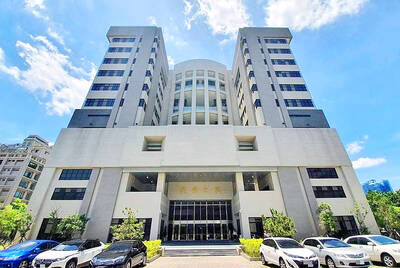
The Shilin District Prosecutors’ Office yesterday indicted two Taiwanese and issued a wanted notice for Pete Liu (劉作虎), founder of Shenzhen-based smartphone manufacturer OnePlus Technology Co (萬普拉斯科技), for allegedly contravening the Act Governing Relations Between the People of the Taiwan Area and the Mainland Area (臺灣地區與大陸地區人民關係條例) by poaching 70 engineers in Taiwan. Liu allegedly traveled to Taiwan at the end of 2014 and met with a Taiwanese man surnamed Lin (林) to discuss establishing a mobile software research and development (R&D) team in Taiwan, prosecutors said. Without approval from the government, Lin, following Liu’s instructions, recruited more than 70 software

Taiwanese singer Jay Chou (周杰倫) plans to take to the courts of the Australian Open for the first time as a competitor in the high-stakes 1 Point Slam. The Australian Open yesterday afternoon announced the news on its official Instagram account, welcoming Chou — who celebrates his 47th birthday on Sunday — to the star-studded lineup of the tournament’s signature warm-up event. “From being the King of Mandarin Pop filling stadiums with his music to being Kato from The Green Hornet and now shifting focus to being a dedicated tennis player — welcome @jaychou to the 1 Point Slam and #AusOpen,” the


 RSS
RSS