


Former premier Jiang Yi-huah (江宜樺) yesterday announced the establishment of a foundation aimed at seeking a “way out” for Taiwan and linking Taiwanese youths with the international community.
He denied that the move was a precursor to staging a political comeback.
With Jiang as president, the newly founded Fair Winds Foundation’s board of directors includes many former Cabinet members of former president Ma Ying-jeou’s (馬英九) administration, including former minister of Mainland Affairs Council Andrew Hsia (夏立言), former minister of National Development Council Kuan Chung-ming (管中閔), former minister of culture Lung Ying-tai (龍應台) and former minister of transportation and communications Yeh Kuang-shih (葉匡時), who is also the chief executive officer.
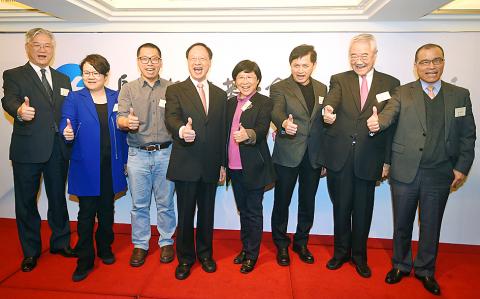
Photo: Liao Chen-huei, Taipei Times
“After resigning as premier in December 2014, I went to the US as a visiting scholar before taking on a teaching job in Hong Kong last year. Spending two years abroad allowed me to look at what happened in Taiwan from an appropriate distance,” Jiang said in his speech.
Jiang said his heart had been wrenched by the constant internal friction at home, which prompted him to approach a group of like-minded individuals to jointly roll up their sleeves and do something to change the situation.
Reiterating that the foundation is not a personal platform, Jiang said it is an organization through which he intends to work with other organizations and link young people with the international community.
He said he plans to achieve the goals through policy research, large-scale speeches, forums and international student camps.
This year’s events include a forum on Feb. 19 in Taipei where Kuan and four young people are to talk about Taiwan’s future, and in April a speech by US political scientist Francis Fukuyama on democratic governance.
“Former vice president Vincent Siew (蕭萬長) is also due to give a speech to share his experiences as one of Taiwan’s economic pioneers and talk about future economic situations across the Taiwan Strait,” Jiang said.
The exact time and content of Siew’s speech are still being discussed, he said.
The foundation’s establishment came as major political parties are gearing up for the local election next year, sparking speculation that Jiang is seeking a political comeback and might join the race.
“It has nothing to do with elections. We merely want to do something based on our shared ideals,” Jiang said, adding that vying for political office is not the only way to serve the community.
Jiang also denied he had consulted with or sought the opinions of Ma and former National Security Council secretary-general King Pu-tsung (金溥聰) about setting up the foundation.
Asked why Chinese Nationalist Party (KMT) Vice Chairman Hau Lung-bin (郝龍斌) was the only political figure attending the founding ceremony, Jiang said he did not invite Ma, former vice president Wu Den-yih (吳敦義) or any leaders of political parties due to the foundation’s cultural and educational nature and limited seating at the ceremony.
“Hau volunteered to come after hearing about news of the foundation’s establishment,” Jiang added.
Hau and Wu are contenders in the KMT’s next chairmanship election on May 20.

Actor Darren Wang (王大陸) was sentenced to six months in prison, commutable to a fine, by the New Taipei District Court today for contravening the Personal Data Protection Act (個人資料保護法) in a case linked to an alleged draft-dodging scheme. Wang allegedly paid NT$3.6 million (US$114,380) to an illegal group to help him evade mandatory military service through falsified medical documents, prosecutors said. He transferred the funds to Chen Chih-ming (陳志明), the alleged mastermind of a draft-evasion ring, although he lost contact with him as he was already in detention on fraud charges, they said. Chen is accused of helping a

SECURITY: Starlink owner Elon Musk has taken pro-Beijing positions, and allowing pro-China companies to control Taiwan’s critical infrastructure is risky, a legislator said Starlink was reluctant to offer services in Taiwan because of the nation’s extremely high penetration rates in 4G and 5G services, the Ministry of Digital Affairs said yesterday. The ministry made the comments at a meeting of the legislature’s Transportation Committee, which reviewed amendments to Article 36 of the Telecommunications Management Act (電信管理法). Article 36 bans foreigners from holding more than 49 percent of shares in public telecommunications networks, while shares foreigners directly and indirectly hold are also capped at 60 percent of the total, unless specified otherwise by law. The amendments, sponsored by Chinese Nationalist Party (KMT) Legislator Ko
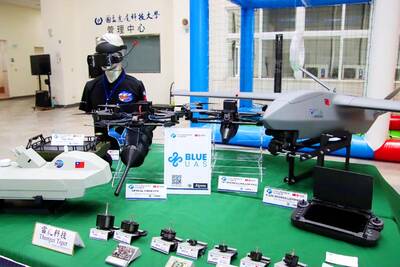
NON-RED SUPPLY: Boosting the nation’s drone industry is becoming increasingly urgent as China’s UAV dominance could become an issue in a crisis, an analyst said Taiwan’s drone exports to Europe grew 41.7-fold from 2024 to last year, with demand from Ukraine’s fight against Russian aggression the most likely driver of growth, a study showed. The Institute for Democracy, Society and Emerging Technology (DSET) in a statement on Wednesday said it found that many of Taiwan’s uncrewed aerial vehicle (UAV) sales were from Poland and the Czech Republic. These countries likely transferred the drones to Ukraine to aid it in its fight against the Russian invasion that started in 2022, it said. Despite the gains, Taiwan is not the dominant drone exporter to these markets, ranking second and fourth
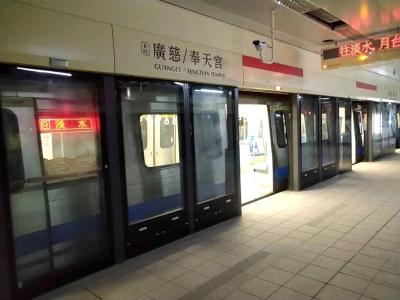
The eastern extension of the Taipei MRT Red Line could begin operations as early as late June, the Taipei Department of Rapid Transit Systems said yesterday. Taipei Rapid Transit Corp said it is considering offering one month of free rides on the new section to mark its opening. Construction progress on the 1.4km extension, which is to run from the current terminal Xiangshan Station to a new eastern terminal, Guangci/Fengtian Temple Station, was 90.6 percent complete by the end of last month, the department said in a report to the Taipei City Council's Transportation Committee. While construction began in October 2016 with an


 RSS
RSS