


All three candidates running in the Chinese Nationalist Party’s (KMT) chairperson election yesterday denied having recruited “dummy members,” following reports that KMT Chairwoman Hung Hsiu-chu (洪秀柱) brought in nearly 40,000 new members after assuming the leadership post in March last year to boost her chances of winning the vote.
The Chinese-language Want Weekly magazine on Tuesday quoted a KMT lawmaker, who requested anonymity, as saying that Hung has endeavored to recruit new members since becoming chairwoman and has so far drawn more than 40,000 new members, while one of the challengers for the position, former vice president Wu Den-yih (吳敦義), has also been encouraging supporters to join the KMT.
The competition between Hung, Wu and KMT Vice Chairman Hau Lung-bin (郝龍斌) has been fierce, despite the three putting on a friendly face in public, the report said.
There have been rumors in central and southern Taiwan that the number of applications for KMT membership has greatly increased, it added.
The article cited a KMT headquarters director as saying that the party has not suddenly become popular and that the increased applications were due to the chairperson election in May.
Speaking to reporters on the sidelines of a KMT forum in the morning in Taipei on local branch directors, Hau said that nobody wants to see the party flooded with nominal members, adding that if a person joins the party, they should be sincere and whole-heartedly support party ideals.
“We hope the party chairperson election will be fair and transparent, establishing a good example that will be looked up to in the future,” Hau said, expressing his confidence that KMT headquarters would give its all to realize such a goal.
KMT Culture and Communications Committee deputy director Hu Wen-chi (胡文琦) said the party last year only registered 11,312 new members, far fewer than the 40,000 the magazine reported.
Party members aligned with Wu said that the allegations were untrue and that his supporters all joined the party of their own accord.
Hau spokeswoman Yu Shu-hui (游淑惠) said that the vice chairman had not encouraged supporters to join the KMT, adding that party headquarters should emulate the Democratic Progressive Party and effect changes in response to the reports.
In an effort to make more complete the administrative procedures of the four party-related elections scheduled for this year, the KMT said that it would continue to report party membership numbers on a daily basis until Friday next week.
The party said it would announce the number of party members eligible to cast ballots in the elections every Tuesday and Friday, in the name of openness and transparency.
As of Monday, there were 887,861 KMT members, including those who have not paid their party fees, statistics published by the party on Tuesday showed.
Of that number, only 226,783 would be eligible to cast a vote this year, including common members who have already paid their fees for this year, permanent party members and people older than 65 who have been members for at least 40 years, as well as those who qualify due to being members of low-income households, the data showed.


South Korea is planning to revise its controversial electronic arrival card, a step Taiwanese officials said prompted them to hold off on planned retaliatory measures, a South Korean media report said yesterday. A Yonhap News Agency report said that the South Korean Ministry of Foreign Affairs is planning to remove the “previous departure place” and “next destination” fields from its e-arrival card system. The plan, reached after interagency consultations, is under review and aims to simplify entry procedures and align the electronic form with the paper version, a South Korean ministry official said. The fields — which appeared only on the electronic form
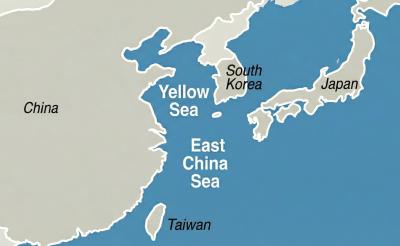
China has reserved offshore airspace in the Yellow Sea and East China Sea from March 27 to May 6, issuing alerts usually used to warn of military exercises, although no such exercises have been announced, the Wall Street Journal (WSJ) reported yesterday. Reserving such a large area for 40 days without explanation is an “unusual step,” as military exercises normally only last a few days, the paper said. These alerts, known as Notice to Air Missions (Notams), “are intended to inform pilots and aviation authorities of temporary airspace hazards or restrictions,” the article said. The airspace reserved in the alert is

A bipartisan group of US senators has introduced a bill to enhance cooperation with Taiwan on drone development and to reduce reliance on supply chains linked to China. The proposed Blue Skies for Taiwan Act of 2026 was introduced by Republican US senators Ted Cruz and John Curtis, and Democratic US senators Jeff Merkley and Andy Kim. The legislation seeks to ease constraints on Taiwan-US cooperation in uncrewed aerial systems (UAS), including dependence on China-sourced components, limited access to capital and regulatory barriers under US export controls, a news release issued by Cruz on Wednesday said. The bill would establish a "Blue UAS

More than 6,000 Taiwanese students have participated in exchange programs in China over the past two years, despite the Mainland Affairs Council’s (MAC) “orange light” travel advisory, government records showed. The MAC’s publicly available registry showed that Taiwanese college and university students who went on exchange programs across the Strait numbered 3,592 and 2,966 people respectively. The National Immigration Agency data revealed that 2,296 and 2,551 Chinese students visited Taiwan for study in the same two years. A review of the Web sites of publicly-run universities and colleges showed that Taiwanese higher education institutions continued to recruit students for Chinese educational programs without


 RSS
RSS