


Discontent in the Chinese Nationalist Party (KMT) with KMT Chairwoman Hung Hsiu-chu (洪秀柱) yesterday boiled to the surface, with former minister of transportation and communications Yeh Kuang-shih (葉匡時) saying that Hung wants to send “the KMT to the mortuary.”
Yeh, who was an adviser to Hung’s presidential campaign in 2015 before Hung’s forced replacement by then-KMT chairman Eric Chu (朱立倫), said on Facebook that Hung allowed the KMT’s Huang Fu-hsing military veterans’ branch to sway the party’s chairperson election.
“According to party member numbers published by the KMT, out of 880,000 registered members, only about 220,000 have voting rights in the chairperson election, of which 197,000 are either older than 65 and have been party members for at least 40 years — including 170,000 Huang Fu-hsing members — or are members of low-income households,” Yeh said. “Both groups are exempt from paying party fees to have voting rights.”
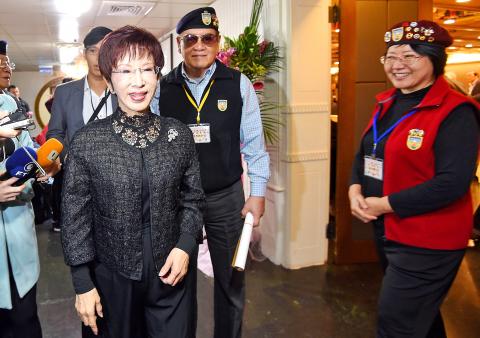
Photo: Liu Hsin-de, Taipei Times
“In other words, the KMT chairperson election will be completely decided by Huang Fu-hsing,” he added, asking why there have been “less than 30,000 members willing to pay party fees” during Hung’s tenure as chairwoman.
“Are you really taking the KMT to the mortuary?” Yeh asked Hung.
It was not the first time Yeh has taken Hung to task for what he said was the impending demise of the party.
On Dec. 22, he said on Facebook that the KMT “is being pushed from the intensive care unit to hospice care and will be sent to the mortuary in no time,” sharing an article from the Chinese-language United Daily News that said the party was “narrowing its road, with an intraparty consensus nowhere to be seen.”
The following day, he added: “Chairwoman Hung, please do not complain about other people not listening to your orders. Please think about why they fail to do so.”
KMT Central Policy Committee director Alex Tsai (蔡正元) fought back yesterday, saying on Facebook: “No wonder [former president] Ma Ying-jeou’s (馬英九) poll numbers were in the mortuary; it was because he made someone like Yeh the minister of transportation and communications.”
“Yeh relied on the KMT to indulge on luxuries, but he did not even pay a NT$2,000 special party fee,” Tsai said, referring to a donation scheme employed by the party to raise funds.
There are only 65,967 Huang Fu-hsing members, of which 60,480 are older than 65 and have been party members for at least 40 years, he said.
“Can Yeh not read numbers? Was his IQ [intelligence quotient] sent to the mortuary?” Tsai said. “No wonder he was seriously slapped on the face when he undertook financial reforms of Taiwan High Speed Rail Corp.”

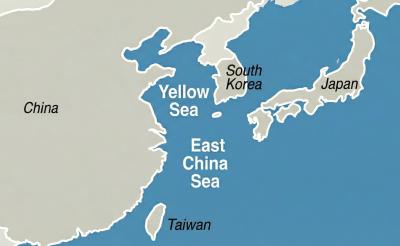
China has reserved offshore airspace in the Yellow Sea and East China Sea from March 27 to May 6, issuing alerts usually used to warn of military exercises, although no such exercises have been announced, the Wall Street Journal (WSJ) reported yesterday. Reserving such a large area for 40 days without explanation is an “unusual step,” as military exercises normally only last a few days, the paper said. These alerts, known as Notice to Air Missions (Notams), “are intended to inform pilots and aviation authorities of temporary airspace hazards or restrictions,” the article said. The airspace reserved in the alert is
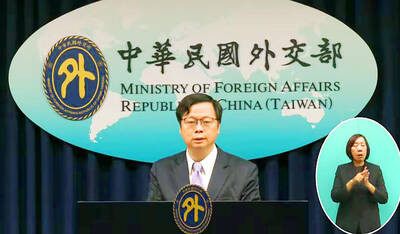
NAMING SPAT: The foreign ministry called on Denmark to propose an acceptable solution to the erroneous nationality used for Taiwanese on residence permits Taiwan has revoked some privileges for Danish diplomatic staff over a Danish permit that lists “Taiwan” as “China,” Eric Huang (黃鈞耀), head of the Ministry of Foreign Affairs’ Department of European Affairs, told a news conference in Taipei yesterday. Reporters asked Huang whether the Danish government had responded to the ministry’s request that it correct the nationality on Danish residence permits of Taiwanese, which has been listed as “China” since 2024. Taiwan’s representative office in Denmark continues to communicate with the Danish government, and the ministry has revoked some privileges previously granted to Danish representatives in Taiwan and would continue to review
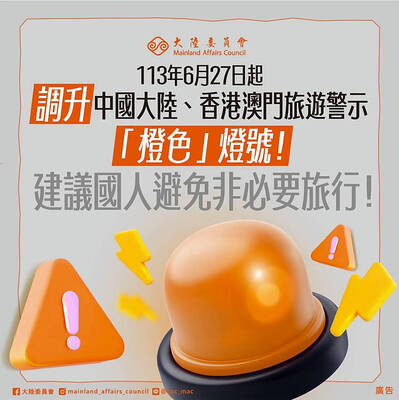
More than 6,000 Taiwanese students have participated in exchange programs in China over the past two years, despite the Mainland Affairs Council’s (MAC) “orange light” travel advisory, government records showed. The MAC’s publicly available registry showed that Taiwanese college and university students who went on exchange programs across the Strait numbered 3,592 and 2,966 people respectively. The National Immigration Agency data revealed that 2,296 and 2,551 Chinese students visited Taiwan for study in the same two years. A review of the Web sites of publicly-run universities and colleges showed that Taiwanese higher education institutions continued to recruit students for Chinese educational programs without
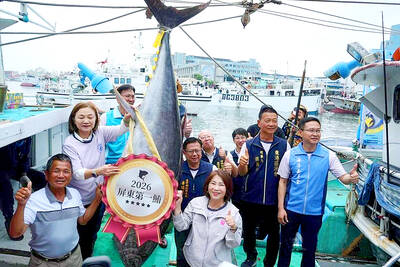
The first bluefin tuna of the season, brought to shore in Pingtung County and weighing 190kg, was yesterday auctioned for NT$10,600 (US$333.5) per kilogram, setting a record high for the local market. The auction was held at the fish market in Donggang Fishing Harbor, where the Siaoliouciou Island-registered fishing vessel Fu Yu Ching No. 2 delivered the “Pingtung First Tuna” it had caught for bidding. Bidding was intense, and the tuna was ultimately jointly purchased by a local restaurant and a local company for NT$10,600 per kilogram — NT$300 ,more than last year — for a total of NT$2.014 million. The 67-year-old skipper


 RSS
RSS