


The Executive Yuan yesterday said it would postpone two public hearings on easing a food import ban from five Japanese prefectures, in an effort to avoid interference from certain groups and political manipulation from the Chinese Nationalist Party (KMT).
Executive Yuan spokesman Hsu Kuo-yung (徐國勇) said that two hearings scheduled next month to discuss food imports from Japan’s Fukushima and surrounding prefectures would be delayed.
Hsu said the decision to delay the hearings, to be held on Monday in Kaohsiung and Jan. 8 in Taipei, was made after listening to the concerns of public.
The first hearing held on Sunday last week regarding the potential import of food products from Japan’s Ibaraki, Tochigi, Chiba and Gunma prefectures ended without progress when more than 100 protesters gathered outside the hearing and obstructed talks from proceeding.
After the first hearing was unable to proceed, the Executive Yuan is concerned that other scheduled hearings could face similar obstructions on an even larger scale, Hsu said, adding that the Executive Yuan decided it was best to delay the hearings and find a new approach.
After speaking to some public organizations, Hsu said it was decided to change the format of the hearings, adding that consultations and greater public participation in the next hearings are being considered.
Hsu said the Executive Yuan does not approve of the KMT’s obstruction of public policy discussions.
All discussions on the issue of Japanese food imports to date have been conducted on the basis of resolutions by the Legislative Yuan, Hsu said, adding that they have taken into account concerns of all political parties.
Hsu said further discussions were necessary, citing concerns by the Executive Yuan that a more adequate food safety management system needed to be implemented before import bans could be lifted.
The Executive Yuan wants to rebuild public trust in the government regarding food safety management, Hsu said.
“We need to establish a new way to communicate with the public on policy issues, allowing public organizations to participate in preparing the agenda, clarifying facts and clarifying points of contention,” Hsu said.
Hsu called on all parties and officials to help establish communications on public policy and avoid creating conflict in society.
Culture and Communications Committee deputy director Hu Wen-chi (胡文琦) said the delay is nothing but an attempt by President Tsai Ing-wen’s (蔡英文) administration to manipulate politics and avoid public scrutiny.
“Every day that goes by without an unequivocal pledge from the Tsai administration that it would not reopen the nation’s door to Japanese food products [from the five prefectures] is another day that we should be prepared for a possible sneak attack from the government,” Hu said.
The issue is that lifting the import ban fundamentally runs against mainstream public opinion, Hu said.
Additional reporting by Stacy Hsu
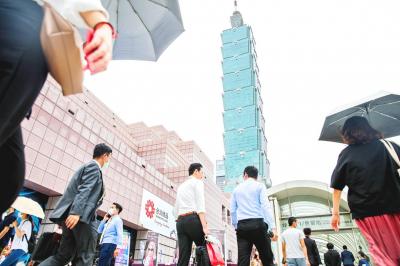
Japanese footwear brand Onitsuka Tiger today issued a public apology and said it has suspended an employee amid allegations that the staff member discriminated against a Vietnamese customer at its Taipei 101 store. Posting on the social media platform Threads yesterday, a user said that an employee at the store said that “those shoes are very expensive” when her friend, who is a migrant worker from Vietnam, asked for assistance. The employee then ignored her until she asked again, to which she replied: "We don't have a size 37." The post had amassed nearly 26,000 likes and 916 comments as of this
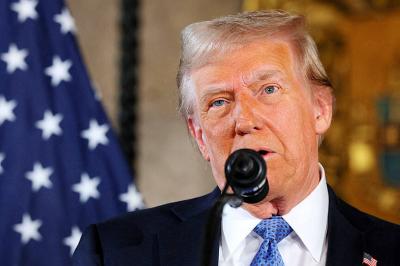
US President Donald Trump said "it’s up to" Chinese President Xi Jinping (習近平) what China does on Taiwan, but that he would be "very unhappy" with a change in the "status quo," the New York Times said in an interview published yesterday. Xi "considers it to be a part of China, and that’s up to him what he’s going to be doing," Trump told the newspaper on Wednesday. "But I’ve expressed to him that I would be very unhappy if he did that, and I don’t think he’ll do that," he added. "I hope he doesn’t do that." Trump made the comments in
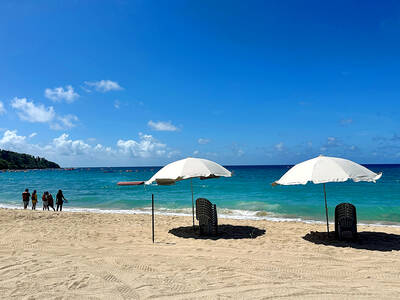
Tourism in Kenting fell to a historic low for the second consecutive year last year, impacting hotels and other local businesses that rely on a steady stream of domestic tourists, the latest data showed. A total of 2.139 million tourists visited Kenting last year, down slightly from 2.14 million in 2024, the data showed. The number of tourists who visited the national park on the Hengchun Peninsula peaked in 2015 at 8.37 million people. That number has been below 2.2 million for two years, although there was a spike in October last year due to multiple long weekends. The occupancy rate for hotels
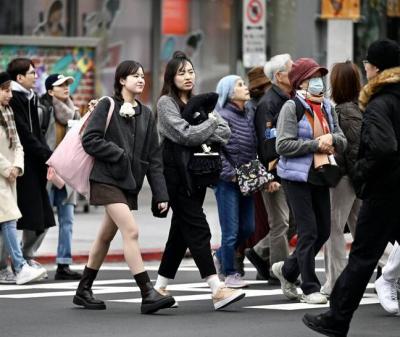
A cold surge advisory was today issued for 18 cities and counties across Taiwan, with temperatures of below 10°C forecast during the day and into tonight, the Central Weather Administration (CWA) said. New Taipei City, Taipei, Taoyuan and Hsinchu, Miaoli and Yilan counties are expected to experience sustained temperatures of 10°C or lower, the CWA said. Temperatures are likely to temporarily drop below 10°C in most other areas, except Taitung, Pingtung, Penghu and Lienchiang (Matsu) counties, CWA data showed. The cold weather is being caused by a strong continental cold air mass, combined with radiative cooling, a process in which heat escapes from


 RSS
RSS