


Minister of Foreign Affairs David Lee (李大維) yesterday dismissed speculation that the Vatican planned to establish diplomatic ties with China as “reheated leftovers,” saying that the government remains confident in Taipei’s diplomatic relationship with the city-state, despite challenges.
“Regarding Radio France Internationale’s report yesterday [Sunday], the article is actually based on ‘reheated leftovers.’ Allow me to use four words to describe it: Run of the mill,” Lee said on the sidelines of a meeting of the legislature’s Foreign and National Defense Committee yesterday.
Lee said more focus should be placed on the five-day Ninth Assembly of Chinese Catholic Representatives, which started yesterday in Beijing.
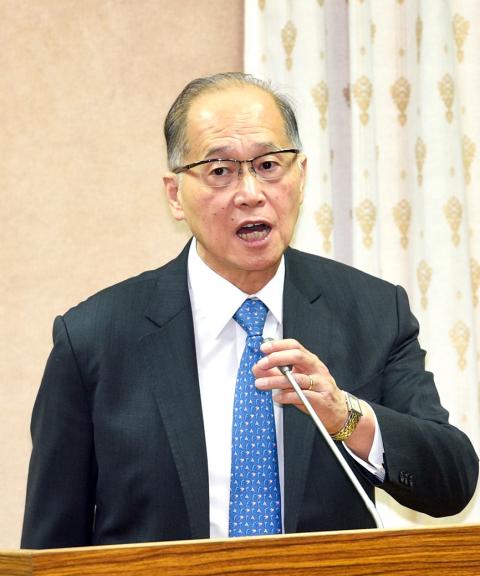
Photo: Peter Lo, Taipei Times
“The new leadership lineup to be announced after the conclusion of the assembly will provide us with more insights,” he said.
The assembly is deemed to be the most authoritative meeting of China’s state-owned church.
According to local news media, the gathering is to bring together bishops recognized and not recognized by the Vatican, as well as those who are considered illegitimate.
Lee said that Ministry of Foreign Affairs officials, whether stationed overseas or in Taiwan, have always remained highly vigilant in their determination to safeguard the nation’s relations with its diplomatic allies.
Asked about the condition of Taipei’s relationship with the Vatican, the country’s only European diplomatic ally, Lee said: “There are challenges, but we are confident.”
The minister was referring to a Chinese-language article published on Radio France Internationale’s Web site that said negotiations between the Vatican and Beijing about establishing diplomatic ties have reached the final stage.
During yesterday’s committee meeting, Democratic Progressive Party (DPP) Legislator Wang Ding-yu (王定宇) proposed a motion asking government agencies to use the title “Taiwan” as often as possible, or use the titles “Taiwan” and “Republic of China” in similar font sizes in government documents and treaties with non-diplomatic allies.
Wang said action needs to be taken to help the nation break the “one China” shackles, particularly after US president-elect Donald Trump called President Tsai Ing-wen (蔡英文) “the president of Taiwan” and the publication of an article titled “Taipei’s name game — it’s time to let Taiwan be Taiwan” in US-based think tank Council on Foreign Relations’ journal Foreign Affairs this month.
The committee passed the motion after it was also backed by Wang’s DPP peers and New Power Party Legislator Freddy Lim (林昶佐).
In other developments, the ministry last night issued a statement accusing China of manipulating the “one China” principle.
The “one China” principle mentioned in the communique signed yesterday between China and Sao Tome and Principe cannot deny the fact that the Republic of China is an independent, sovereign nation, the statement said.
The statement came as a response to China signing an agreement to restore diplomatic relations with Sao Tome and Principe earlier yesterday, just days after the small African nation announced it had cut ties with Taiwan.
Additional reporting by AFP and staff writer

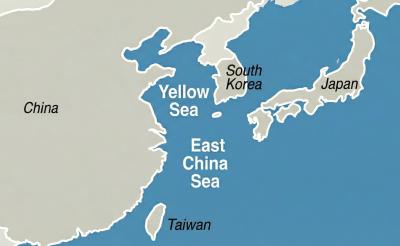
China has reserved offshore airspace in the Yellow Sea and East China Sea from March 27 to May 6, issuing alerts usually used to warn of military exercises, although no such exercises have been announced, the Wall Street Journal (WSJ) reported yesterday. Reserving such a large area for 40 days without explanation is an “unusual step,” as military exercises normally only last a few days, the paper said. These alerts, known as Notice to Air Missions (Notams), “are intended to inform pilots and aviation authorities of temporary airspace hazards or restrictions,” the article said. The airspace reserved in the alert is

South Korea is planning to revise its controversial electronic arrival card, a step Taiwanese officials said prompted them to hold off on planned retaliatory measures, a South Korean media report said yesterday. A Yonhap News Agency report said that the South Korean Ministry of Foreign Affairs is planning to remove the “previous departure place” and “next destination” fields from its e-arrival card system. The plan, reached after interagency consultations, is under review and aims to simplify entry procedures and align the electronic form with the paper version, a South Korean ministry official said. The fields — which appeared only on the electronic form
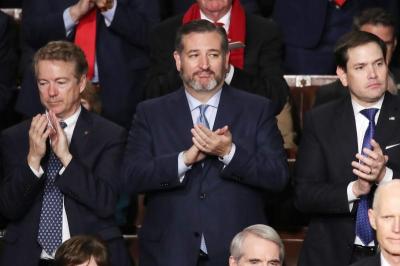
A bipartisan group of US senators has introduced a bill to enhance cooperation with Taiwan on drone development and to reduce reliance on supply chains linked to China. The proposed Blue Skies for Taiwan Act of 2026 was introduced by Republican US senators Ted Cruz and John Curtis, and Democratic US senators Jeff Merkley and Andy Kim. The legislation seeks to ease constraints on Taiwan-US cooperation in uncrewed aerial systems (UAS), including dependence on China-sourced components, limited access to capital and regulatory barriers under US export controls, a news release issued by Cruz on Wednesday said. The bill would establish a "Blue UAS
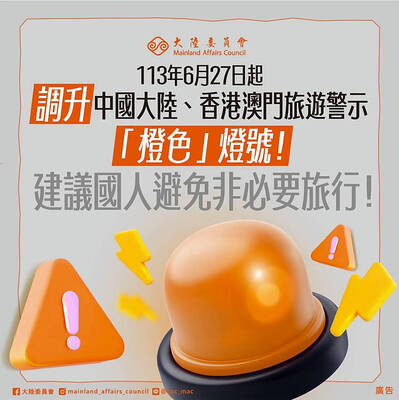
More than 6,000 Taiwanese students have participated in exchange programs in China over the past two years, despite the Mainland Affairs Council’s (MAC) “orange light” travel advisory, government records showed. The MAC’s publicly available registry showed that Taiwanese college and university students who went on exchange programs across the Strait numbered 3,592 and 2,966 people respectively. The National Immigration Agency data revealed that 2,296 and 2,551 Chinese students visited Taiwan for study in the same two years. A review of the Web sites of publicly-run universities and colleges showed that Taiwanese higher education institutions continued to recruit students for Chinese educational programs without


 RSS
RSS