


The government is looking to phase out the 18 percent preferential interest rate for civil servants and educators within six years, National Pension Reform Committee deputy convener Lin Wan-i (林萬億) said.
The armed forces pension would be handled separately and given its own set of rules, Lin said, adding that a draft of the amendments is to be reviewed by the Legislative Yuan before the first session next year.
The committee is to hold four public hearings nationwide on Saturday, Jan. 7, Jan. 8 and Jan. 14 to discuss the preferential interest rate and civil servant pensions, as well as allegations that some people have been over-quoting their years of service by adding their party member service or time as an administrative officer, Lin said.
The sessions are to be broadcast live, Lin said, adding that the committee will hold a national conference on Jan. 21 and Jan. 22.
The reforms are to take stock of the pension system and difficulties surrounding it — including differences in guarantees of minimum income; high-income replacement ratios; short average mean time calculations for salary investment into one of the four funds; low rates that cause payment problems; low age requirements for applying for a pension; severe imbalances between income and expenditure; and the inability to continue pension plans after changing jobs, Lin said.
“We also intend to look into non-standard rules, such as preferential savings rates, combining of years as a party member or years as an administrative officer into total years of service, and preferential 13 percent savings for retired employees at the four state-run banks, including Bank of Taiwan, Land Bank of Taiwan, Export-Import Bank of the Republic of China and the central bank,” he said.
The proposed reforms are to help expedite the phasing out of the 18 percent preferential interest rate, Lin said.
The phasing out period is expected to be six years. When the interest rates for educators, armed forces personnel and civil servants are less than 1 percent — as the market interest rates stand now — then the 18 percent preferential savings rate will end, Lin said.
The 18 percent preferential interest rate policy was introduced in the 1960s, when the average income of teachers, civil servants and military personnel was lower than that of other professions.
The committee plans make “basic life guarantees for elderly people” a prime consideration in the hope that the amendments will help the disadvantaged, Lin said.
“All adjustments to the preferential interest rate, income replacement ratios, the age requirement for applying for a pension and adjustment of rates will be applied gradually,” Lin said.

Kenting National Park service technician Yang Jien-fon (楊政峰) won a silver award in World Grand Prix Photography Awards Spring Season for his photograph of two male rat snakes intertwined in combat. Yang’s colleagues at Kenting National Park said he is a master of nature photography who has been held back by his job in civil service. The awards accept entries in all four seasons across six categories: architectural and urban photography, black-and-white and fine art photography, commercial and fashion photography, documentary and people photography, nature and experimental photography, and mobile photography. Awards are ranked according to scores and divided into platinum, gold and

More than half of the bamboo vipers captured in Tainan in the past few years were found in the city’s Sinhua District (新化), while other districts had smaller catches or none at all. Every year, Tainan captures about 6,000 snakes which have made their way into people’s homes. Of the six major venomous snakes in Taiwan, the cobra, the many-banded krait, the brown-spotted pit viper and the bamboo viper are the most frequently captured. The high concentration of bamboo vipers captured in Sinhua District is puzzling. Tainan Agriculture Bureau Forestry and Nature Conservation Division head Chu Chien-ming (朱健明) earlier this week said that the
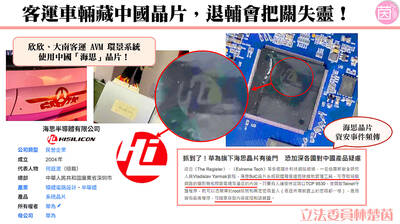
BREACH OF CONTRACT: The bus operators would seek compensation and have demanded that the manufacturer replace the chips with ones that meet regulations Two bus operators found to be using buses with China-made chips are to demand that the original manufacturers replace the systems and provide compensation for breach of contract, the Veterans Affairs Council said yesterday. Democratic Progressive Party Legislator Michelle Lin (林楚茵) yesterday said that Da Nan Bus Co and Shin-Shin Bus Co Ltd have fielded a total of 82 buses that are using Chinese chips. The bus models were made by Tron-E, while the systems provider was CYE Electronics, Lin said. Lin alleged that the buses were using chips manufactured by Huawei subsidiary HiSilicon Co, which presents a national security risk if the

The National Immigration Agency has banned two Chinese from returning to Taiwan, after they published social media content it described as disrespectful to national sovereignty. The agency imposed a two-month ban on a Chinese man surnamed Liang (梁) and a permanent ban on a woman surnamed Yang (楊), an influencer with 23 million followers, in October last year and last week respectively. Minister of the Interior Liu Shyh-fang (劉世芳) yesterday said on the sidelines of a legislative meeting that Chinese visitors to Taiwan are required to comply with the rules and regulations governing their entry permits. The government has handled the ban and


 RSS
RSS