

Tensions appear to have intensified between Democratic Progressive Party (DPP) and New Power Party (NPP) legislators after a DPP caucus official reportedly called for a review of the parties’ relationship following disputes over amendments to the Labor Standards Act (勞動基準法) that were passed on Tuesday.
“In the end our efforts [to halt amendments] were not enough, but we only owe an apology to workers, not the ruling party,” NPP Executive Chairman Huang Kuo-chang (黃國昌) said. “Over the past two days, I have seen actions that look similar to the way the Chinese Nationalist Party (KMT) used to treat the DPP, but I will not allow us [the NPP] to be reduced to a supporting escort for DPP legislation because of it.”
While the ruling party and the social movement-rooted NPP are viewed as allies in the “pan-green” political camp, tensions between the two parties emerged in July when NPP legislators occupied the convener’s podium of the Social Welfare and Environmental Hygiene Committee prior to a review of the proposed labor amendments.
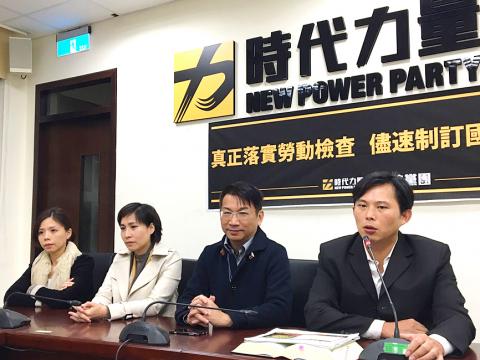
Photo: CNA
DPP caucus whip Ker Chien-ming (柯建銘) earlier this week accused the NPP of hypocrisy for advocating a “committee-centric” review of the legislation despite its earlier occupation of the convener’s podium.
He also accused the party of colluding with the Workers Struggle Alliance to disrupt a legislative hearing on proposed changes.
The Chinese-language China Times yesterday reported that the NPP’s stance also drew extensive criticism in a recent DPP Central Standing Committee meeting.
“Right now a lot of members of the DPP caucus are starting to question whether the NPP is a friend or an enemy,” said DPP Legislator Chen Ming-wen (陳明文), who serves as the convener of the party’s electoral strategy committee.
Controversy over the NPP’s conduct during the passage of Labor Standards Act amendments has led to “universal discontent” within the DPP caucus, Chen said.
The two parties had coordinated and cooperated closely before the presidential and legislative elections, avoiding direct competition in most legislative district seat races.
“I would not use abstract nouns like ‘friend’ or ‘enemy’ to describe our relationship,” Huang said, citing judicial reform and pension reform as areas of common ground, while criticizing the DPP for delays on transitional justice.
“Our position is that we completely support any progressive reforms by the new government,” he said. “However, just acting as a rubber stamp would not be living up to our commission from voters.”
Additional reporting by CNA
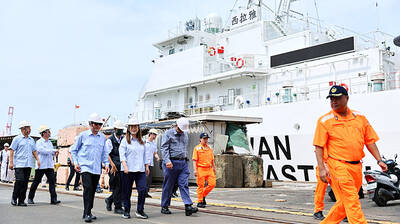
Ocean Affairs Council (OAC) Minister Kuan Bi-ling (管碧玲) on Wednesday said decommissioned coast guard vessels were given to the Philippines to enhance regional rescue capacity and would not affect Taiwanese fishers’ rights and benefits. Kuan made the remarks after confirmation on Tuesday that a 500-tonne Coast Guard Administration (CGA) patrol and rescue vessel would be given to the Philippine Coast Guard. The donation ceremony was reportedly done in Manila, but whether the vessel — previously numbered “CG123” and named Kinmen (金門) — has been handed over has yet to be confirmed. China’s Taiwan Affairs Office (TAO) on Wednesday criticized the donation for “taking
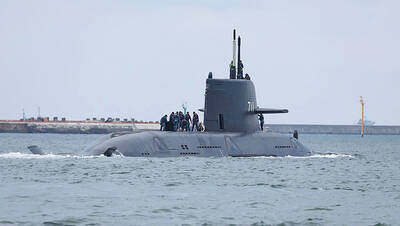
UPDATE: The submarine would need to undergo combined systems testing and crew training for navy personnel before it is ready for mission, an expert said Taiwan’s first domestically built submarine, the Hai Kun (Narwhal, 海鯤), could be delivered to the navy as early as next month, military expert and Taiwan Association for Security and Development chairman Chi Tung-yun (紀東昀) said yesterday. The submarine was yesterday morning observed departing for its 21st sea trial and its 15th submerged test. The vessel missed the initial delivery deadline of November last year due to “testing delays,” its primary contractor, shipbuilder CSBC Corp, Taiwan, said in June. The contractor also cited “political pressure from China” in procuring critical equipment. All testing operations are in the final stages, with the
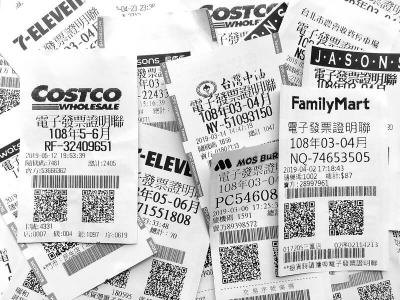
Six NT$10 million (US$315,527) special prizes and seven NT$2 million grand prizes in Taiwan's May-June uniform invoice lottery remained unclaimed as of today, including one NT$10 million winner who spent only NT$10 on an Uber Eats delivery order, the Ministry of Finance said. The ministry said the 13 winners need to claim their prizes by Nov. 5. The eight-digit serial number that won the NT$10 million special prize for May-June was 38548029, with 18 winning receipts in total. The NT$2 million grand prize number was 10138845, of which there were 22 winning receipts, the ministry said. In addition to the receipt issued for an
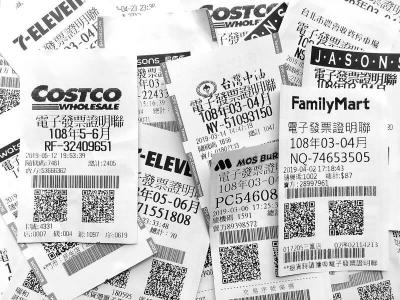
The Ministry of Finance today announced the winning numbers for the July-August uniform invoice lottery. The winning number for the NT$10 million (US$314,663) special prize is 89996565, while the winning number for the NT$2 million grand prize is 91098182. Three numbers were drawn for the NT$200,000 first prize: 54348835, 44991397 and 06595111. Those with receipts matching the last seven digits of any of the first-prize numbers can claim the NT$40,000 second prize, while those matching the last six digits qualify for the NT$10,000 third prize. Those whose receipts match the last five digits of the first-prize numbers are eligible for the NT$4,000 fourth prize,


 RSS
RSS